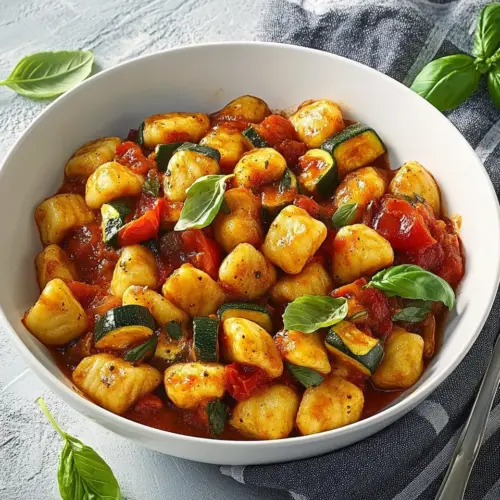
Homemade Zucchini Gnocchi in Rustic Tomato Sauce
Homemade Zucchini Gnocchi in Rustic Tomato Sauce is a creamy, light, and flavorful dish that combines tender ricotta gnocchi with charred cherry tomatoes for a rustic finish. Perfect as an easy weeknight dinner or for a summer supper, this recipe is comforting yet bright, with fresh basil and grated Parmesan adding savory depth. Try it for a simple, impressive meal that celebrates seasonal produce.
Equipment
- Food Processor
- Pastry bag
- Large Pot
- Slotted Spoon
- Large Skillet
- Baking Dish
Ingredients
- 250 g zucchini Grated or shredded to remove excess moisture and provide structure for the gnocchi dough; zucchini offers a light vegetal flavor and helps keep the dumplings tender. Squeeze well after grating to avoid a soggy dough and measure by weight for consistency.
- 250 g ricotta Whipped or stirred until smooth to add creaminess and richness to the gnocchi; ricotta contributes moisture and binds the flour for a delicate texture. Choose whole-milk ricotta for best flavor and drain any excess whey before combining.
- 350 g all-purpose flour Measured and incorporated gradually to create a workable dough that holds shape when boiled; all-purpose flour supplies the necessary gluten for structure. Handle lightly when mixing to prevent overworking and producing dense gnocchi.
- salt Added sparingly to season the gnocchi dough and balance flavors; salt enhances the natural sweetness of zucchini and ricotta. Adjust to taste and account for salty elements like Parmesan and any salted cooking water.
- pepper Ground and used to add a subtle heat and depth to both dough and sauce; pepper brightens flavors without overwhelming the dish. Add freshly cracked for best aroma and adjust quantity according to preference.
- 500 g cherry tomatoes Halved or crushed and simmered to form a rustic tomato sauce with fresh sweetness and acidity; cherry tomatoes break down quickly for a vibrant, chunky base. Cook until they release their juices and concentrate, stirring occasionally.
- 1 garlic clove finely chopped Finely chopped and sautéed briefly to infuse the sauce with aromatic savory notes; garlic adds pungency and warmth. Add near the start of sauce cooking to mellow its sharpness but avoid burning to prevent bitterness.
- 1 -2 tbsp basil finely chopped Finely chopped and folded into the sauce or used as a fresh garnish to provide bright herbal aroma and a sweet, peppery finish. Use the upper leaves for best fragrance and add at the end to preserve color.
- 4 tbsp vinegar Measured and used to add acidity and brightness to the tomato sauce or to deglaze the pan; vinegar balances sweetness and enhances overall flavor. Choose a mild vinegar to avoid overpowering the tomatoes.
- 50 g grated Parmesan Grated and sprinkled into the dough and sauce to contribute savory umami and a nutty finish; Parmesan also helps season the gnocchi from within. Use freshly grated for optimal melting and flavor distribution.
- salt Sprinkled to adjust seasoning in the finished sauce and on the plated gnocchi; salt brings out other flavors and improves balance. Taste before adding because some components like Parmesan already contain sodium.
- pepper Ground to season the sauce and finished dish with warm, peppery notes that lift the palate; pepper should complement rather than dominate. Use freshly ground pepper for strongest aroma and flavor.
- olive oil Measured and used for sautéing garlic and simmering the sauce, providing a fruity, rich base fat and mouthfeel; olive oil also helps meld flavors. Use extra-virgin for finishing and medium heat to preserve its flavor.
Instructions
- In a food processor, blend the zucchini, ricotta, flour, salt, and pepper until smooth.: The moment you pulse these together you will notice a silky, pale green paste forming, and the smell will be clean and dairy forward from the ricotta . The texture should be cohesive but slightly sticky, signaling enough moisture to keep the gnocchi tender. Why this matters, the balance of moisture to flour dictates whether the gnocchi will hold shape when boiled; too wet and they will fall apart, too dry and they will be dense. A frequent mistake is over-processing which can heat the mixture and change its texture, so pulse in short bursts and scrape down the bowl. If the mix feels too loose after pulsing, rest it in the fridge for ten minutes to firm up slightly before shaping.
- Transfer the dough to a pastry bag. Pipe strips of the dough onto a well-floured surface.: Handling the dough with a pastry bag lets you pipe uniform strips without overworking the mixture with your hands, preserving a tender crumb. You will feel a gentle resistance as you squeeze the bag, and the dough should flow steadily. The why is consistency, uniform pieces cook evenly in the boiling water. A common misstep is using too small a nozzle which requires excess pressure and can tear the bag, so choose a moderate opening. If the dough sticks to the bag, dust the tip with a little all-purpose flour .
- Sprinkle the strips with additional flour and gently roll them with your hands. Cut into small pieces to form gnocchi.: As the strips land they will be soft and slightly glossy; flour helps form a dry outer skin that makes rolling and cutting easier. This step ensures you can handle the dough without it sticking to the board or your hands. The tactile cue is a faint resistance when you press, not a gummy pull. Avoid the mistake of skimping on flour, which will make shaping messy and lead to misshapen gnocchi. Keep extra all-purpose flour nearby to dust both the surface and your hands as needed.
- Bring a large pot of salted water to a boil over medium heat. Reduce heat to a gentle simmer.: Rolling creates a firmer surface and evens the thickness, you will hear a soft whisper of flour brushing across the board. Rolling lightly rather than firmly keeps the inside airy, which is key for a pillowy bite. The rationale is to create slight resistance so the dough cuts cleanly into uniform pieces. A typical error is rolling too aggressively, compressing the dough and producing dense gnocchi; roll with a gentle, even touch. If the dough rips, press it back together without stretching excessively.
- Drop the gnocchi into the water in batches. Once they float to the surface, remove them with a slotted spoon and transfer to a baking dish with a drizzle of olive oil to prevent sticking.: As you cut, the pieces should separate cleanly and retain their shape on the floured surface, with edges slightly floured to prevent sticking. These small pillows will bloom in the pot, so consistent sizing is important for uniform cooking. The why is straightforward, similar sized pieces ensure even float time and texture. Avoid cutting too small which can lead to overcooked, mushy gnocchi; aim for bite size. If pieces stick together, nudge them apart with a floured bench scraper.
- Heat a pan over high heat. Add the whole cherry tomatoes and let them char until darkened.: The water should reach a lively, rolling boil but not an aggressive torrent, and the surface will move in broad swells. Adding salt seasons the gnocchi from within as they cook; the water should taste like the sea. The reason for medium heat is control, you do not want violent turbulence that breaks delicate gnocchi. A common blunder is undersalting the water which yields bland gnocchi; be generous but not overpowering.
- Lower the heat to medium, add a drizzle of olive oil, and stir in the garlic.: Lowering to a simmer creates a calmer cooking environment so gnocchi can rise without being battered by churning water. You will see small, steady movement on the surface rather than large splashes. This technique preserves shape and texture, preventing them from falling apart. People sometimes forget to reduce heat and end up with torn pieces, so keep an eye and adjust immediately if the water becomes too rough.
- Deglaze with vinegar, then mash the tomatoes with a spoon to create a rustic sauce.: You should hear a soft plop as each piece hits the surface, and spacing them prevents clumping. Cooking in batches ensures they do not cool the water drastically. The sensory cue you want is that they drift gently rather than being slammed together. A frequent mistake is overcrowding the pot which causes stuck and misshapen gnocchi, so give each piece room to move. Use a slotted spoon to keep them separated gently if needed.
- Add the gnocchi to the pan with the sauce. Season with salt and pepper, gently stir, and turn off the heat.: Floating is the classic visual cue that they are cooked through; they will look slightly puffed and feel tender when prodded. The oil prevents them from forming a gluey skin as they cool, keeping them separate for finishing. This step matters because it maintains texture before they meet the sauce. A mistake to dodge is leaving them in the water after floating, which can overcook them and make them mushy.
- Stir in the basil and Parmesan.: The pan needs to be hot so the cherry tomatoes can char quickly and develop deep flavor, and you will see shimmering of oil when the pan is ready. High heat gives an immediate sear that enhances complexity in the sauce. If the pan is not hot enough, tomatoes will merely steam and the sauce loses smoky notes, so preheat thoroughly. Take care that once hot, ingredients will cook fast, so stand ready.
- Serve hot, drizzled with a little olive oil and a pinch of pepper.: As the tomatoes blister you will hear quick pops and see skins blacken in spots, releasing sweet, concentrated juices. These caramelized edges contribute a smoky, roasted quality that contrasts with the gnocchi. The why is flavor depth; char adds complexity without added steps. A common misstep is moving the tomatoes too soon; let them sit until they wobble and blacken for the best taste.
- Lower the heat to medium, add a drizzle of olive oil, and stir in the garlic: The moment you add chopped garlic the aroma will bloom, filling the kitchen with a warm savory note. Reducing the heat prevents the garlic from burning, which would otherwise turn bitter and ruin the sauce. This technique ensures a gentle infusion of garlicky flavor. Watch closely because garlic can go from fragrant to scorched in seconds; stir promptly and keep heat moderate.
- Deglaze with vinegar, then mash the tomatoes with a spoon to create a rustic sauce: When the vinegar hits the hot pan it will hiss and lift the browned bits off the surface, adding brightness. Mashing the tomatoes yields a chunky, textured sauce that clings to each gnocchi. The acid balances sweetness and brings clarity to the overall flavor. A mistake to avoid is adding too much vinegar at once; add and taste so the tang complements rather than overpowers.
- Add the gnocchi to the pan with the sauce: As the warm gnocchi meet the bubbling sauce you will notice them take on a glossy sheen and pick up tomato flecks. This step melds textures and helps the sauce adhere. The why is integration, final flavor comes from the gnocchi absorbing a bit of the sauce while remaining tender. Do not stir vigorously which can break the delicate pillows; fold gently instead.
- Season with salt and pepper, gently stir, and turn off the heat: Finishing seasoning at this stage lets you adjust balance with the full picture of sauce and gnocchi together. The steam rising will carry a bright tomato scent, and the gentle stir distributes seasoning evenly. Turning off the heat prevents overcooking and preserves a tender bite. Over-salting is a common error, so taste and season gradually.
- Stir in the basil and Parmesan: Adding fresh basil off the heat keeps its aroma vivid, and the grated Parmesan melts into a silky finish that rounds out the sauce. The result is a fragrant, slightly creamy coating on each gnocchi. This finishing touch elevates the dish from simple to memorable. Avoid adding basil too early, which dulls its brightness, and grate the Parmesan fresh for the best melt.
- Serve hot, drizzled with a little olive oil and a pinch of pepper: The final drizzle of olive oil adds sheen and a fruity note, while a crack of pepper gives subtle heat. Serve immediately when the gnocchi are warm and pillowy to capture the best texture and aroma. The reason for serving right away is that gnocchi firm as they cool; delayed serving loses the ideal tenderness. Don’t let them sit too long in the dish before serving, which can make them clump together.
Notes
- Handle the dough gently, avoid overmixing in the processor; pulse until combined to prevent a gummy texture and to keep the gnocchi light.
- Chill briefly if sticky, if the dough feels too soft to pipe, refrigerate for ten to fifteen minutes to firm it slightly before shaping and you will find it much easier to manage.
- Salt the water well, the boiling water should taste like the sea so the gnocchi are seasoned from the inside out during cooking.
- Char the tomatoes thoroughly, let them blister and blacken in spots for maximum smoky flavor, but do not burst them too early or youlose that charred depth.
- Taste as you finish, adjust vinegar and salt at the end rather than the beginning to get the best balance between sweet tomato and bright acidity.