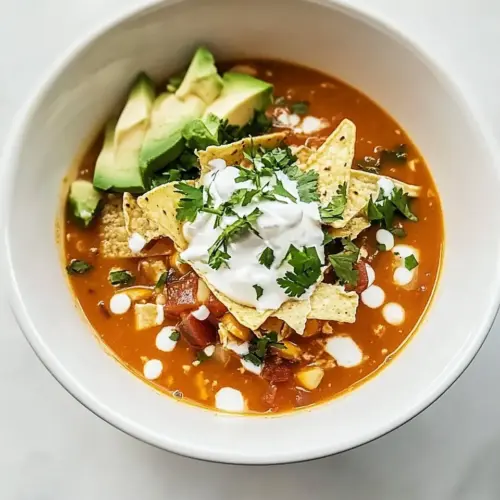
Homemade Tortilla Soup
Homemade Tortilla Soup is a creamy, flavorful bowl with slow caramelized onions and garlic, bright canned tomatoes, and smoky guajillo chile. This easy weeknight dinner yields a silky broth finished with crunchy fried tortillas and creamy avocado, perfect for cozy family meals or casual gatherings, and worth making for its comforting, layered flavors.
Equipment
- Large Pot
- Blender or immersion blender
Ingredients
- 2 tablespoons olive oil Heat gently in the pan to create a fragrant base for the soup, contributing healthy fats and a subtle fruity flavor. Use as the cooking medium for onions and garlic to prevent sticking and promote browning. Adjust quantity slightly for desired richness.
- 2 peeled and small diced yellow onions Sweat slowly until translucent to build a sweet aromatic foundation and add body to the soup. Dice finely to release natural sugars and ensure even cooking and texture. Cook just until softened to avoid bitterness and preserve mild onion flavor.
- 4 finely minced cloves of garlic Mince finely and sauté briefly to release pungent, savory aromatics that deepen the soup's flavor. Add toward the beginning of cooking so its oils infuse the base without burning. Balance quantity to complement other spices and ingredients.
- 1 dried guajillo chile Toast briefly and rehydrate to provide a smoky, mildly fruity chili note that enriches the broth. Remove seeds if desired for less heat, then blend or chop into the tomato base for color and complexity. Taste and adjust for preferred spice level.
- 2 28-ounce cans whole peeled tomatoes Crush or blend with juices to form a bright, tangy tomato backbone that balances richness and acidity in the soup. Use whole peeled tomatoes for a robust texture and to create a silky purée when cooked down. Simmer to concentrate flavors and meld with chiles and stock.
- 2 cups chicken stock Simmer with the tomato and chile mixture to create a flavorful, savory liquid that defines the soup's consistency. Choose a low-sodium chicken stock to control salt levels and enhance umami without overpowering other ingredients. Adjust amount to reach desired thickness.
- sea salt and pepper to taste Season gradually to taste during cooking to enhance and balance all flavors while avoiding over-salting. Use freshly ground pepper for aromatic sharpness and add at different stages to layer seasoning. Taste before serving and correct as needed.
- 1 peeled, seeded, and large diced avocado Dice and add last to provide creamy, cool contrast and buttery texture that brightens each spoonful. Peel and seed to ensure a smooth, tender bite and prevent bitterness from skins. Serve atop the soup to retain fresh avocado color.
- Mexican crema Drizzle sparingly to introduce a tangy, silky richness that complements spicy and acidic notes. Use as a garnish to add creaminess and mellow heat without diluting the broth's flavor. Adjust amount to maintain balance between richness and brightness.
- cilantro leaves Garnish with leaves to inject fresh herbaceous brightness and a citrusy, slightly peppery finish. Use whole or chopped cilantro to add aromatic lift and visual contrast. Scatter just before serving to preserve fragrance.
- cooked shredded chicken Fold in to add protein, savory depth, and satisfying texture that turns the broth into a substantial meal. Use pre-cooked shredded chicken warmed through so it absorbs flavors without overcooking. Adjust amount to achieve desired heartiness.
- fried tortillas Crisp and toss or layer on top to provide crunchy texture and authentic tortilla-chip flavor that contrasts the creamy soup. Fry or bake strips until golden and drain excess oil to avoid greasiness. Add just before serving to maintain crispness.
Instructions
- In a large pot over low heat add in the olive oil and caramelize the onions and garlic well, about 45 minutes.: The aroma will evolve from sharp to sweet, filling the kitchen with a toasty, almost nutty scent as the onions and garlic soften and take on a pale gold color, and you should notice a gentle, sustaining sizzle rather than frantic frying. This slow approach is what converts sugars in the onions into deep, savory notes that form the soup's emotional center, so be patient and stir occasionally to maintain even browning. If the pot gets too hot, lower the flame immediately to avoid bitter char, and if the mixture starts sticking, add a splash more olive oil or a few tablespoons of water to deglaze and pull those caramelized bits back into the mix. Avoid rushing the step by increasing heat, because fast browning leads to burnt flavors, which are hard to mask later.
- Next, add in the tomatoes, chile, and chicken stock and simmer over low heat for about 25-30 minutes.: As the canned whole peeled tomatoes hit the pot, you will see the mixture relax into a gentle simmer, releasing bright, tangy steam tempered by the warm guajillo chile . The sound becomes a soft, steady bubbling and tiny pops as the tomatoes break down, and the color deepens to a warm, inviting red. This slow simmer melds the flavors, allowing the chile to infuse smoky notes while the chicken stock brings savory depth, so keep the heat low to maintain clarity in the broth. One common mistake is simmering too vigorously, which can separate the texture and cause the palate to taste flat; if you see violent bubbling, reduce to the lowest setting and cover partially to keep a steady, gentle steam.
- Remove the chile and puree the soup until completely smooth. Return the soup back to the pot along with the chile and season with salt and pepper.: After removing the dried guajillo chile , you will transfer the pot in batches to a blender or use an immersion blender to puree until velvety smooth, watching the color become uniformly glossy. The sound changes to a steady whirl and the soup's texture becomes satiny, coating the back of a spoon. Pureeing removes fibrous bits and brightens mouthfeel, which is important if you want a refined, creamy bowl rather than a chunky stew. Take care when blending hot liquids by venting the lid and holding a towel over it to prevent splatters, and avoid overfilling your blender. A frequent blunder is blending too long with a tightly sealed lid, which can cause pressure build up; so always proceed with caution and cool slightly if needed.
- Serve the soup with assorted optional toppings.: Once the texture is silked, bringing the soup back to the pot allows you to reintroduce the guajillo chile for visual and flavor continuity, and then you will adjust with sea salt and pepper . On reheating, the aromas will bloom again, and this is the moment to taste for balance, adding a pinch of salt at a time until the acidity and sweetness sit in harmony. The goal is a bright but grounded bowl, so season incrementally and let the soup warm through gently to integrate the seasoning. An easy misstep is to over salt early; wait until the final warm-through to get an accurate sense of seasoning, and if it becomes too salty, a splash of water or extra stock can help return balance.
- Serve the soup with assorted optional toppings: When plating, the sensory contrast is everything: a hot, smooth bowl of the soup invites cold, creamy diced avocado and a spoonful of Mexican crema to create a cooling moment, while crisp fried tortillas add a satisfying crunch that gradually soaks and softens. Garnish with fresh cilantro leaves for a bright herbal lift, and if using cooked shredded chicken , fold it in just before serving to keep the meat tender and not dried out. A typical error is adding crunchy toppings too early, which makes them soggy; bring them to the table separately so each diner can build their perfect bowl and enjoy the intended textural interplay.
Notes
- Make it heartier Add cooked shredded chicken directly to bowls for extra protein and a more filling meal while preserving the soup's smooth texture.
- Keep toppings crisp Fry tortilla strips just before serving and serve them in a separate bowl so they retain crunch when guests build their bowls.
- Swap tomatoes seasonally In summer, replace the canned whole peeled tomatoes with ripe fresh tomatoes that have been peeled and roasted to maintain depth and brightness.
- Control the heat Remove the seeds from the dried guajillo chile for milder spice, or use two chiles if you want a more pronounced smoky warmth.
- Advance prep Make the soup up to two days ahead, refrigerating it separately from garnishes so reheating is fast and the toppings stay fresh.