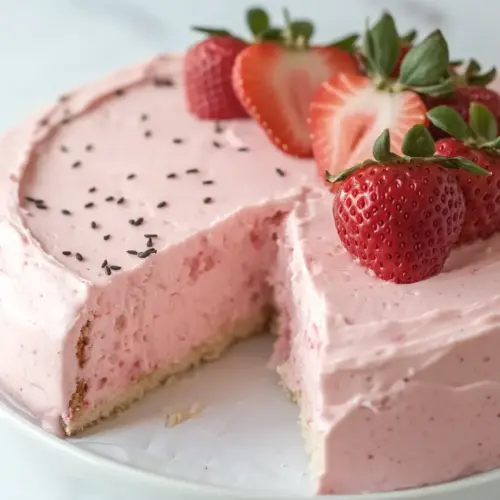
Homemade Strawberry Cake From Scratch
Homemade Strawberry Cake From Scratch is a tender, fruity layer cake with creamy cream cheese frosting and bright strawberry notes. The crumb is soft yet sturdy thanks to cake flour and the butter plus oil blend, while fresh pureed strawberries keep the flavor authentic. Perfect for spring gatherings and celebrations, this easy to follow recipe yields beautiful slices guests will request again.
Equipment
- Stand mixer
- 9-inch Round Cake Pans
- Blender
- Offset Spatula
- Cooling rack
Ingredients
- 3 cups cake flour, sifted (or 2 3/4 cups all-purpose flour + 1/4 cup cornstarch) Sifted to ensure a light, airy crumb and to remove lumps; provides the primary structure and bulk for the cake. Use cake flour for tenderness, or the all-purpose plus cornstarch substitute to mimic lower protein levels. Measure carefully to maintain correct dry-to-wet ratio and avoid a dense result.
- 2 teaspoons baking powder Leavening agent that reacts with wet ingredients to create lift and a tender texture in the cake. Distributes uniformly when sifted with the flour, helping the layers rise evenly. Use fresh powder to ensure reliable rise and avoid flat cakes.
- 1/2 teaspoon baking soda Chemical leavener that activates with acidic components to produce additional rise and fine crumb. Balances the baking powder for precise texture and helps prevent overly dense cakes. Use the specified amount to maintain correct pH and crumb structure.
- 1 teaspoon salt Balances and enhances flavor while strengthening gluten formation slightly to support the cake structure. Works with leavening to improve overall taste and mouthfeel when used in correct proportion. Adds a subtle savory note that offsets sweetness.
- 1 3/4 cups granulated sugar + 2 tablespoons Primary sweetener that provides bulk, tenderness, and browning; split amounts often mean some is creamed with fats and some added later for texture control. Contributes to moisture retention and caramelization during baking. Adjust carefully if substituting to preserve balance.
- 1/2 cup unsalted butter, softened Adds richness, flavor, and moisture while contributing to the cake's tender crumb when creamed with sugar. Provides some structure through milk fat and helps trap air during creaming for lift. Use softened butter for smooth incorporation and even texture.
- 1/2 cup vegetable oil Provides extra moisture and a tender, moist crumb while slightly reducing the cake's density. Helps carry flavor and contributes to a softer mouthfeel than using butter alone. Use a neutral oil to avoid altering the strawberry flavor.
- 4 large eggs Adds structure, moisture, and emulsification; eggs help leaven, bind, and enrich the cake for a stable, tender crumb. Beat or add as directed to ensure proper incorporation and volume. Use large eggs at room temperature for best mixing and rise.
- 1 1/2 teaspoons vanilla extract Adds warm, rounded vanilla flavor that complements strawberries and enhances the overall aroma of the cake. Works with other extracts to build a complex flavor profile without overpowering the fruit. Use quality extract for the best results.
- 2 1/2 teaspoons strawberry extract Provides concentrated strawberry flavor to intensify the fruit profile beyond fresh puree, ensuring a pronounced strawberry note in both batter and frosting. Small amount goes a long way, so add carefully to avoid artificial or overpowering taste. Use pure extract for natural flavor.
- 3/4 cup fresh pureed strawberries (about 1 1/2 cups whole ripe berries) or sliced frozen strawberries in syrup Adds fresh strawberry flavor, moisture, and natural color while contributing to the batter's overall fruit content; pureed berries integrate for consistent flavor distribution. Can be substituted with thawed frozen berries in syrup as noted, but adjust sugar if syrup is sweetened. Strain if necessary to remove seeds for a smoother crumb.
- 3/4 cup full fat buttermilk Contributes acidity, tenderness, and a slight tang that balances sweetness while reacting with baking soda for lift; adds moisture and richness. Full fat buttermilk improves crumb and flavor compared with lower-fat liquids. Use at room temperature to avoid curdling when combined with fats.
- 4 -8 drops red food coloring, optional (I used 4 drops) Optional color enhancer that deepens the cake's pink hue without affecting flavor when used sparingly. Adds visual appeal to emphasize the strawberry theme but can be omitted for a more natural appearance. Use gel or liquid drops as specified to control intensity.
- 8 ounces cream cheese, softened Provides creamy tang and stability for the frosting while lending richness and smooth texture when softened and beaten. Contributes to the frosting's body and pairs well with strawberry jam for a balanced sweet-tart icing. Keep cream cheese chilled until slightly softened to avoid runny frosting.
- 1/2 cup unsalted butter, softened Adds buttery flavor, richness, and smoothness to the frosting when creamed with cream cheese, improving spreadability and structure. Helps stabilize the frosting and enhance mouthfeel. Use softened butter for uniform emulsification with the cream cheese.
- 1/4 cup strawberry jam Adds concentrated strawberry flavor and sweetness to the frosting while contributing gloss and a fruity finish; helps thin the frosting slightly for better spreading. Choose smooth jam to avoid seeds or chunks unless texture is desired. Adjust amount to reach preferred fruit intensity.
- 1 teaspoon vanilla extract Adds warm, familiar vanilla notes that enhance and round out the frosting's flavor profile when combined with cream cheese and jam. Works as a complementary flavor to the strawberry elements, deepening complexity. Use pure vanilla extract for best aromatic results.
- 4 -6 cups powdered sugar Provides bulk sweetness and structure to the frosting, allowing it to hold peaks and pipe cleanly; amount flexible to reach desired thickness and sweetness. Sift powdered sugar to avoid lumps and add gradually to control consistency. Use as many cups as needed for spreading versus piping.
- 1 pinch of salt Tiny amount of salt that brightens and balances sweetness in both batter and frosting while enhancing overall flavor perception. Helps round out the profile and prevents cloying sweetness. Dissolve or cream in well for even distribution.
- 3 -5 drops red food coloring, optional Optional color boost to intensify the frosting's pink hue without altering flavor when only a few drops are used. Enhances presentation to match the cake's strawberry theme, useful for vivid piping or decorative finishes. Use sparingly to avoid staining or overly artificial color.
Instructions
- Preheat the oven to 350 degrees F. Spray or grease two 9-inch round cake pans. Cut out 9-inch parchment paper circles, and press them down in the bottom of each pan. (Trace the pan for perfect circles.): As the oven warms you will notice a neutral dry heat that promises even baking, and greasing the pans prevents sticking, which keeps the cake surface intact when you flip it out. When pressing the parchment, run your fingers along the edge so it lays flat, which helps batter distribute evenly. A common mistake is to skip the parchment, which can cause the bottoms to tear when removed, so take the extra moment to line them. The gentle creak of the oven door and the soft whir of the heating elements are cues that the oven is ready. If your oven runs hot, an oven thermometer is a wise check. Ensure the pans sit level on the rack for uniform rise.
- For the Strawberry Layer Cake: In the bowl on an electric stand mixer, cream the butter and 1 3/4 cups sugar together for 1 minute. Then add in the oil and beat until the mixture is very smooth. (Cream: Beat on high to break down the sugar crystals.): In the bowl on an electric stand mixer, cream the butter and 1 3/4 cups sugar together for 1 minute. Then add in the oil and beat until the mixture is very smooth. : You will hear a steady rhythmic beat and see the sugar start to disappear into the fats, creating a pale, slightly aerated mixture; this is where air is incorporated for lift. The texture should turn silky and glossy when the oil integrates, signaling proper emulsification. Scraping the bowl now and then prevents pockets of unblended fat and sugar. If you under-cream, the cake may have uneven texture, and overbeating after adding flour can make the crumb firmer, so stop once smooth.
- In a separate bowl, mix the cake flour, baking powder, baking soda, and salt.: Whisking these dry ingredients distributes the leaveners so each spoonful performs evenly, which affects how the cake rises. The flour should look uniform and light; any clumps could cause uneven texture. I often sift if the flour seems compacted, because sifting yields a lighter batter. A common pitfall is dumping flour straight into wet batter, which can cause pockets of dry flour; pre mixing prevents that.
- Place the ripened strawberries in the blender with 2 tablespoons sugar. Puree until smooth. (Or use an equal amount of thawed sliced strawberries in syrup. Drain and puree. No need to add sugar.): You will smell bright fruity aromas as the blades sheer the berries, and the puree will shine with juice and tiny flecks of seed. The added sugar boosts natural sweetness and helps the puree blend smoothly into the batter. If using frozen berries, thaw and drain well to avoid excess liquid. Too much juice can thin the batter, so drain or reduce slightly if your puree seems watery.
- Once the butter and sugar are well creamed. Scrape the mixing bowl with a rubber spatula. Then turn the mixer on low and beat in the eggs, vanilla extract, strawberry extract, strawberry puree, and buttermilk.: After adding wet ingredients you'll observe the batter relax and flatten out, with ribbons forming as the eggs incorporate, lending structure and moisture. The scent will lift into a warmer, more complex aroma with vanilla and strawberry combined. Scrape thoroughly so pockets of butter do not remain stuck to the bowl, which would create uneven pockets in the cake. A mistake here is adding eggs straight from the fridge; room temperature eggs incorporate more smoothly.
- Scrape the bowl again. Turn the mixer back on low and slowly add the flour mixture until well combined. Beat in the food coloring if desired, then turn off the mixer.: As you add the dry mix, look for a batter that comes together without streaks of flour; it should be smooth and slightly thick, yet pourable. Adding the flour too quickly or mixing on high can develop gluten, resulting in a tougher crumb. The strawbery tones deepen visually when you fold in the puree and food coloring. Stop mixing as soon as combined to maintain a tender texture.
- Pour the batter evenly into the two prepared pans. Bake on the middle rack, undisturbed for 30 minutes. If the center of the cakes are puffed up, check the cake by inserting a toothpick into the center. If it comes out clean, take them out of the oven. If the toothpick has batter on it, bake another 5-10 minutes and recheck.: Pouring batter evenly ensures both layers bake at the same rate, which makes assembly easier. The oven produces a consistent dry heat that browns edges while the center sets. Resist opening the oven early or jostling the pans, as sudden movements can make the cakes sink. The surface should look set and slightly domed; if it is still glossy or wobbly, it needs more time.
- Allow the cakes to cool 10 minutes in the pans. Then carefully flip them out on a cooling rack. Remove the parchment paper and cool completely.: When you probe with a toothpick you will get a tactile sense of readiness, and visually, a clean toothpick indicates completion. If batter clings, the cake needs time; the crumb firms as residual heat finishes the internal bake once removed. A common error is removing too soon and ending with underbaked centers, so err on the side of a few extra minutes if unsure.
- For the Frosting: Once the cakes are room temperature, place the cream cheese and butter in a clean stand mixer bowl. Beat until fluffy. Then scrape the bowl and turn on low. Mix in the strawberry jam, vanilla extract, and salt. Then add the powdered sugar one cup at a time, beating to incorporate. After adding 4 cups of powdered sugar, turn the mixer up to beat out any clumps. Check the consistency of the frosting. If it is too loose, add another 1-2 cups of powdered sugar and beat until smooth. Add food coloring if desired.: Ten minutes in the pan allows the crumb to set so the cake holds its shape when you flip it. When you invert the pan you should feel a gentle release; if the cake resists, run a thin knife around the edge to loosen it. The cake will continue to give off warm steam as it cools to room temperature, and that steam helps steady the crumb. Cooling completely is crucial before frosting, because warm layers will melt the frosting and make it slide.
- To Assemble: Move one cake to a cake stand or platter. Scoop about 2 cups frosting onto the cake. Use a large flat spatula to spread the frosting out evenly.: Once the cakes are room temperature, place the cream cheese and butter in a clean stand mixer bowl. Beat until fluffy. : As you beat, the texture becomes airy and glossy, and the tang of the cream cheese balances the sweet butter . A clean bowl prevents stray crumbs and ensures a pure frosting color. If the dairy is too cold, it will not whip smoothly, leaving lumps, so always start with softened ingredients.
- Set the second cake on top of the frosting, being careful to center the cake. Gently press the cake a little to level the top. Then scoop all remaining frosting on top of the cake. Use the spatula to work the frosting over the top and down the sides.: Mixing in jam and vanilla releases an inviting strawberry perfume, and adding sugar gradually prevents a cloud of powdered sugar everywhere. The frosting texture will transform from glossy and slightly loose to thicker and pipeable as you add sugar. If you add all the sugar at once you can end up with a gritty texture, so take your time. Taste as you go to keep sweetness balanced with tang.
- Turn the cake stand to smooth out the sides with the flat edge of the spatula. Once you are satisfied with the sides, use the spatula to make swooping marks on the top of the cake. Use a wet paper towel to clean up the cake stand. Top with whole fresh strawberries, or sliced strawberries if serving on the same day.: When you increase speed, the frosting becomes silkier and you can hear a softer, more vigorous beat as clumps break down. The right consistency should hold soft peaks and spread without sliding. If the frosting becomes too stiff, a teaspoon of milk can soften it, but be cautious. Overwhipping can cause the frosting to become too aerated and unstable.
- Cover and keep the cake at room temperature for up to 4 days, or refrigerate for up to a week. When ready to serve, make sure the cake is at room temperature… All classic layer cakes taste best at room temperature.: Move one cake to a cake stand or platter. Scoop about 2 cups frosting onto the cake. Use a large flat spatula to spread the frosting out evenly. : The first layer of frosting should feel cool and smooth under the spatula, offering a tactile resistance as you press and smooth. Spreading evenly prevents lumpy areas that make the top layer look uneven. If you press too hard you can compress the crumb, so use light, steady pressure. A bench scraper or offset spatula helps achieve a neat finish.
- Set the second cake on top of the frosting, being careful to center the cake. Gently press the cake a little to level the top. Then scoop all remaining frosting on top of the cake.: When you place the second layer you'll hear a faint soft thud as the cakes meet, and centering keeps the cake balanced when you slice. Pressing lightly helps the layer adhere without squeezing out the filling. If layers are uneven, a quick trim can help, but trimming warm or fresh cakes can cause crumbs to smear, so chill briefly if needed.
- Use the spatula to work the frosting over the top and down the sides.: As the frosting covers the cake the surface becomes cohesive, and the sides should sweep down smoothly. The act of smoothing warms the frosting slightly with your hands, making it more pliable. Avoid long strokes that drag crumbs into the final layer; a thin crumb coat first helps prevent this.
- Turn the cake stand to smooth out the sides with the flat edge of the spatula. Once you are satisfied with the sides, use the spatula to make swooping marks on the top of the cake.: The rotating stand makes smoothing efficient and helps you see the cake from all angles, revealing any thin spots. The swooping motions on top create a handmade look that catches light and shadow, making the cake visually appealing. Clean the stand between moves to avoid frosting smears that distract from the finish.
- Top with whole fresh strawberries, or sliced strawberries if serving on the same day.: The fresh fruit adds an unmistakable final scent and a bright visual cue of ripeness. Whole berries add height and drama, while slices make eating with each forkful effortless. If you plan to serve later, store the fresh berries separately and place them on the cake just before serving to avoid moisture seeping into the frosting.
- Cover and keep the cake at room temperature for up to 4 days, or refrigerate for up to a week.: Storing at room temperature preserves a soft crumb, while refrigeration extends life but can slightly firm the frosting; return to room temperature before serving so flavors bloom. Covering prevents drying and limits the absorption of other fridge odors. A common oversight is leaving the cake uncovered, which causes a crusty outer layer and diminished texture.
Notes
- Room temperature ingredients are essential for proper emulsification, which ensures a smooth batter and even rise.
- Sift flour and cornstarch when substituting to mimic cake flour, this keeps the crumb tender and prevents dense spots.
- Evenly divide batter by weighing pans or using a measuring cup, equal layers bake more uniformly and stack neatly.
- Use an oven thermometer to confirm true oven temperature, many home ovens run hotter or cooler than the dial indicates.
- Crumb coat first with a thin layer of frosting, this traps loose crumbs and lets you achieve a clean final finish.
- Chill briefly before final frosting if your frosting feels too soft; 20 to 30 minutes helps it set and smooth easily.