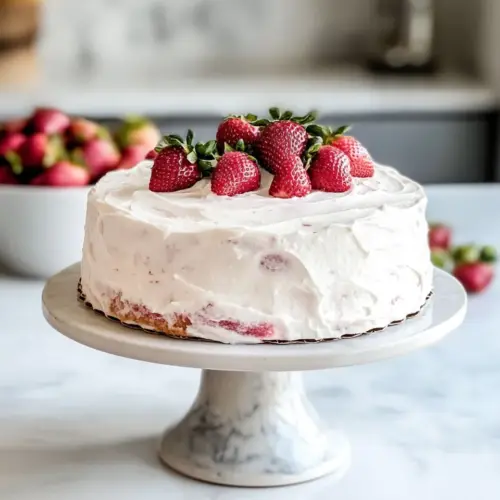
Homemade Strawberry Cake
Homemade Strawberry Cake is a tender, berry forward layer cake with creamy strawberry cream cheese frosting. Bright strawberries and a soft crumb make this an easy celebration dessert for spring gatherings or easy weeknight treats. The cake is moist, lightly sweet, and visually stunning, making it a persuasive reason to bake now.
Equipment
- Oven
- 9-inch Round Cake Pans
- Stand mixer
- Food processor or blender
- Mixing Bowls
- Spatula
- Cooling rack
Ingredients
- 2 cups whole strawberries divided (fresh, or frozen and thawed), plus additional for garnish Puree or chop and divide to fold into batter and reserve some for garnish; provides fresh strawberry flavor and moisture to both cake and frosting.
- 3 cups all-purpose flour Sift or whisk before measuring to ensure even distribution and to form the cake's structure by providing gluten when combined with liquid and fat.
- 2 teaspoons baking powder Whisk into dry ingredients to leaven the cake, creating lift and a tender crumb by releasing carbon dioxide during baking.
- 1/2 teaspoon kosher salt Dissolve into the dry mix to balance sweetness and enhance overall flavor while slightly strengthening gluten development for structure.
- 1/2 cup whole milk at room temperature Warm to room temperature and add to batter to hydrate dry ingredients and contribute to tenderness and moistness without chilling the batter.
- 1 tablespoon pure vanilla extract Measure and stir into batter to amplify aromatic flavor, rounding the sweetness and enhancing other flavor notes in the cake.
- 1 cup unsalted butter at room temperature (2 sticks) Cream at room temperature with sugar to incorporate air, provide richness and tenderness, and contribute to texture and flavor in the cake.
- 2 cups granulated sugar Beat with butter and eggs to add bulk, sweetness, and aid in aeration for a light, tender crumb and balanced sweetness.
- 4 large egg whites at room temperature Whip to incorporate air and structure without the yolk's fat; contributes lift and a lighter texture when folded into batter.
- 2 large whole eggs at room temperature Beat with sugar and fats to add richness, emulsify, and help build structure, moisture, and flavor in the cake batter.
- 1/4 cup unsalted butter at room temperature Soften and blend into frosting or batter to add extra richness, silky mouthfeel, and a balanced butter flavor where needed.
- 6 ounces reduced-fat cream cheese at room temperature Soften and beat into frosting for tang, creaminess, and stability; offsets sweetness and adds a subtle acidic lift.
- 4 cups powdered sugar plus additional if you prefer a sweeter or stiffer frosting Sift and gradually incorporate into frosting to achieve desired sweetness and thickness; stabilizes and provides a smooth, pipeable texture.
- 2 tablespoons strawberry puree reserved from cake recipe Reserve and concentrate flavor into a small puree to swirl into frosting; provides intense natural strawberry taste and color.
- 1 pinch kosher salt Pinch and add to balancing components to enhance flavors and reduce overly sweet perception while highlighting acidity.
- 1/2 teaspoon pure vanilla extract Measure and stir into frosting to add aromatic depth and enhance the strawberry notes while rounding the overall sweetness.
Instructions
- Preheat the oven to 350 degrees F. Line the bottom of 2 9-inch round cake pans with parchment paper, then lightly coat with nonstick spray. Set aside.: The kitchen fills with a dry, warm note as the oven ramps to 350 degrees F , and prepping the pans now avoids last minute scrambling. You should feel the slight warmth from the oven as it approaches temperature, and the parchment will ensure clean release, while the nonstick spray protects the sides. This step matters because even heat and properly prepared pans give even rise and smooth layer surfaces. A common mistake is skipping the parchment which can make the cake stick and tear when you remove it.
- Place the strawberries in a food processor or blender and pulse until pureed. Reserve 2 tablespoons of the puree for the frosting and set aside. Then measure out an additional 2/3 cup for the cake. If you are a little short of 2/3 cup, blend in a few more strawberries as needed.: You will notice the fruit turn into a fragrant, ruby liquid as you blend, releasing a bright aroma that signals freshness. Reserve exactly 2 tablespoons for the frosting so the cake and icing remain balanced, then measure the remaining 2/3 cup for the batter. The puree contributes both moisture and a natural pink hue. Avoid overblending to the point of heating the fruit, and strain only if seeds bother you. A common slip is mismeasuring the puree which changes the batter consistency.
- In a medium bowl, whisk together the flour, baking powder, and salt. Set aside.: As you whisk the dry ingredients, they release a faint, earthy scent and become uniformly light. This uniformity is vital so the baking powder disperses evenly and the rise is consistent. Whisking also helps break up any lumps. Do not skip this step, or you risk pockets of leavening that cause uneven texture.
- In a small bowl, whisk together the milk, vanilla, and 2/3 cup of strawberry puree. Set aside.: The mixture will look pale pink and smell of fresh strawberries and vanilla . Combining liquids separately ensures an even distribution when they join the batter, preventing streaks or sudden clumps. Room temperature milk helps the batter emulsify smoothly. A common error is using cold milk, which can cause the butter to seize and make the batter lumpy.
- In the bowl of a stand mixer fitted with the paddle attachment (or a large mixing bowl), cream the butter on medium-high speed until it is light and fluffy. Slowly add the granulated sugar and continue to beat until fluffy and well combined. Stop the mixer and add the egg whites. Beat on medium, just until incorporated. Add the whole eggs and mix again, just until combined.: You will hear a soft whir as air folds into softened butter , and the mixture will lighten in color and texture. Adding granulated sugar gradually helps create stable air pockets that the leavening will expand. When you fold in the whipped egg whites and eggs , the batter takes on silkiness and lifts slightly. The technique matters because overbeating after adding the eggs can collapse the air you just worked in, leading to denser cake. Avoid rushing through creaming or adding eggs too quickly.
- With the mixer on low, slowly add half the flour mixture.: As the dry mix disappears into the batter, you will hear a soft change in the mixer tone, and the texture will thicken noticeably. Adding in two stages prevents clumping and reduces gluten development that would toughen the cake. Keep speed low to preserve the air we created. A misstep is to add the flour all at once, which can overwork the batter and yield a heavier crumb.
- Mix just until the flour disappears.: The batter should look streak free and slightly glossy, with a few small air pockets visible on the surface. Stopping at this point preserves tenderness. Overmixing develops gluten and robs the cake of its delicate texture, so stop while small, wet streaks vanish.
- Add in all of the strawberry mixture and mix just until combined.: When the pink liquid joins the batter it will take on a rosy tint and release a sweet berry fragrance that fills the kitchen. This addition brings moisture and concentrated flavor, and a quick, gentle mix prevents overworking the batter. If you mix vigorously, the batter can deflate and the crumb will be denser than intended.
- Slowly add the remaining flour mixture, scraping down the sides of the bowl with a spatula as needed. Stop mixing as soon as the flour disappears. If you have a bit of flour stuck to the bottom or sides of the bowl, finish stirring it in by hand.: As you finish adding dry ingredients, use a spatula to bring any clingy flour into the batter. The final batter should be smooth, with a uniform color and moderate viscosity. Hand finishing reduces the risk of overmixing by the mixer. The trap here is leaving dry streaks that bake into pockets in the cake, or overmixing until the batter becomes glossy and elastic.
- Divide the batter between the two prepared pans and smooth the tops (if you'd like to be exact, use a food scale; otherwise, eyeball it as best as you can). Bake the strawberry cake layers until a toothpick inserted in the center of the cake comes out clean and the top springs back lightly when touched, about 30 to 35 minutes.: As the pans go into the oven you will smell the sugar caramelize gently and the kitchen will bloom with strawberry aroma. The tops should become lightly golden and spring back when pressed. Insert a toothpick into the center, and if it comes out clean the layers are ready. Baking too briefly leaves a gummy center, while overbaking dries the crumb. Rotate pans if your oven has hot spots, and check early to avoid overbake.
- Place the pans on a cooling rack and let the layers cool in the pan completely. Do not be tempted to frost the cake before it is cool, or the frosting will turn into a big melty mess.: Cooling in the pan allows the crumb to set gently, and you will feel the residual warmth fade over 30 to 60 minutes. If you rush to frost a warm layer, the frosting will slide and the structure will suffer. Patience here yields neat layers that accept frosting cleanly. A frequent mistake is frosting too soon, which leads to melting and a sloppy finish.
- While the cake cools, prepare the frosting. In the bowl of a stand mixer fitted with the paddle attachment or a large mixing bowl, beat the butter on medium speed until smooth and fluffy. Beat in the cream cheese, stopping as soon as the two are fully combined. Reduce the mixer speed to low, then gradually add the powdered sugar. Once it all has been added, increase the mixer speed to medium and continue beating until the frosting is smooth. Don’t overbeat it—once it looks nice and creamy and evenly blended, it’s time to stop.: The frosting should turn glossy and spreadable, with a velvety mouthfeel. When cream cheese and butter marry, you get a tangy richness that complements the fruit. Gradual addition of powdered sugar prevents dust clouds and allows you to control stiffness. Overbeating can introduce air and make the frosting too fluffy or unstable, so stop when it looks smooth and cohesive.
- Beat in the reserved 2 tablespoons of strawberry puree, salt, and vanilla until evenly combined. If you'd like the frosting stiffer or sweeter, gradually beat in additional powdered sugar until your desired stiffness/sweetness is reached.: The reserved strawberry puree adds a fresh berry note and gentle color. The frosting should smell fruity and taste balanced, with a hint of tang from the cream cheese and a trace of salt to amplify flavors. Adding more powdered sugar will thicken the frosting, but too much masks the berry and makes the texture gritty.
- To decorate, place one cake layer on a serving plate, top side down and flat side up. Tuck strips of wax paper under the edges to protect the plate. Spread the top with about 1/2 cup frosting.: Placing the first layer flat side up gives a smooth canvas for filling, and the wax paper catches stray frosting for clean edges. The first spread should be even and tactile, with the frosting gliding smoothly. If the layer is slightly domed, trim gently for even stacking. A common error is using too much filling and creating an unstable stack.
- Top with the second cake layer, either flat side or round side up, depending upon the look you are going for (flat gives a more formal, professional presentation; round is more homey and casual). Spread the remaining frosting over the top and sides of the cake.: When the second layer is set, take a step back and decide the aesthetic you want, then apply the rest of the frosting in broad strokes. The frosting will smooth under your spatula with a soft pull and slight drag sound. Consistent pressure yields even coverage. Beware of heavy hands that compress the crumb or create ridges that are hard to smooth.
- Smooth the frosting around the sides (don't stress over it being perfect. It's going to be DELISH!). Garnish with fresh berries as desired. Remove the strips of paper and refrigerate until ready to serve. Prior to serving, let the cake stand at room temperature for at least 15 minutes.: The final smoothing should create soft swirls or a polished finish depending on your tools. Fresh strawberries on top add shine and a last bright burst of flavor. Refrigeration firms the frosting and helps set slices, while a brief rest at room temperature relaxes the texture for eating. Avoid leaving the cake out too long in warm conditions, as the frosting can soften excessively.
Notes
- Measure flour correctly by spooning it into the cup and leveling, to prevent a dense crumb.
- Use room temperature dairy and eggs so ingredients emulsify smoothly and the batter is uniform.
- Reserve puree precisely so the frosting is flavored without thinning, keeping the texture stable.
- Do not frost warm cake, always cool completely to avoid melting and sliding of the frosting.
- Adjust powdered sugar gradually when making frosting to control sweetness and stiffness without overshooting.
- Store properly by refrigerating the cake with cream cheese frosting, and let it come to room temperature before serving for ideal texture.