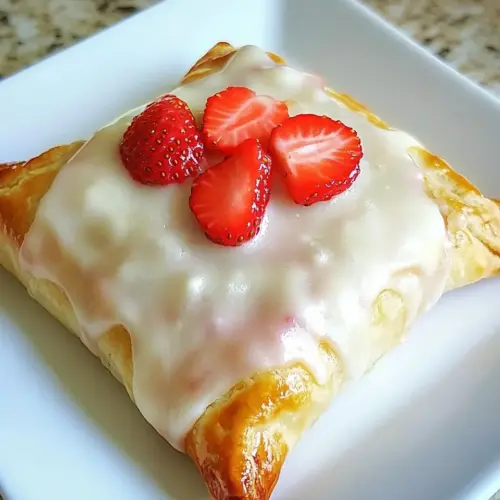
Homemade Strawberries and Cream Cheese Toaster Strudels
Homemade Strawberries and Cream Cheese Toaster Strudels deliver a creamy, crispy, and easy handheld pastry filled with macerated strawberries and tangy cream cheese. Flaky puff pastry dough puffs to golden perfection, while a simple glaze finishes each warm strudel. Perfect for weekend brunches and casual gatherings, this recipe is a quick way to bake a bakery style treat at home.
Equipment
- Baking Sheet
- Parchment Paper
- Mixing Bowl
- Pastry Brush
- Sharp Knife
Ingredients
- 1 box puff pastry dough, frozen in sheet form Provide a flaky, buttery base for the strudels that rises and creates crisp layers when baked; thaw according to package directions and keep chilled until assembled to maintain texture. Handle gently to avoid overworking the dough and use flour-dusted surface to roll or cut as needed. Can be cut into rectangles to encase filling and brushed with egg wash for golden color.
- 2 cups strawberries, chopped Offer a fresh, sweet-tart filling when chopped and mixed with sugar; macerate briefly to release juices and concentrate flavor. Distribute evenly on pastry rectangles to ensure balanced taste and texture in each strudel piece. Reserve any excess for spooning over finished pastries if desired.
- 1/4 cup white granulated sugar Sweeten and help draw out juices from the strawberries when combined; adjust amount slightly to taste depending on berry sweetness. Dissolve into the chopped fruit for a glossy, well-balanced filling and combine thoroughly with softened cream cheese if making a blended filling. Can also be sprinkled lightly on top before baking for added caramelization.
- 4 oz cream cheese, softened; divided Provide creamy richness and tang to the filling when softened; divide as directed to create layers of creaminess and to enable easier spreading. Beat until smooth for a velvety texture and mix with a portion of the strawberries and sugar for a cohesive filling. Reserve some for dolloping or layering if recipe specifies divided use.
- 1 egg Bind and glaze components when beaten into an egg wash; whisk together with water to create a shiny, golden finish on the baked pastry. Use sparingly to brush edges for sealing and brush surfaces prior to baking for appealing color and sheen. Beat thoroughly to blend white and yolk for an even wash.
- 1 tbsp water Thin and emulsify the egg wash when combined with beaten egg; measure precisely to avoid making the wash too watery. Stir into the egg to achieve a smooth, spreadable consistency that helps pastry brown evenly. Use immediately after mixing for best results.
- 1/2 cup powdered sugar Create a sweet, smooth icing when sifted and mixed with milk or cream; whisk until lump-free for a glossy finish. Drizzle over cooled strudels to add sweetness and visual appeal and adjust thickness by varying liquid amount. Can be flavored or tinted if desired while maintaining a pourable consistency.
- 1 tsp milk, or heavy cream Thin the powdered sugar to the desired consistency and add a touch of richness depending on choice; milk yields a lighter finish while heavy cream produces a silkier glaze. Stir in small increments until the glaze reaches a smooth, pourable texture and apply to cooled pastries to prevent melting into the filling. Use sparingly to achieve desired sweetness and shine.
Instructions
- Remove puff pastry sheets from package and lay on counter to thaw. In the meanwhile chop strawberries into small pieces and place in a bowl. Toss with granulated sugar and let sit for 30 minutes.: The surface of the dough should feel cool and slightly firm to the touch but pliable enough to unfold, with a faint floury sheen. When the pastry is properly thawed, you will hear a whisper of layers as you gently unfold a sheet. This step matters because working with fully frozen pastry leads to tearing, while overthawed pastry becomes sticky and loses its lift. Common mistake to avoid, do not let the sheets sit too long at room temperature, especially on a warm day, because they will become soft and difficult to handle; if they get too warm, pop them back in the refrigerator for ten to fifteen minutes to firm up again.
- Preheat oven to 400 degrees. Lightly flour your work surface and unfold pastry sheets and cut along the creases to create 6 long strips of dough. On one half of the dough gently spread 1 tbsp of cream cheese in the center (you should only use about 3 oz of the cream cheese and leave the remaining 1 oz for the glaze), leaving about an inch of dough on each side. Top with 1-2 tbsp of chopped strawberries. Fold the dough over, and pinch closed with a fork to create an enclosed pocket. Repeat for all 6 pastries.: The chopped fruit should glisten and feel slightly yielding, not mushy, and you should notice the sweet strawberry aroma as you stir. Small pieces ensure the fruit releases just enough juice to become jammy without spilling out of the pastry. This technique preserves texture and prevents a soggy bottom in the finished strudel. A frequent error is cutting the pieces too large, which can make assembly messy and cause leaking during baking; aim for uniform, bite sized pieces.
- Place on a parchment or silicone lined baking sheet. Beat the egg with 1 tbsp of water in a small bowl. Brush the tops of the pastries with the egg wash. Using a sharp knife cut 3 slices on the top of the pastry, being careful not to slice through the bottom.: As the white granulated sugar blends with the juices, you will see the mixture become glossy and slightly saucy, and it will smell sweeter and more intensely of strawberry. This maceration step concentrates flavor and helps create a cohesive filling. The timing is important because it allows the sugar to draw moisture without making the pastry soggy if you drain slightly before using. Avoid skipping this step, because unmacarated berries can taste flat and may not mingle well with the cream cheese .
- Bake for 15-16 minutes. Should be puffed up and a golden brown.: When the oven reaches heat, you should feel a warm burst when opening it, and the racks will radiate gentle heat. Baking at this temperature encourages rapid puffing of the layers and efficient browning of the exterior. If the oven is cooler than specified, the pastry will take longer to puff and may absorb more filling moisture. A common mistake is placing pastries in an oven that has not fully preheated, which results in uneven rise and a denser texture.
- To make the glaze, in a small bowl combine the remaining 1 oz of cream cheese with 1/2 cup powdered sugar and 1 tsp of milk or heavy cream and beat with a fork or whisk until smooth. Spoon into a zip close bag and snip a corner off to pipe onto a warm 'toaster' strudel.: The sheets should separate cleanly along their creases with a faint crackle as you open them. Light flour prevents sticking without adding too much extra dusting that could alter browning. Cutting into six even strips ensures consistent bake times and uniform portions. People often press too hard or use a dull knife and compress the layers, so use a sharp knife and gentle pressure to keep the layers intact.
- On one half of the dough gently spread 1 tbsp of cream cheese in the center: The cream cheese should be smooth and spreadable, leaving a small unfilled margin to allow for sealing. Spread it with the back of a spoon to create a thin cushion that tempers the fruit's juices and adds a creamy contrast. This matters for mouthfeel because the cream cheese prevents the filling from feeling syrupy. One mistake to avoid is overfilling with cream cheese , which can cause the pastry to split during baking.
- You should only use about 3 oz of the cream cheese and leave the remaining 1 oz for the glaze: Reserving a portion of cream cheese ensures your glaze will be rich and cohesive, while the bulk inside provides a tangy center without overwhelming the fruit. The reserved ounce will blend smoothly with the powdered sugar and milk to make a silky topping. A slip up here is using all the cream cheese in the filling and then having to stretch the glaze, which changes its consistency.
- Top with 1 to 2 tbsp of chopped strawberries: Add just enough of the macerated strawberries so you get bright pops of fruit without making the seam vulnerable. The fruit should look moist but not puddling; you want visible pieces, some glossy juices, and an inviting scent. This ratio helps the pastry hold its shape and bake evenly. If you add too many berries, juices can leak and create a soggy bottom, so be mindful of portion sizes.
- Fold the dough over, and pinch closed with a fork to create an enclosed pocket: When sealed correctly, you will see crimped edges that are slightly compressed and will brown evenly. The fork crimps create a decorative edge while ensuring the filling stays inside during the oven rise. Proper sealing is crucial for presentation and preventing leaks. A typical mistake is rushing the seal, which leads to bursting pockets and a messy bake.
- Repeat for all 6 pastries: Work methodically so each pastry gets the same attention, and you will notice the rhythm after the first few. Consistency in filling amounts and sealing technique results in a uniformly baked batch. If you vary sizes, bake times will differ and some pastries may overbrown. Avoid assembling so many at once that the pastry warms up; keep unfilled strips chilled briefly if needed.
- Place on a parchment or silicone lined baking sheet: The sheet should look clean and the pastries should sit with some breathing room between them so hot air circulates and they puff evenly. Parchment prevents sticking and makes cleanup painless, while silicone gives a slightly gentler browning. Crowding the sheet is a common mistake that reduces puff and causes uneven color.
- Beat the egg with 1 tbsp of water in a small bowl: The mixture should look glossy and slightly frothy, and brushing it lightly will give the pastries that attractive golden sheen. This wash helps with color and encourages a crisp exterior. Over applying the wash or letting it pool in seams can prevent proper puffing, so use a pastry brush with an even, delicate touch.
- Brush the tops of the pastries with the egg wash: A gentle sweep across each top will produce an even, warm brown once baked, and you should be careful to avoid brushing the edges where the seal is, because too much moisture there can unstick the seam. The sound of the brush on the pastry is soft and tells you you are moving with care. If you brush too vigorously, you risk pressing out air and flattening the layers.
- Using a sharp knife cut 3 slices on the top of the pastry, being careful not to slice through the bottom: Those vents let steam escape so the layers puff without bursting the seam, and you will see the slits open slightly as the pastry rises. The cuts should be clean and angled just enough to allow evaporation. Cutting all the way through will leak filling into the pan, so stop before you reach the base.
- Bake for 15 to 16 minutes: During baking you will hear a gentle crackle as the layers separate and smell a warm, buttery aroma with sweet fruit notes. The pastries should be puffed and a golden brown when ready, and the edges will be crisp while the centers remain soft. Overbaking will dry them out, and underbaking leaves raw pastry layers, so watch closely in the final two minutes for color cues.
- Should be puffed up and a golden brown: The visual cue of even golden color and noticeable lift signals doneness; when lightly tapped the top should feel crisp. This texture contrast is what makes the pastry delightful, combining flakiness with a tender filling. If centers still seem cold, return briefly to the oven in small increments to avoid overbrowning the edges.
- To make the glaze, in a small bowl combine the remaining 1 oz of cream cheese with 1/2 cup powdered sugar and 1 tsp of milk or heavy cream and beat with a fork or whisk until smooth: The glaze should be silky and lump free, with a pale sheen, and you will smell the faint tang of cream cheese balanced by the sweet scent of powdered sugar . A smooth glaze clings nicely to warm pastry, creating an attractive finish. If the mixture seems grainy, keep whisking or sift the powdered sugar to remove lumps; too thin a glaze will run off, so adjust with more powdered sugar if needed.
- Spoon into a zip close bag and snip a corner off to pipe onto a warm toaster strudel: The warm pastries will accept the glaze and it will set slightly on the surface, creating a pretty contrast. Pipe in a confident motion to create lines or loops, and let the glaze cool to a soft set before serving. A common mistake is piping onto very hot pastry which can cause the glaze to melt and run, so allow the strudels to rest a few minutes first.
Notes
- Keep pastry cold: Chilled puff pastry dough preserves those distinct layers so the oven can create maximum lift and flakiness; if it warms too much, return it to the refrigerator briefly.
- Uniform fruit pieces: Chop the strawberries into small, even pieces so each pastry gets consistent texture and the filling cooks evenly without large wet pockets.
- Control moisture: After the strawberries macerate, spoon off excess juice if needed, because too much liquid can prevent the bottom from staying crisp during baking.
- Reserve cream cheese: Keep one ounce of cream cheese aside for the glaze; it adds tang and body that complements the pastry when drizzled over warm strudels.
- Even egg wash: Mix the egg with water for a thin, glossy wash and apply it with a light hand to ensure an even golden color without weighing down the layers.
- Vent carefully: Make three shallow slits on top to release steam and allow the pastry to puff without bursting open and leaking the filling.
- Watch the oven in the final minutes: The difference between perfect golden brown and overdone can be just a minute or two, so stay close and check for even color and puff.
- Make ahead and freeze: Assemble unbaked pastries on a tray, freeze until firm, then transfer to a bag; bake from frozen with an extra few minutes of time for a make ahead treat.
- Sift glaze sugar: Sifting the powdered sugar ensures a lump free glaze that pipes smoothly and looks professional.
- Serve warm: These pastries are at their best when enjoyed warm, because the contrast between crisp layers and a soft filling is most pronounced.