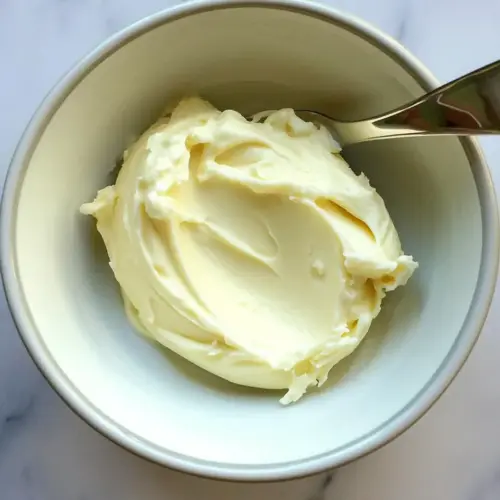
Homemade Spreadable Butter
Homemade Spreadable Butter is a creamy, silky fridge ready spread made by blending unsalted butter with avocado oil and salt. This easy recipe yields scoopable texture straight from the refrigerator and adds a rich finish to toast, rolls, and vegetables, making it perfect for quick breakfasts and simple gatherings. Make a batch to keep on hand for effortless flavor all week.
Equipment
- Food Processor
Ingredients
- 1 cup unsalted butter (I prefer organic) Softens and provides the creamy base for the spreadable butter, contributing fat, body, and rich mouthfeel; chill slightly before blending to achieve a smooth emulsion when combined with oil and salt.
- 3/4 cup avocado oil (you may substitute a neutral-flavored or buttery-flavored olive oil) Adds lightness and fluidity to the butter, creating a spreadable texture and helping to suspend flavors; choose a neutral or buttery-flavored oil to complement without overpowering.
- 1/4 teaspoons ea salt, or to taste Balances and enhances overall flavor, drawing out buttery and savory notes while allowing adjustment to personal taste; dissolve evenly into the softened butter for consistent seasoning.
Instructions
- Let the butter slowly come to room temperature. To speed this process, cut the butter into small chunks and separate them from each other. Do not try to speed things up in the microwave, even at half power... you’ll change the texture of the butter.: As you begin, you will notice the butter soften; it will yield under gentle pressure and the edges will lose their rigid shape. The softened butter smells fresh and slightly sweet, a sign that the fats are ready to blend. This gentle softening helps the butter emulsify with the oil rather than separating. Avoid rushing this by microwaving, because uneven warming creates grainy texture and can break the emulsion. A common mistake is trying to melt it, which leads to oily separation rather than a smooth spread.
- Place the room temperature butter into a food processor along with the oil and sea salt.: When you chop the butter into pieces you increase surface area so it warms evenly, which shortens wait time without overheating. The small chunks will feel cool but pliable, and your hands will quickly sense when they are ready for the processor. The visual cue is uniform softness across pieces. Do not crowd the pieces together, because trapped cold spots slow warming and make blending inconsistent.
- Process the butter, oil and salt for 1-2 minutes, scraping the sides of the processor periodically, till all lumps have disappeared and the mixture is smooth and soft. It will be quite liquid, but don't worry, it will firm up in the fridge.: Microwaving can create pockets of melted fat and pockets of still cold solids, producing a lumpy or grainy final product. The smell might shift slightly as fats heat unevenly, and the texture becomes harder to control. If you notice any melted puddles, chill and rework rather than proceeding, since rushing here often ruins the emulsion. Many people err by assuming quicker is better, but patience preserves smoothness.
- Pour the softened butter into a container that can be sealed airtight (like a Tupperware). Refrigerate for 1-2 hours until fully chilled and firm.: As the ingredients meet, you will hear the processor hum and see ribbons of butter and oil fold together. The aroma of the dairy will lift while the oil adds a glossy sheen. Starting with room temperature butter ensures the avocado oil disperses evenly and the salt dissolves into the mixture. If you use cold butter, the processor will strain, and the blend may remain chunky; if overly warm, it will separate.
- This Homemade Spreadable Butter will last up to 3 months in the refrigerator. It is spreadable straight from the refrigerator. Do not leave the butter at room temperature too long or it will start to separate. If this happens, you can stir the oil back into the butter before refrigerating again.: As you process, watch for a silky, homogeneous texture and a pale, glossy color. The sound of the motor will change slightly as the mixture smooths, and you will smell the rich butter come forward. This step is about building a stable emulsion, so periodic scraping ensures no pockets of unblended butter remain. If you underestimate the time, lumps will persist; if you overwork at high heat, the mixture may warm too much and separate, so pulse and check frequently.
- It will be quite liquid, but don't worry, it will firm up in the fridge: Right after blending the mixture will pour easily and have a shiny, almost satiny texture. This liquidity is normal, the oil and butter are fully combined and the fat matrix will solidify as it cools. You can judge readiness by the sheen and absence of visible lumps. A mistake to avoid is assuming liquid means failed emulsion; chilling is the intended step to set the texture.
- Pour the softened butter into a container that can be sealed airtight (like a Tupperware): Transfer while the mixture is still pourable, paying attention to keeping the container clean and dry. The airtight seal prevents the spread from absorbing fridge odors and helps it keep longer. Listen for the soft plop as the mixture settles into the container, and smooth the surface with a spatula if you want a neat presentation. Leaving air gaps can speed oxidation, so fill thoughtfully.
- Refrigerate for 1-2 hours until fully chilled and firm: During chilling, the fats recrystallize and the texture becomes scoopable but stable, giving you the ideal spreadability. You will notice the surface lose sheen and become more matte as it firms. Chilling also lets flavors meld, so salt distributes evenly. A common error is not chilling long enough, which results in overly soft consistency; conversely over chilling is fine, but you may prefer a short rest for easier scooping.
- This Homemade Spreadable Butter will last up to 3 months in the refrigerator: Stored properly, it keeps well and maintains flavor and texture. You will see a consistent pale color and the spread will remain smooth when scooped. Check occasionally for any off smells; proper sealing and refrigeration are key for longevity. A pitfall is leaving it out too long between uses, which can lead to separation and a thin film of oil on top.
- It is spreadable straight from the refrigerator: When you take it out, the spread should glide across toast without dragging, and it will impart an even, creamy coating. The tactile sensation is smooth and slightly cool, perfect for immediate use. If you find separation after a long rest, simply stir the oil back in before resealing. Avoid leaving it at room temperature for extended periods, as that invites separation and potential spoilage.
Notes
- Use neutral oil - Swap avocado oil for a neutral oil if you want a cleaner buttery flavor without any green notes.
- Try a buttery olive oil - A buttery flavored olive oil will add depth and a hint of fruitiness that complements toast and vegetables.
- Adjust salt to taste - Start with the listed amount of salt and increase carefully after chilling to avoid over seasoning.
- Portion into small tubs - Divide the spread into smaller containers so you only open what you need, keeping the rest fresher longer.
- Firm up for piping - Chill slightly longer if you want a firmer texture suitable for piping decorative shapes onto rolls.
- Make ahead for gatherings - Prepare jars a few days in advance to simplify hosting, the flavors will marry nicely in the fridge.