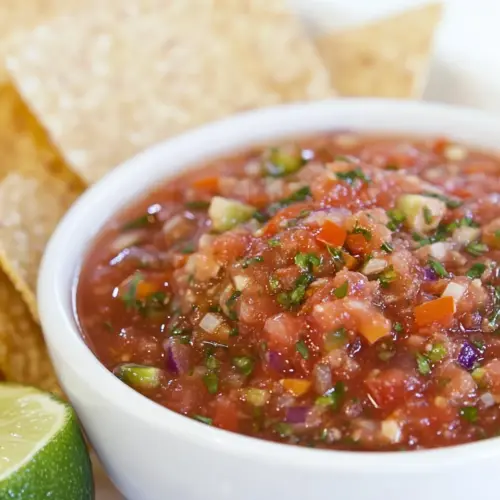
Homemade Salsa Recipe
Homemade Salsa Recipe is a bright, easy to make condiment that blends fresh tomatoes, zesty lime, and warm cumin for a flavorful, crispy contrast to chips and mains. This easy weeknight or party salsa is quick to prepare and highly customizable, perfect for those who love bold, fresh flavors. Make it to elevate gatherings and give guests a reason to come back for more.
Equipment
- Food Processor
- Measuring Spoons
- Cutting Board
- Chef's Knife
- Airtight Container
Ingredients
- 4 ripe tomatoes, cored and quartered Provide juicy, acidic body and fresh tomato flavor while contributing texture; core and quarter before processing or chopping to ensure even consistency and balance with other flavors.
- 1 red onion, peeled and quartered Add sharpness and crunchy bite that contrasts the tomatoes; peel and quarter for easier chopping and to release pungent, savory aromatics when blended or minced.
- 3 garlic cloves, peeled Deliver pungent, savory depth and aromatic heat when minced or blended; peel cloves to avoid bitterness and release essential oils that enhance overall savory profile.
- 3 jalapenos, stemmed and seeded (you can substitute 1-2 habanero or serrano peppers.) Impart bright heat and peppery kick that defines salsa spice level; stem and seed to reduce heat if desired and finely chop for even distribution throughout the mixture.
- 1/3 cup fresh cilantro Provide bright, herbaceous freshness and citrusy undertones; roughly chop leaves and stems to release aroma and balance acidity and heat in the salsa.
- 3 tablespoons fresh lime juice Contribute tangy brightness and acidity to brighten flavors; squeeze fresh limes and strain seeds to integrate clean citrus notes that lift the whole recipe.
- 2 -3 teaspoons ground cumin Offer warm, earthy undertones and a smoky background that deepen flavor complexity; measure to taste as cumin can quickly dominate if overused.
- 2 -3 teaspoons sugar (optional) Balance acidity and round out flavors by softening sharpness and enhancing sweetness; add sparingly and adjust to personal taste for optimal balance.
- 1 1/2 teaspoons salt Season evenly to enhance and bring out all flavors while maintaining balance; dissolve into the mixture and taste as you go to avoid oversalting.
- 15 ounces crushed San Marzano tomatoes (1 can) Extend tomato flavor with a smooth, saucy base and add concentrated umami; pour from the can to increase body and create a consistent texture.
- 4.5 ounces diced green chiles, mild, medium, or hot (1 can) Contribute mild to moderate heat and subtle vegetal flavor while adding texture; drain if desired and fold in to adjust overall spiciness and consistency.
Instructions
- Place the fresh tomatoes, onion, garlic, peppers, cilantro, lime juice, 2 teaspoons cumin, 2 teaspoons sugar (if using), and salt in a food processor. Pulse until the contents are fine and well blended.: When you begin pulsing, listen for the rhythmic chopping sound that tells you the blades are doing even work. You will smell a bright citrus note from the lime and a warm, nutty scent from the cumin that mingles quickly with the sharpness of raw onion and the grassy, almost soapy lift of fresh cilantro . Aim for a consistency that is finely chopped but not completely liquified unless you prefer a smooth salsa. This creates body and texture so chips can grip the bits. A common mistake is over pulsing until everything is a puree, which can flatten the perception of fresh ingredients, so pulse in short bursts and scrape down the sides if large chunks remain.
- Pour in the crushed tomatoes and green chiles. Puree until mostly smooth. Taste, then add more cumin and sugar if desired. Refrigerate until ready to serve.: As you add the canned crushed San Marzano tomatoes and diced green chiles , the mixture will loosen and the aroma will shift toward a deeper tomato sweetness and subtle roasted notes from the can. Puree just until mostly smooth, leaving a bit of texture so the salsa feels lively on the tongue. Watch the color become more uniform and the sound of the processor deepen into a steady whir, which indicates things are blending properly. Over blending here can make the salsa watery and lose its fresh bite, so stop when you still see tiny flecks of herbs and pepper.
- Taste, then add more cumin and sugar if desired.: Once blended, spoon a small sample and pay attention to the balance of acid, heat, salt, and sweetness. The immediate tang of lime should be present, but the warmth of cumin may need a gentle boost to round the profile, or a pinch of sugar can tame sharp acidity if the tomatoes are very tart. Make adjustments conservatively, mixing after each small addition and tasting again. A frequent error is to add too much of any one seasoning at once, which can be difficult to correct, so increment slowly.
- Refrigerate until ready to serve.: Chilling helps the flavors marry and settle, producing a more cohesive salsa. Place the finished salsa in an airtight container and refrigerate for at least a short rest, though I often let it rest for a few hours if time allows. The cold will slightly mute raw edges and let the cilantro and spices integrate. Avoid leaving the salsa out at room temperature for extended periods, as it is fresh and perishable; refrigerate promptly to preserve brightness and food safety.
Notes
- Make it milder: Reduce the number of jalapenos to one and remove the seeds to soften the heat while maintaining the pepper flavor. This keeps the salsa approachable for guests who prefer low spice, and it still retains brightness from the lime and freshness from the cilantro.
- Boost the warmth: If you want more depth, increase cumin slightly but add no more than an extra half teaspoon at a time. The cumin adds an earthy backbone, but too much will overpower the fresh notes, so proceed slowly and taste frequently.
- Change the texture: Pulse less for a chunkier, rustic salsa that clings to chips, or puree more for a smoother finish that doubles as a sauce. Chunkier textures showcase the tomatoes and onion, while smoother versions work well spooned over grilled proteins.
- Sweetness adjustment: Use the optional sugar sparingly to round out tart tomatoes. One teaspoon is often enough to balance acidity without making the salsa taste sweet, and it can rescue a batch made with underripe tomatoes.
- Advance prep: Make the salsa up to two days ahead and refrigerate to let the flavors meld. It will taste more integrated the next day, and this is a great strategy for entertaining, but keep it sealed to maintain brightness.