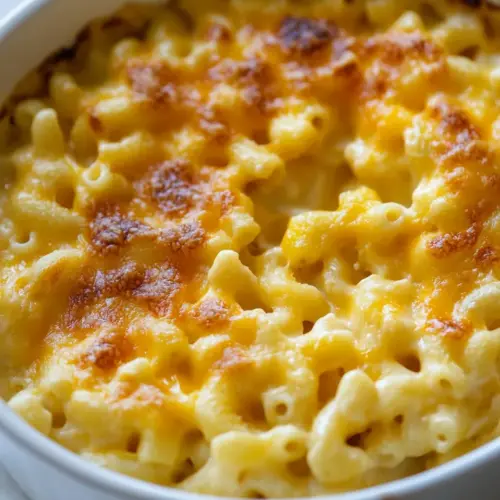
Homemade Mac and Cheese
Homemade Mac and Cheese delivers creamy, cheesy comfort with a smooth sauce and tender elbow macaroni. This easy weeknight dinner comes together from simple pantry staples for a rich, satisfying result that is perfect for family meals or small gatherings. Make it for a cozy night when you want approachable comfort and reliably delicious flavor.
Equipment
- Oven-safe skillet
- 8x8 dish
- Rotary Cheese Grater
Ingredients
- 1/2 lb uncooked elbow macaroni* (225 g) Provides the pasta base and structure for the dish, supplying starchy texture that holds sauce; cook to al dente to avoid mushiness and allow for further baking or mixing with the cheese sauce.
- 3 tablespoons butter (43 g) Adds rich fat for a smooth roux and glossy sauce, contributing buttery flavor and mouthfeel; melt gently to avoid browning before whisking in flour to thicken.
- 2 tablespoons all-purpose flour (16 g) Acts as the thickening agent when combined with butter to form a roux, giving body and stability to the cheese sauce; whisk thoroughly to eliminate lumps for a silky texture.
- 1/2 teaspoons salt Seasons the sauce to balance and enhance flavors, preventing the dish from tasting flat; adjust slightly to taste, remembering cheese also brings salinity.
- 1/8 teaspoon ground black pepper Adds mild heat and aromatic depth to the sauce, sharpening the cheese flavors; use freshly ground for best aromatic impact and adjust amount to preference.
- 1 1/2 cups milk, any kind (360 ml) Provides the liquid backbone of the sauce and contributes creaminess and moisture; warm slightly before adding to the roux to prevent curdling and ensure smooth integration.
- 3/4 cup half and half (180 ml) Contributes extra creaminess and richness to the sauce, boosting mouthfeel and preventing a thin texture; combine with milk for a balanced, luxurious consistency.
- 2 1/2 cups shredded cheddar cheese* (250 g) Delivers the primary flavor and meltability, creating the characteristic cheesy sauce; grate finely for even melting and stir into the hot sauce until fully smooth.
Instructions
- Preheat the oven to 325 degrees F and lightly grease an 8' square (or similar size) baking dish.: The oven will give you a gentle, even bake that melts the top without drying the interior. You should feel a mild warmth from the oven as it reaches temperature, and the light greasing prevents sticking while adding a bit of buttery aroma. Doing this step ahead keeps you from scrambling later, which helps maintain smooth assembly. A common misstep is preheating to a much higher temperature, which can cause the top to brown too quickly while the interior remains underheated.
- Cook the macaroni to al dente, according to package instructions. Drain and set aside.: The pasta should be firm to the bite yet tender, offering a slight resistance when you chew. While boiling you will notice the water roiling and a faint starch scent; when you taste the pasta it should not be chalky. Drain promptly to stop cooking and avoid a waterlogged bake. Overcooking here results in a mushy texture after baking, and undercooking will make the macaroni feel gummy in the finished dish.
- Make the sauce: Melt the butter in a medium saucepan over medium heat. Blend in the flour, salt, and pepper. Cook for 2 minutes. Slowly add the milk and half and half, stirring constantly, and cook over medium-low heat for a few minutes until the mixture has thickened like the consistency of gravy, about 5-7 minutes. Remove from heat and stir in 1 cup shredded cheese, stirring just until melted.: Melt the butter in a medium saucepan over medium heat. Blend in the flour, salt, and pepper. Cook for 2 minutes. Slowly add the milk and half and half, stirring constantly, and cook over medium-low heat for a few minutes until the mixture has thickened like the consistency of gravy, about 5 to 7 minutes. Remove from heat and stir in 1 cup shredded cheese, stirring just until melted. : As the butter melts you will hear a soft sizzle and see a glossy pool form, then the flour will bloom into a fragrant, toasty base. When you add the dairy gradually you will notice the sauce thicken and develop a velvety sheen; it should coat the back of a spoon. Stirring constantly prevents lumps and helps the starches hydrate evenly, producing a cohesive texture. If the heat is too high the milk can scald, creating off flavors, so keep the temperature controlled and remove from heat before adding most of the cheese. A typical error is adding all the cheese while the sauce is too hot, which can cause separation or a grainy texture.
- Combine: Add the cooked macaroni noodles and toss to coat. Pour half of the pasta mixture into the prepared baking dish. Sprinkle 1/2 cup cheese over the top. Add remaining pasta and sprinkle with remaining cheese.: Add the cooked macaroni noodles and toss to coat. Pour half of the pasta mixture into the prepared baking dish. Sprinkle 1/2 cup cheese over the top. Add remaining pasta and sprinkle with remaining cheese. : When you fold the macaroni into the sauce you should see glossy strands and pockets of rich cream; each noodle should be evenly coated. Layering the pasta and cheese ensures pockets of melted cheese on top and in the interior, creating contrast between gooey and slightly baked textures. Press gently so the sauce seeps into the pasta crevices. Avoid packing the dish too tightly, as dense layers can prevent even heating during the short bake.
- Bake for 15-20 minutes or until cheese is melted on top.: In the oven the surface will shift from glossy to a gentle bubbling and the cheese will become uniformly melted, emitting a warm, savory aroma. Look for small, golden spots and a consistent melt across the top to know it is ready. Let the dish rest for a couple of minutes after removing it, because the sauce will set slightly and be easier to portion. A frequent mistake is leaving it in longer than necessary, which can dry the sauce and reduce creaminess.
Notes
- Choose good cheddar: High quality aged cheddar provides sharper flavor and a smoother melt than mild, inexpensive versions, which can taste grainy.
- Freshly grate the cheese: Grating your own eliminates anti caking additives, allowing the cheese to melt uniformly into a glossy sauce.
- Room temperature cheese: Allow grated cheese to sit at room temperature briefly so it melts more predictably when added to the warm sauce.
- Low heat when finishing: Remove the sauce from direct heat before adding most of the cheese, then stir gently to prevent separation and control the final texture.
- Adjust salt at the end: Because cheese varies in saltiness, taste at the finish and add more salt sparingly if needed.
- Timing matters: Keep an eye on the oven during the short bake window to avoid drying the sauce while still achieving an appealing melted top.