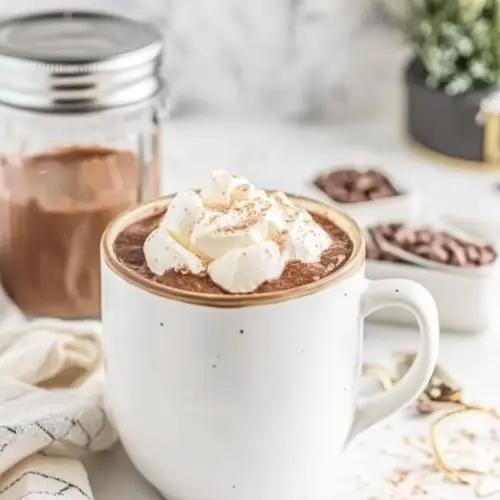
Homemade Hot Chocolate Mix
Homemade Hot Chocolate Mix delivers a creamy, rich cup with deep chocolate notes and velvety texture. This easy mix combines real unsweetened chocolate and unsweetened cocoa powder for authentic flavor, perfect for quick cozy drinks or gifting. Make a batch, stash it in a jar, and enjoy a warm, comforting mug whenever you need a sweet treat.
Equipment
- Food Processor
- Small Saucepan
- Whisk
- Airtight Container
Ingredients
- 1 cup (200 g) granulated sugar Sweeten and balance the mix while helping dissolve cocoa and chocolate; contributes bulk and texture and helps control sweetness level in each serving. Use fine granulated sugar for even incorporation and adjust slightly if you prefer less sweetness. Store in an airtight container to prevent clumping and moisture absorption.
- 6 ounces (170.1 g) unsweetened chocolate, finely chopped Provide deep chocolate flavor and richness while melting into hot liquid to create a smooth, intense base; finely chopping promotes even melting and prevents grainy bits. Use high-quality unsweetened chocolate for best flavor and slightly bittersweet notes. Grate or chop just before mixing for easier blending with dry ingredients.
- 1 cup (86 g) unsweetened cocoa powder Deliver concentrated cocoa flavor and help thicken the drink when reconstituted; contributes chocolate color and a robust, slightly bitter backbone to balance sugar. Sift to remove lumps and ensure smooth distribution throughout the dry mix for consistent cups. Use natural or Dutch-processed cocoa depending on desired acidity and flavor profile.
- 1/2 cup (64 g) nonfat dry milk powder Add creamy dairy solids and enhance mouthfeel without refrigeration; boosts body and gives a milky finish when combined with hot water or milk. Choose nonfat powder for a lighter caloric contribution while still providing dairy flavor and protein. Whisk well into hot liquid to prevent clumping and achieve a smooth texture.
- 5 teaspoons cornstarch Act as a light thickening agent to create a slightly velvety, stable beverage; helps prevent separation and gives the hot chocolate a pleasant coating mouthfeel. Dissolve thoroughly into the dry mix to avoid pockets and ensure consistent thickness once prepared. Use cornstarch sparingly to maintain balance without gumminess.
- 1 teaspoon vanilla extract Impart warm, aromatic sweetness that elevates and rounds out the chocolate flavor; provides a subtle floral-vanilla note that enhances perceived richness. Add at mixing or when preparing servings to preserve volatile aromatic compounds. Use pure vanilla extract for the most natural flavor integration.
- 3/4 teaspoon (0.75 teaspoon) kosher salt Enhance and balance sweetness by sharpening flavors and reducing flatness; contributes a savory note that brightens chocolate and ties other components together. Measure carefully to avoid over-salting, which can overwhelm the drink. Kosher salt granules dissolve readily and help release chocolate aromatics.
Instructions
- Process all of the ingredients in a food processor until ground to a powder, 30 to 60 seconds. Transfer to an airtight container and store at room temperature for up to 2 months.: The moment you pulse the ingredients you'll hear a rapid chopping sound and then a steady, smoother whir as everything becomes fine; the smell changes too, shifting from separate sugar and chocolate notes to a unified, toasted cocoa aroma. This milling step matters because grinding the unsweetened chocolate and granulated sugar into a consistent powder ensures the mix dissolves in hot milk without gritty bits, producing a silkier mouthfeel. A common mistake is under processing, which leaves little chocolate shards that float and create clumps in the cup; to avoid that, scrape the bowl once and pulse again until the texture is uniformly fine. If your processor gets warm, pause briefly to prevent melting the chocolate, which would make the mix sticky.
- To make hot chocolate: Heat 1 cup of milk (whole, 2% or 1%) in a small saucepan over medium heat until it starts to steam and bubbles appear around the edge of the saucepan. Add 1/4 cup of the hot chocolate mix and continue to heat, whisking constantly, until simmering, 2 to 3 minutes longer. Pour into a mug and serve.: As you spoon the finished powder into a clean jar you'll notice a deep, concentrated chocolate scent and a satiny, dry texture that resists clumping when stored properly. Storing in an airtight container protects the mix from moisture and odors, preserving flavor and texture; I recommend a glass jar with a tight lid because it creates a stable environment and lets you see how full the jar is. A typical misstep is leaving the container partially open, which can let humidity in and create lumps, so always check the seal and keep the jar in a cool, dark place away from direct heat. Label the container with the date so you use the mix within the recommended time frame.
- To make hot chocolate: Heat 1 cup of milk (whole, 2% or 1%) in a small saucepan over medium heat until it starts to steam and bubbles appear around the edge of the saucepan : You will see tiny bubbles forming at the rim and smell the milk warming; that steam signal means it is hot enough to dissolve the mix without scalding. Heating the milk gently rather than boiling preserves a creamy texture and prevents a cooked flavor, which keeps the chocolate tasting fresh and balanced. A common error is bringing the milk to a vigorous boil, causing it to scorch or form a skin; watch closely and lower the heat as soon as you see the first bubbles. Stir occasionally with a whisk to keep the milk moving and distribute heat evenly.
- Add 1/4 cup of the hot chocolate mix and continue to heat, whisking constantly, until simmering, 2 to 3 minutes longer: When the powder hits the hot surface, you'll notice a faint popping sound as it rehydrates and releases aroma; whisking produces a glossy, slightly thickened surface and integrates air so the drink feels lighter. This stage develops the final texture and allows the cornstarch and nonfat dry milk powder to activate, creating that velvety mouthfeel; whisk in steady, circular motions to prevent settling and lumps. One pitfall is dumping the mix in and walking away, which can lead to clumps; constant whisking prevents that and also helps gauge the readiness by observing small, even bubbles forming around the edge. If the mixture seems too thick, reduce the heat and whisk vigorously to loosen it up.
- Pour into a mug and serve: As you pour, you'll notice the cup filling with a deep brown liquid that shimmers slightly from the dissolved fats, and the scent becomes rich and inviting. Serving immediately preserves the temperature and texture, and I often garnish with a light dusting of extra unsweetened cocoa powder or a tiny pinch of kosher salt on top to highlight the flavor contrast. A common mistake is letting the drink sit too long, which can lead to cooling and slight thickening as the cornstarch continues to set; enjoy it right away for the best experience. Clean your saucepan soon after serving, because cooled chocolate residue can be stubborn to remove.
Notes
- Spiced Touch Add a pinch of ground cinnamon or a small scraping of fresh nutmeg to the milk while heating to introduce a warming spice note that plays beautifully with the unsweetened cocoa powder.
- Richer Mouthfeel Use whole milk or a blend of milk and a splash of cream for a more luxurious texture when you want an indulgent treat.
- Lower Sweetness Scoop a little less than the suggested 1/4 cup into your mug to reduce sweetness without changing the chocolate intensity, letting the natural cocoa bitterness come forward.
- Frothy Finish After whisking, use a handheld frother to aerate the surface, creating a cafe style foam and a lighter finished texture.
- Mini Batch Gifts Portion into small jars and tie with a ribbon for a homemade gift that stores well and feels personal and thoughtful.