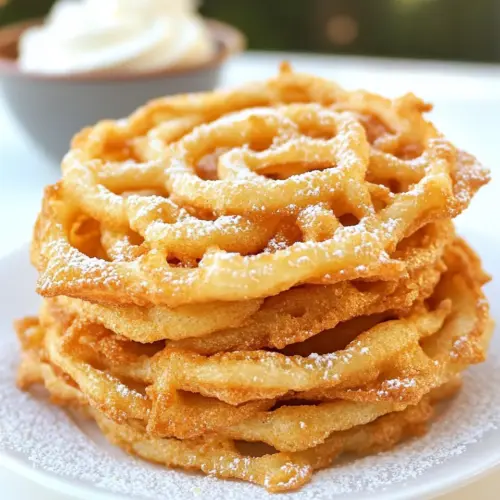
Homemade Funnel Cakes
Homemade Funnel Cakes deliver crispy, golden edges with pillowy centers, a nostalgic treat that is surprisingly easy to make at home. This recipe is simple, quick, and perfect for a weekend brunch or festive gathering where everyone can customize their toppings. Make them for an easy crowd pleaser that tastes like a fair without leaving your kitchen.
Equipment
- Frying Pan
- Funnel
- Mixing Bowl
- Slotted Spatula
Ingredients
- 2 cups milk Combine to create the liquid base that hydrates dry ingredients and produces steam for lightness; milk also adds subtle richness and helps dissolve sugar and salt, contributing to batter consistency and mouthfeel.
- 1 egg Provide structure and richness by binding ingredients together and trapping air when mixed; egg also contributes to color, flavor, and tenderness in the finished funnel cake.
- 1 teaspoon pure vanilla extract Add aromatic sweetness and depth of flavor, enhancing the overall taste profile; vanilla extract rounds out the batter and complements the fried dough's subtle sweetness.
- 2 cups all purpose flour Form the primary structural framework of the batter, supplying gluten that gives body and chew; flour also absorbs liquids and helps achieve the proper viscosity for piping into hot oil.
- 1 teaspoon salt Enhance overall flavor balance by providing a slight savory contrast that brightens sweetness; salt also strengthens gluten slightly and controls fermentation and browning.
- 1 teaspoon baking soda Act as a leavening agent to help the batter rise and create airy pockets during frying; baking soda reacts with acidic components to produce carbon dioxide and light texture.
- 1 tablespoon granulated sugar Contribute sweetness and help with browning and caramelization while frying; granulated sugar also slightly affects batter viscosity and enhances overall flavor.
- 4 tablespoons unsalted butter melted Add richness and tenderizing fat when melted into the batter; butter contributes flavor, improves mouthfeel, and helps create a crisp exterior when fried.
- powdered sugar for topping Provide a finishing touch that adds pronounced sweetness and visual appeal; powdered sugar dusted over hot funnel cake melts slightly and creates a classic presentation.
- oil for frying Serve as the medium for frying, transferring high, consistent heat to rapidly cook and crisp the batter; oil choice and temperature control are critical for texture and color.
Instructions
- Combine all ingredients (except for the melted butter) in a large mixing bowl and mix until batter is smooth.: The moment you start mixing you'll notice a change in texture, the batter going from floury to silky, and a faint sweet aroma as sugar and vanilla mingle with the milk . Whisk gently to avoid overworking the flour , this keeps the batter tender. If you hear small clumps hitting the bowl, pause and scrape the sides so everything incorporates evenly. A common pitfall is vigorous mixing which tightens the batter, producing chewier cakes, so stop as soon as the lumps are gone and the mixture flows smoothly.
- Carefully fold in melted butter and quickly mix to make sure that it does not cook the egg if the butter is still warm.: When you add the warm melted butter , you should notice a glossy sheen on the batter and a richer mouthfeel developing. Fold the butter in gently so the emulsion stays intact and you do not scramble the egg . If you feel the batter warming too much, let the butter cool briefly on the counter before folding it in. A frequent error is pouring in piping hot butter , which can partially cook the egg and leave specks or change the batter consistency; avoid that by ensuring the butter is warm, not hot.
- Heat oil in a frying pan, pour batter into a funnel and use your finger to stop the flow of the batter when needed. When oil is hot release your finger and move the funnel into circular motion to create spiral shapes formed into one huge circle.: As the oil heats you will hear a gentle ripple and see a faint shimmer, signs that it is approaching frying temperature. Test with a small drop of batter, it should sizzle steadily but not spit violently. Pouring from a funnel gives you control, and stopping the flow with your finger helps start and stop the spiral precisely. Keep your hand steady and use a funnel or a squeeze bottle if you prefer. A common mistake is frying at too low a temperature, which yields greasy cakes, so wait for that steady sizzle before you begin.
- Fry until batter is slightly puffed and is golden brown.: As you release and move the funnel, watch the batter trail form delicate laces that puff and cook from the outside in. The batter should hit the oil and set almost immediately, creating crispy filigree that browns evenly. Keep the motion consistent to avoid clumps or overly thick lines that take longer to cook. If you see large bubbles and rapid darkening, the oil is too hot and will burn the outer edges before the interior cooks, so lower the heat.
- Sprinkle with powdered sugar or top with your favorite toppings.: Visually you'll see the cake puff a bit and turn a deep golden color along the edges while the center firms up. The sound will change to a steady, gentle crackle, and the oil will smell toasty rather than raw. Use a slotted spatula to gently lift and check the underside for uniform color. Avoid moving the cake too often, as constant flipping can deflate the crisp exterior. A typical trap is undercooking to rush the process, which leaves the insides doughy, so fry until that golden cue appears all over.
- Sprinkle with powdered sugar or top with your favorite toppings: Right out of the oil the surface will still be warm and slightly tacky, making it ideal for a dusting of powdered sugar , which melts into the crevices and highlights the lacy edges. The aroma will be sweet and comforting, and the contrast between crisp exterior and softer interior becomes pronounced. If you let the cakes cool too long before topping, the sugar may not adhere as well, so dust while warm. One mistake to watch for is piling on toppings that weigh down the delicate cake; keep portions balanced to preserve the crunch.
Notes
- Swap milk for a lighter option Use a lower fat milk if you want a slightly lighter mouthfeel while keeping the batter pourable and tender.
- Adjust sugar for sweetness control Reduce or increase the granulated sugar to make the cakes less or more sweet depending on your toppings and audience.
- Fold in citrus zest carefully Add a teaspoon of lemon or orange zest to the batter for a bright twist, mixing gently to distribute the flavor without altering batter texture.
- Use a squeeze bottle for precision If you struggle with the funnel, transfer batter to a squeeze bottle to draw consistent spirals with less mess.
- Make them ahead with warm finishing You can fry ahead and reheat briefly in a 350 F oven to restore crispness before finishing with powdered sugar.