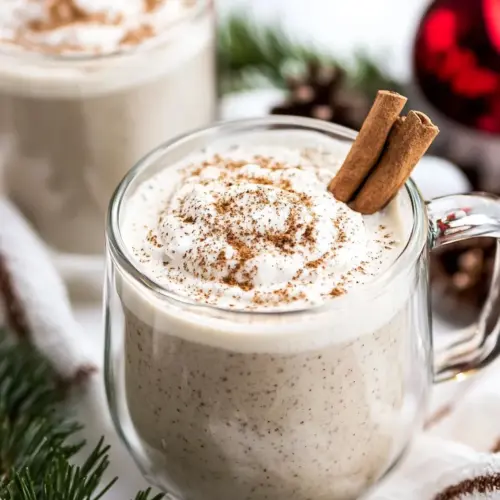
Homemade Eggnog
Homemade Eggnog is a creamy, spiced winter classic with a silky custard base and warm notes of cinnamon and nutmeg. This easy, comforting drink is perfect for holiday gatherings or a cozy night in, offering rich texture from heavy cream and egg yolks. Make it ahead, chill it well, and serve with a dollop of whipped cream for a festive treat you will want to make again and again.
Equipment
- Small Saucepan
- Medium Bowl
- Whisk
- Spoon
Ingredients
- 2 c. milk Provide a creamy liquid base that carries flavors and balances richness; warms gently with spices when heated and helps thin the custard for desired consistency.
- 1 tsp ground cinnamon plus a little for garnish if desired Add warm, sweet-spicy aroma and a subtle, woody heat to the mixture; sprinkle a little on top at serving for visual appeal and extra fragrance.
- 1 tsp ground nutmeg Contribute a warm, slightly sweet, and aromatic earthiness that defines classic eggnog flavor; pairs well with cinnamon and enhances overall spice complexity.
- 1 tsp vanilla extract Impart a sweet floral-vanilla note that rounds out the custard and complements the eggs and cream; dissolve into warm milk to distribute flavor evenly.
- 6 large egg yolks Create structure and silkiness by thickening the custard when tempered and cooked; provide richness and body that make eggnog indulgent and satisfying.
- 1/2 c. granulated sugar Sweeten the custard to balance egg richness and spice; dissolve into yolks to help stabilize the custard and control sweetness level to taste.
- 1 c. heavy cream Increase the richness and velvety mouthfeel, making the eggnog luxurious; fold in lightly whipped for a creamier texture or use as-is for full-bodied flavor.
- Whipping cream Top drinks with light, airy texture and decorative peaks, adding a fresh creaminess at serving; sweeten or flavor before piping for enhanced presentation.
- Cinnamon stick Garnish with subtle aromatic presence that can be stirred in for mild spice infusion; add whole for visual elegance and a hint of warming scent.
- Star Anise Provide a fragrant, licorice-like aroma when used as garnish or simmered briefly; add whole to infuse a subtle anise complexity without overpowering the drink.
Instructions
- In a small saucepan, combine milk, cinnamon, nutmeg and vanilla. Slow bring mixture to a low boil over low heat.: The aroma begins to bloom as the milk warms, releasing the fragrant oils from the ground cinnamon and ground nutmeg . You'll notice an immediate soft spice scent that fills the kitchen, signaling the base is marrying. The visual cue is steam rising gently, with tiny bubbles forming around the edge when the heat is right. Stir occasionally to prevent the spices from settling and scorching on the pan. A common mistake is overheating which can flatten the spice brightness, so keep the heat low to preserve the delicate aromatics.
- In a medium sized bowl, separate egg yolks from the whites. Add sugar to egg yolks and whisk until light and pale in color, about 2-3 minutes.: As the liquid approaches simmer, the sound is a barely audible whisper, and the surface will show small, consistent bubbles. This slow heating extracts flavor without breaking down the dairy proteins abruptly. If you rush this step with high heat the mixture can scald and develop an off taste, so maintain gentle warmth. Watch for signs of frothing that indicate it is getting too hot and reduce the temperature immediately.
- Begin by adding a very small amount of the heated milk mixture to the eggs, whisking constantly to temper the eggs. Do not add the hot milk too quickly or it will cook the eggs.: The glossy egg yolks will sit silky in the bowl, awaiting sugar. When you add granulated sugar , whisking makes the yolks turn pale and slightly thick, which means air is being incorporated for a lighter texture. The visual transformation to a lighter color is a key indicator you have whisked enough. Avoid leaving shells in the bowl and do not overwhip, which can make the mixture frothy rather than smooth.
- Continue adding small amounts of the milk to the eggs, whisking constantly until all the milk is incorporated and well combined.: The rhythm of whisking changes the yolks into a ribbon like consistency that holds briefly before blending back in, producing a slightly thicker batter. You'll feel the sugar dissolve as the texture becomes satin smooth, and the color shifts to a soft lemon tone. If you see granules of sugar despite whisking, continue until they dissolve completely to prevent a gritty finish.
- Return the saucepan to stovetop and cook over medium heat until slightly thick and mixture coats the back of a spoon. Do not boil.: The key sensory cue is the warmth that gradually increases in the bowl without curdling. As you whisk, the mixture should feel gradually warmer and remain glossy. This controlled introduction protects the egg yolks from cooking too fast. A frequent error is pouring too much hot liquid at once, which yields scrambled bits, so always add in small stream and whisk continuously.
- Remove the saucepan from heat and stir in heavy cream until mixed thoroughly.: You should feel the temperature rise steadily but not spike, and the yolk mixture should stay smooth to the touch. If you notice any thickening or lumps forming, remove the bowl from the heat and whisk vigorously while adding a bit more liquid to smooth it out. This step is all about patience, because a hurried approach ruins the custard texture.
- Chill for several hours before serving.: As the bowl fills, the mixture will become silkier and more uniform. The whisk will leave defined paths that slowly settle back, showing a cohesive texture. This slow incorporation ensures even cooking when you return it to the saucepan. If you rush, you risk pockets of uneven temperature, which can create stringy cooked egg in the final product.
- To serve, add whipping cream, ground cinnamon, cinnamon stick or star anise if desired.: When you pour the tempered mixture back into the saucepan, stir constantly and watch for a velvety sheen to form on the surface. The sound is a gentle simmer and you may notice the aroma of spices intensify. The spoon test is crucial: run your finger through the coating and it should leave a clear line. Overcooking or boiling will cause curdling and graininess, so keep it below a boil and remove promptly at the right thickness.
- Store leftovers in refrigerator.: Maintaining a sub boil avoids breaking the custard and preserves a creamy mouthfeel. Boiling creates rapid agitation and can separate proteins, producing a curdled, lumpy appearance. If you see bubbles rise vigorously, reduce heat immediately and whisk to cool slightly. This prevention is easier than repairing a broken custard.
- Remove the saucepan from heat and stir in heavy cream until mixed thoroughly: Adding the heavy cream off heat keeps its richness intact and makes the texture lusher. The mixture will loosen slightly and become silkier, with the aroma rounding into a balanced whole. Stir gently to blend, feeling the change from thick custard to a smooth, pourable drink. A mistake here is adding cream over high heat which can thin or separate the mixture.
- Chill for several hours before serving: Cooling allows flavors to meld and the texture to settle into a cold, luxurious body. The surface will cool and the scent will become more integrated. I recommend chilling until well cold, which enhances the final mouthfeel. Do not skip chilling, as serving warm changes the expected flavor profile and consistency.
- To serve, add whipping cream, ground cinnamon, cinnamon stick or star anise if desired: When plated, the contrast of whipped Whipping cream adds lightness and a floating aroma of spice brightens each sip. The visual of a cinnamon stick or Star Anise creates an inviting presentation. Avoid leaving whole spices in the drink too long if their flavor becomes overpowering for some guests.
- Store leftovers in refrigerator: Properly chilled, the eggnog will keep for a few days and will thicken slightly as it rests. Use an airtight container to preserve freshness and prevent absorption of other odors. If it develops any off smells or separation, discard it, as dairy and eggs can spoil if not stored correctly.
Notes
- Use full fat dairy for the creamiest texture and richest mouthfeel, which helps the spices feel rounded and luxurious.
- Garnish individually so each guest can choose ground cinnamon or a cinnamon stick for aroma and presentation, giving a personal touch at the table.
- Whip cream lightly to soft peaks and dollop on top for a contrasting lightness that lifts each sip and adds visual appeal.
- Temper carefully by adding just a little hot liquid at first, this protects the egg yolks and keeps the custard smooth rather than scrambled.
- Make ahead and chill to save time on the day of serving, the flavors will deepen and the texture will be more cohesive after resting.