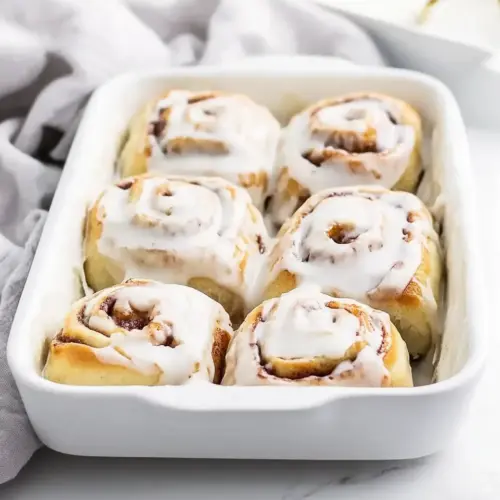
Homemade Cinnamon Rolls
Homemade Cinnamon Rolls deliver pillowy, yeasty dough spiraled with buttery brown sugar and cinnamon, topped with silky cream cheese frosting. These easy to follow rolls are perfect for a cozy winter brunch or a comforting weekend bake, offering soft texture and rich aroma. Make them ahead or bake fresh for a warm, shareable treat that everyone will ask for again.
Equipment
- Large Bowl
- Wooden Spoon
- Rolling Pin
- Jelly Roll Pan
- Whisk
Ingredients
- 1 packet active dry yeast Activate yeast by proofing in warm liquid; provides leavening to make the dough rise and develop lightness. Enhances texture and contributes subtle fermentation flavor during proofing. Ensure the liquid is warm, not hot, to avoid killing the yeast.
- 1 cup milk, warm Warm milk to help activate yeast and create a tender, moist dough with richer flavor. Adds moisture and fat that improve crumb structure and shelf life. Use lukewarm temperature to encourage proper fermentation.
- 1/2 cup granulated sugar Sweeten dough and encourage browning while feeding yeast slightly to aid fermentation. Balances flavors in the roll and helps achieve a soft, tender crumb. Adjust amount for desired sweetness and texture.
- 1/3 cup butter, softened Soften butter to incorporate into dough for tenderness, flavor, and richness. Contributes fat that shortens gluten strands, resulting in a more tender, flaky roll. Ensure butter is pliable for even distribution.
- 1 teaspoon salt Season dough to enhance overall flavor balance and control yeast activity subtly. Strengthens flavor profile and offsets sweetness for a well-rounded roll. Use measured amount to avoid overly salty results.
- 2 eggs Beat eggs to enrich the dough with structure, moisture, and color while aiding leavening and tenderness. Contribute protein for strength and emulsification for smoother dough handling. Incorporate at room temperature for best mixing.
- 4 cups all-purpose flour Provide the bulk of the dough as the primary structure-building ingredient that forms gluten when hydrated. Determines chewiness and texture, and binds other ingredients together. Measure accurately for consistent dough consistency.
- 1 cup brown sugar Sweeten the filling and provide moisture and slight chewiness when combined with butter and spices. Creates a caramelized, flavorful center that contrasts with the soft dough. Pack firmly when measuring for consistent sweetness.
- 2 1/2 tablespoons cinnamon Flavor the filling with warm, aromatic spice that defines the characteristic taste of cinnamon rolls. Blends with sugar and butter to create a fragrant, flavorful swirl. Adjust amount according to spice intensity preference.
- 2 tablespoons all-purpose flour Thicken the filling lightly and help the sugar-cinnamon mixture adhere to the dough during rolling. Adds structure so the filling spreads evenly without leaking excessively. Combine with the filling sugars for uniform texture.
- 1/3 cup butter, softened Soften butter for the filling to create a spreadable, creamy layer that melds with sugar and spices. Adds richness and helps the cinnamon-sugar mixture stick and caramelize during baking. Use softened texture for easy spreading.
- 1/2 cup butter Provide additional butter for greasing or enriching the roll or pan to enhance flavor and prevent sticking. Contributes to a tender crumb and golden exterior when incorporated or brushed on. Melt or soften as required by the step.
- 1 1/2 cup powdered sugar Sweeten and thicken the glaze to create a smooth, spreadable frosting that complements the rolls. Adds creamy sweetness and helps set a shiny finish over warm buns. Sift to remove lumps for a silky texture.
- 1/4 cup cream cheese Add tang and creaminess to the frosting, balancing sweetness with a slight acidic note and smooth texture. Enhances mouthfeel and prevents the glaze from being cloyingly sweet. Soften to blend smoothly into the powdered sugar.
- 1/2 teaspoon vanilla extract Impart vanilla flavor to the glaze for aromatic depth and rounded sweetness. Enhances overall flavor profile and complements the cinnamon-spiced filling. Use sparingly to avoid overpowering delicate notes.
- 1/3 teaspoon salt Provide a subtle savory balance in the frosting to enhance flavor complexity and depth. Helps round out sweetness and contributes to overall flavor harmony in the glaze. Measure precisely to avoid noticeable saltiness.
Instructions
- In a large bowl, dissolve yeast in warm milk. Add sugar and 1 cup of flour. Stir gently, cover, and set aside until doubled in size, about 30-45 minutes.: The warm milk should feel like a baby s bath temperature to the inside of your wrist, not hot, to coax the active dry yeast awake. As the yeast dissolves, you may notice a faint yeasty fragrance, and within minutes tiny bubbles or foam can appear, signaling good activity. This step matters because vigorous yeast growth sets the stage for a light crumb. Avoid water that is too hot or the yeast will be killed, leading to dense rolls; if no bubbles form after ten to fifteen minutes, your yeast might be expired and you should try a fresh packet.
- Add butter, salt, eggs, and remaining flour. Mix well with a wooden spoon.: When you stir in the granulated sugar and the first cup of all-purpose flour , the mixture will thicken into a loose batter. The sugar feeds the yeast and the flour begins to create structure, so the mixture should feel slightly tacky. This early stage helps temper the dough for later kneading. A common mistake is adding all the flour at once, which can make the dough too stiff; reserve most of the flour for gradual incorporation.
- Turn dough onto a lightly floured surface and knead for 5 minutes (dough will be a little sticky). Place back in the bowl and cover to let rise until doubled in size.: Covering the bowl traps warm air so the yeast can work steadily. Over the next half hour to forty five minutes you will see the mixture puff and rise, almost doubling in volume, giving off a sweet, bready aroma. This is where patience repays you with airy texture. Avoid placing the bowl in a draft or cold room, which can lengthen the rise time dramatically.
- While the dough is rising, make the filling by combining brown sugar, cinnamon, and flour in a small bowl.: As you add softened butter , salt , eggs , and the rest of the all-purpose flour , the dough will transform from batter to a shaggy mass. The eggs enrich the mix and the butter tenderizes the crumb. Mixing until the ingredients are integrated ensures even texture; do not overmix into a gluey paste, or the final rolls may be heavy.
- Roll out onto a 21×16-inch rectangle, about 1/4 inch thick.: Using a wooden spoon gives you tactile control while combining the dough, and you can feel when it pulls away from the sides of the bowl. The dough should be slightly sticky to the touch but cohesive. This texture encourages a soft, tender interior after baking. If the dough feels too wet, resist the urge to dump in large amounts of flour all at once which can make it dry and tough.
- Spread the 1/3 cup softened butter then sprinkle with the cinnamon mixture. Roll up long ways and cut into 1 3/4-inch slices. You should get about 12 cinnamon rolls.: As you knead the dough on a lightly floured board, you ll feel it change from rough to smooth and elastic. The sound of the dough shifting beneath your hands, a faint springiness returning as you fold and press, is a good signal. Kneading aligns gluten strands for structure and chew while keeping tenderness; over kneading leads to a tough bite, and under kneading can yield a slack, loose crumb, so aim for about five minutes until slightly tacky and springy.
- Place on a greased jelly roll pan and let double in size.: Back in the bowl, the dough rests and the yeast continues to create air pockets. Within an hour depending on warmth the dough should swell to about twice its original size and feel pillowy. This second rise deepens flavor and yields a lighter interior. Avoid letting it over proof, which can cause collapse and a coarse texture.
- Bake at 375°F for 15-20 minutes.: Mixing the brown sugar , cinnamon , and a touch of flour releases a fragrant, spiced scent as the molasses of the sugar meets the warm spice. This dry blend keeps the filling cohesive when spread and helps it caramelize. Taste a pinch for balance; if the mix is too sweet, a little extra cinnamon can sharpen the profile.
- While the rolls are baking, whisk unsalted butter, powdered sugar, cream cheese, vanilla extract, salt together and spread over warm rolls.: When rolling the risen dough, aim for a 21 by 16 inch rectangle and about a quarter inch thickness so the spiral layers bake evenly. The dough should glide under the rolling pin with a gentle resistance, and you ll see faint stretch marks as gluten aligns. If the dough snaps back, let it rest for a few minutes to relax the gluten before continuing; forcing it risks tearing the sheet.
- Spread the 1/3 cup softened butter then sprinkle with the cinnamon mixture: Use softened butter to coat the dough evenly to the edges, forming a lush base for the brown sugar and cinnamon to cling to. The sugar will glisten on the surface, and when rolled will form dark, caramelized ribbons. If the butter is too cold it won t spread well, creating uneven pockets of filling.
- Roll up long ways and cut into 1 3 4-inch slices: Rolling the sheet longways into a tight log creates uniform spirals; when sliced into roughly one and three quarters inch pieces, you should get about twelve rolls. Use a sharp knife or unflavored dental floss to slice cleanly without squashing the spirals. Cutting too tightly can compress the layers, while very wide slices change the bake time and texture.
- Place on a greased jelly roll pan and let double in size: Arrange the rolls with a bit of breathing room on a greased pan and let them rise again until nearly doubled, about thirty to forty five minutes depending on warmth. This final puff ensures a soft, airy interior and encourages the centers to open up. Crowding the pan hinders expansion and leads to denser centers.
- Bake at 375°F for 15 to 20 minutes: As the rolls bake at 375°F , they will turn golden, the tops developing a gentle sheen and the interiors filling with steam. The scent of caramelized brown sugar and toasty dough will fill the kitchen, and you ll hear no loud noises, just a quiet bubbling from the centers. If the tops brown too quickly, tent with foil to prevent over coloring while ensuring the centers are fully baked.
- While the rolls are baking, whisk unsalted butter, powdered sugar, cream cheese, vanilla extract, salt together and spread over warm rolls: Whipping the warm frosting ingredients creates a glossy, pillowy glaze. The powdered sugar dissolves into the fat of the butter and cream cheese , and a little vanilla extract brightens the mix. Spreading this over warm rolls lets it melt into crevices, forming a silky coating. If the frosting is made too cold it won t spread smoothly, and if too thin it will run off the sides instead of settling into the spirals.
Notes
- Temperature matters: Keep your milk between warm and comfortably hot to the wrist so the active dry yeast wakes without being killed.
- Measure flour carefully: Spoon and level the all-purpose flour when scooping, or use a scale for best results, to prevent dry, heavy dough.
- Softened butter is key: Use butter that yields slightly under gentle pressure for both the dough and filling so it spreads evenly without melting into the dough.
- Watch your rise: Dough rises faster in a warm, draft free spot; checking visually for doubling is more reliable than clock timing alone.
- Slice cleanly: Use a serrated knife or unflavored dental floss to cut rolls to preserve the spiral structure and avoid squashing.
- Chill for convenience: Form and refrigerate the pan of unbaked rolls overnight to bake fresh in the morning, making timing much easier for special occasions.