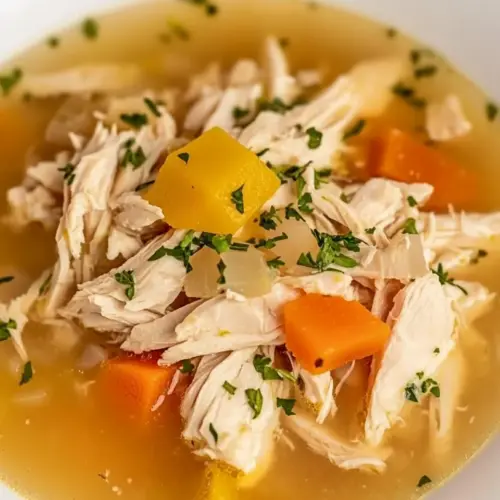
Homemade Chicken Soup From Scratch
Homemade Chicken Soup From Scratch is a warm, nourishing bowl with rich, clear broth and tender shredded chicken. This easy weeknight dinner uses simple whole ingredients to create savory depth, silky mouthfeel, and bright finishing notes of lemon. It s comforting, nutritious, and perfect for cold nights or when you need a restorative meal, making it worth cooking from scratch.
Equipment
- Fine-mesh strainer
- Spoon
Ingredients
- 3 -4 pound whole fresh chicken, giblets removed Roast or simmer whole to build a rich, gelatinous broth and provide tender shredded meat; remove giblets before cooking to avoid bitterness and unwanted textures. Use the carcass and bones for long simmering to extract collagen and deep chicken flavor that forms the soup's backbone.
- 2 large yellow onions, peeled and halved Sear or simmer halved to add savory sweetness and depth to the stock; peeling concentrates a cleaner flavor and halving exposes more surface for browning. Remove and discard skins if desired to reduce fat, or simmer with skins on for additional richness.
- 1 head garlic, cut in half horizontally Smash or simmer halved to impart mellow, aromatic garlic tones and subtle sweetness to the broth; cutting exposes cloves and releases oils during cooking. Add near the beginning of the simmer to diffuse savory umami throughout the soup.
- 1/2 small jalapeno, seeded and ribs removed Seed and simmer or finely chop to contribute a mild, bright heat and vegetal freshness without overwhelming the broth; removing ribs and seeds controls spiciness. Add sparingly early in cooking to infuse a gentle chile note that complements the chicken.
- 2 dried bay leaves Toast or simmer whole to introduce a faintly floral, slightly bitter aromatic that balances rich broth flavors; remove before serving. Use bay leaves during long simmering for subtle complexity and herbaceous backbone.
- 1/2 teaspoon kosher salt, + more to taste Season early to enhance and bring forward the flavors in the stock, adjusting later to taste; kosher salt dissolves efficiently in broth. Add gradually while simmering to avoid over-salting as flavors concentrate.
- 1/2 tablespoon peppercorns, or 1 teaspoon ground black pepper Crush or grind and add to develop pungent warmth and aromatic bite throughout the soup; whole peppercorns can be simmered and removed or coarsely cracked for texture. Use measured amounts to complement rather than overpower delicate chicken notes.
- 12 cups water Simmer as the liquid base to extract flavor from chicken, vegetables, and aromatics; measure for consistent dilution and cooking volume. Maintain a gentle simmer to concentrate flavor without boiling the proteins harshly.
- 2 large Yukon Gold potatoes, scrubbed and cut into 1/2-inch cubes Scrub and cube to provide tender, starchy body and earthy notes that hold shape when cooked; 1/2-inch cubes cook evenly and thicken the broth slightly. Add at the appropriate time to finish tender but intact, contributing substance to the soup.
- 2 large sweet potatoes, scrubbed, peeled and cut into 1/2-inch cubes Peel and cube to add sweet, creamy texture and vibrant color that contrasts with other root vegetables; uniform 1/2-inch pieces ensure even cooking. Include for a natural sweetness that enriches the broth and pairs well with savory elements.
- 3 large carrots, peeled and diced into 1/2-inch cubes Peel and dice to impart classic sweetness, color, and soft texture; 1/2-inch cubes meld into the broth while retaining pleasant bite. Use to balance savory and starchy components, providing familiar comfort and mouthfeel.
- 1 teaspoon reduced sodium soy sauce Add sparingly to deepen umami and boost savory complexity with minimal sodium; reduced sodium soy sauce lends color and fermented depth. Stir in toward the end of cooking to layer flavor without making the soup distinctly soy-forward.
- 1 large lemon, juiced Squeeze fresh to brighten and lift the finished soup with acidic clarity; lemon juice cuts through richness and enhances other flavors. Add a little at a time to achieve a balanced, lively finish without overpowering the broth.
Instructions
- Place a 3-4 pound whole fresh chicken, 2 large yellow onions (peeled and quartered), and 1 head garlic (cut in half), 2 dried bay leaves, 1/2 small jalapeno, 1/2 teaspoon kosher salt, and 1/2 tablespoon peppercorns into a large stock pot, soup pan, or Dutch oven. Cover with 12 cups water.: The first inhale when you add the water is wonderful, expect an immediate vegetal and poultry aroma as the pot warms. You will notice tiny bubbles forming along the metal when the water heats, but you are not aiming for a rolling boil right now. This gentle start lets collagen and flavors leach slowly from the bones, producing a clearer broth and richer mouthfeel. If you crank the heat too high you'll agitate the proteins and create cloudiness, so keep things low and steady. A frequent misstep here is overfilling the pot, which can cause spillage when simmering, so leave headspace for bubbling.
- Bring the stock to a simmer over medium heat. As the soup comes to a simmer, remove any cloudy material that rises to the top of the broth with a fine-mesh strainer scum off the top of the soup as it forms and discard.: Listen for the change from quiet warming to the soft hiss of bubbles breaking at the edge, that is your cue that proteins are coagulating and impurities are separating. Skimming these scum bits improves clarity and keeps the flavor clean, and using a fine mesh strainer gives you control. The smell becomes more brothlike, moving from raw poultry to savory depth. Avoid stirring vigorously, because that suspends the solids and makes skimming harder.
- Once the soup is simmering (small bubbles around the edges of the pan), turn the heat to medium-low and cover the pan with a lid. Simmer for 1 hour and 30 minutes, or until the chicken is tender and falling apart.: During this long simmer you should notice a gentle steady aroma that deepens over time, the kitchen filling with warm, homey notes. Check occasionally that the simmer remains gentle, adjusting the flame so bubbles do not become angry and rapid. This slow process extracts gelatin and flavor while keeping the broth clear and balanced. A common mistake is lifting the lid too often, which lets heat escape and stretches the cooking time.
- Remove the chicken and place it on cutting board or large bowl/casserole dish. Discard onions, garlic bulb, bay leaves, and peppercorns. You can choose to strain the broth or simply use a spoon to fish out the ingredients from the broth.: The chicken will feel tender and hot; when you pull it free you will see the meat start to separate from the bones. The broth should now smell rounded and savory without sharp raw notes. Removing aromatics and spices prevents them from overcooking and turning bitter. If you choose to strain, you will notice the broth shine and look clearer; failing to remove all solids can leave gritty textures in the final soup.
- Optional: Refrigerate broth for a few hours or overnight to let fat consolidate and harden on the surface of the soup. Once the fat rises to the surface, scoop it out and discard.: Refrigerate broth for a few hours or overnight to let fat consolidate and harden on the surface of the soup. Once the fat rises to the surface, scoop it out and discard : Cooling reveals the fat as a pale layer on top, and removing it yields a lighter mouthfeel and cleaner flavor. You will hear a soft clink when the cold fat hardens if you tap the container, which is oddly satisfying. The downside is waiting, but the payoff is a less greasy bowl. A common error is trying to remove warm fat with a spoon, which is messy and less effective compared to chilled solidified fat.
- If needed, return the broth to the soup pan and bring back to a simmer over medium heat. Once simmering, add the 2 large Yukon Gold potatoes (cubed), 2 large sweet potatoes (cubed), 3 large carrots (sliced), and 1 teaspoon reduced sodium soy sauce and cook until vegetables are tender about 20-30 minutes.: As the vegetables hit the simmering broth you will hear a gentle bubbling and smell the sweetness of the root vegetables entering the pot. The steam will carry a layered aroma of starch and vegetal sweetness, a sign that the soup is rounding out. Keeping the simmer steady ensures even cooking and prevents overmashing of the sweet potatoes. A typical slip is overcrowding the pot with too many pieces at once, which causes uneven cooking and longer times to reach tenderness.
- While the vegetables are simmering, prepare the chicken. Remove the skin and discard. Remove the meat from the bones and discard the bones. Shred or dice the chicken into bite-sized pieces. Measure out 2-3 cups of the chicken and save the rest to use in another recipe.: Working with warm chicken feels satisfying, and you will see the meat separate easily if it is cooked properly. The texture should be tender, moist, and slightly fibrous when shredded. Keeping some cooked meat for other meals is efficient, and saving the measured 2 to 3 cups guarantees the soup stays balanced. One pitfall is leaving the skin on, which can add unwanted greasiness; removing it keeps the soup cleaner.
- Once the vegetables are tender, add 2-3 cups of the shredded chicken to the soup and simmer for 2-5 minutes, just to warm through.: The brief simmer warms the chicken and allows its juices to mingle with the vegetables without breaking down the meat. You will notice a shimmering surface as the protein heats and the aromatic balance settles. This short finish preserves texture and prevents the chicken from becoming stringy. Overcooking here flattens flavor and yields dry pieces, so be mindful of timing.
- Remove the soup from the heat and add the juice of 1 large lemon to the soup. Stir to combine. Taste and season with salt and pepper as desired.: The final squeeze of lemon should make the broth pop, cutting through richness with a bright clean note. Stirring integrates the citrus, and a careful taste test lets you adjust seasoning just before serving. The aroma at this point is lively and balanced, and that first spoon will feel fresh and satisfying. Adding too much acid at once can dominate the bowl, so start with less and add more if needed.
Notes
- Use chicken pieces: If you prefer, substitute bone in pieces such as thighs and drumsticks for the whole bird. They release great flavor and are easier to handle for some cooks, though the stock may be slightly lighter than when using a whole bird with carcass attached.
- Add noodles just before serving: Cook egg noodles separately in salted boiling water and stir into bowls rather than simmering them in the pot, this prevents them from soaking up too much broth and becoming gummy over time.
- Keep it gluten free: Replace the reduced sodium soy sauce with tamari or coconut aminos to maintain umami without gluten; this preserves the depth while respecting dietary needs.
- Double the batch for freezing: Make a large pot and portion into freezer safe containers, leaving space for expansion; frozen portions thaw easily for quick meals later and the flavor holds up well after reheating.
- Make a lighter broth: Remove the skin from the chicken before simmering for a naturally leaner soup, or skim more frequently while cooking to keep the broth clear and low in fat.
- Reserve extra shredded chicken: Measure and store leftover shredded meat separately for salads or sandwiches, this is a smart way to stretch ingredients across multiple meals.