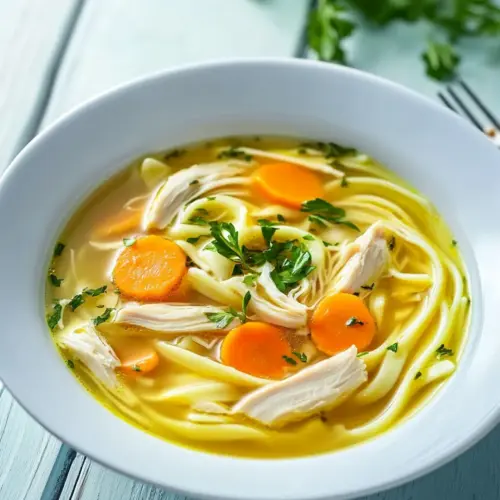
Homemade Chicken Noodle Soup
Homemade Chicken Noodle Soup is a warm, comforting bowl featuring tender chicken, handmade whole wheat noodles, and bright vegetables. This easy weeknight dinner balances savory broth and chewy noodles for a hearty, nourishing meal. It’s perfect for chilly evenings or when someone needs a gentle, restorative dish to feel better.
Equipment
- Large Stockpot
- Mixing Bowl
- Rolling Pin
- Pizza Cutter
- Knife
Ingredients
- 1 1/2 cup flour, whole wheat Provide structure and fiber to the dough for homemade noodles; whole wheat flour adds a hearty texture and a nutty flavor. It helps absorb liquids and bind the batter so the noodles hold up in simmering soup. Adjusts the soup's mouthfeel to be more rustic and wholesome.
- 1/4 cup milk Add creaminess and moisture to the noodle mixture while enriching flavor; milk helps hydrate the flour for a tender dough. It contributes lactose and proteins that brown slightly during cooking and improve texture. Use at room temperature for even incorporation.
- 1 large egg Bind the noodle dough together and contribute richness and protein; the egg helps create elasticity and structure. It also aids in browning and adds a silky mouthfeel to noodles once cooked. Whisk thoroughly to combine with the milk before adding to dry ingredients.
- 1/2 teaspoons salt Season the noodle dough and enhance overall flavor balance; salt strengthens gluten slightly and brings out other tastes in the soup. Use the specified amount to avoid over-seasoning the broth later. Dissolve evenly in the liquid components for consistent seasoning.
- 2 tablespoon olive oil Provide fat for sautéing and a subtle fruity flavor; olive oil helps coat ingredients and prevents sticking during cooking. It adds a smooth mouthfeel and can be used both in the noodle dough and for browning aromatics. Choose extra-virgin for more pronounced flavor or regular for milder taste.
- 1/2 pound chicken breast Supply lean protein and body to the soup while adding savory flavor; chicken breast cooks quickly and becomes tender when simmered. It contributes to the broth's depth and can be shredded or diced for even distribution. Properly cooked chicken ensures a satisfying, protein-rich bowl.
- 1 medium onion Form the aromatic base by providing sweet, savory notes when sautéed; onion adds depth to the broth and balances other flavors. It softens and caramelizes slightly to contribute natural sugars and umami. Dice uniformly for consistent texture throughout the soup.
- 4 cup chicken broth, low-sodium Create the flavorful liquid foundation and convey savory depth; low-sodium chicken broth allows better control over final seasoning. It hydrates noodles and vegetables and carries aromas throughout the dish. Choosing low-sodium helps prevent an overly salty soup.
- 5 medium carrot Add natural sweetness, color, and texture while supplying vitamins and slight earthiness; carrots become tender and release flavor into the broth. They complement savory elements and balance the soup's profile with a pleasant bite. Slice or dice for consistent cooking times.
- 5 stalk celery Contribute crisp vegetal flavor and aromatic notes to the soup's base; celery softens and imparts a subtle savory bitterness that enhances complexity. It pairs with onions and carrots to form a classic mirepoix for depth. Chop evenly so pieces cook through alongside other vegetables.
- 1 cup green peas, frozen Introduce poppable bursts of sweetness and color while adding nutrition; frozen green peas cook quickly and help brighten the soup. They retain a tender texture and contribute plant-based protein and fiber. Add toward the end of simmering to preserve color and texture.
- 2 tablespoon parsley, fresh Provide fresh herbaceous brightness and a clean finish; chopped fresh parsley lifts flavors and contrasts richness from broth and chicken. It enhances visual appeal and adds subtle aromatic notes when stirred in before serving. Use leaves, not stems, for the best texture.
- 1/4 teaspoons salt Fine-tune seasoning and reinforce savory balance; additional salt can be used to adjust final taste after ingredients have combined. It ensures the soup's flavors are cohesive and well-rounded without overpowering other components. Add gradually and taste as you go.
- 1/4 teaspoon black pepper, ground Add mild heat and aromatic warmth while accentuating savory flavors; ground black pepper provides a subtle piquancy to the finished soup. It rounds out the seasoning and complements herbs and vegetables. Grind fresh for the most vibrant flavor.
Instructions
- Mix noodle ingredients together until blended. The dough should be fairly stiff, but soft enough to knead.: When you mix the flour , milk , egg , salt , and olive oil , you will feel the dough change from crumbly to cohesive under your palms. The surface should feel tacky but not sticky, and the aroma will be faintly wheaty with a hint of richness from the egg . This step matters because even hydration ensures the noodles roll out smoothly and cook evenly, preventing gummy edges. If the dough feels dry, add a teaspoon of milk at a time until it comes together; if it is too wet, sprinkle a little flour to bring back structure. A common mistake here is overworking the dough right away, which can make the noodles tough after cooking.
- Roll out the dough as thin as you can.: As you roll, the dough will relax and spread, becoming more translucent at the edges. You want a thin sheet so the noodles cook quickly and have a tender bite. The surface should be slightly firm to the touch with barely visible air pockets and a faint sheen from the olive oil . Rolling thin also helps the noodles absorb broth without becoming stodgy. To avoid tearing, let the dough rest for a few minutes if it springs back, and dust lightly with flour to prevent sticking. New cooks sometimes keep the dough too thick, which results in heavy, doughy noodles.
- Take a pizza cutter and cut out noodles into long, thin strips.: As you slice, the knife will make clean edges and the sound will be a soft tearing rather than a heavy drag. Aim for consistent widths so they cook at the same rate and present nicely in the bowl. The cut edges should be sharp and catch light slightly, which indicates a clean cut that will not fray in the soup. If the strips stick together, separate them gently with a fork and toss with a dusting of flour . Cutting unevenly is a frequent oversight that leads to uneven cooking times.
- Let the noodles dry for 2 hours. Toss them occasionally while they dry to keep them from sticking.: As the noodles rest, their surface will matte and firm up, reducing the risk of clumping in the pot. You will notice the raw dough scent fade and the edges become slightly chewier. Tossing breaks any small clusters and ensures air circulates. This drying step helps the noodles retain shape when added to simmering broth. Skipping the toss can cause sticky clumps that are hard to separate later, so take the time to move them a couple of times during drying.
- Heat a small amount of olive oil in a large stockpot, and place raw chicken breasts in the pot. Brown on all sides.: When the oil shimmers and you add the chicken , you should hear a confident sizzle, and the meat will begin to color at the contact points. Browning develops Maillard flavors, which translates to a deeper, more complex broth after simmering. Use medium-high heat to create a golden exterior without burning. If the pan is too cold, the chicken will stick and steam instead of browning, losing that desirable roasted note. A common mistake is crowding the pot, which prevents proper browning.
- Add chopped onions and fry for about five minutes, then add broth to cover chicken and onions.: As you turn the breasts, watch for even golden patches, and notice the aroma shift toward toasted, savory notes. Browning creates fond on the pot bottom, which will dissolve into the broth and add richness. Cook until each side has a warm brown color, not blackened, which takes attention and a steady hand. Avoid flipping too often, which can prevent a crust from forming. If you see smoke, lower the heat slightly to preserve a clean flavor.
- Simmer the chicken in broth until tender and cooked through. Remove chicken and cut into bite-sized pieces. Set aside.: The onions will become translucent and release a sweet, savory perfume as they soften and mingle with the browned bits. When you pour in the chicken broth , steam will rise and lift those browned fond particles into the liquid, enriching the stock. This step matters because the softened onion builds the aromatic base and the broth carries that flavor through the soup. Avoid adding broth that is cold, which can chill the pot and slow development; warm or room temperature broth integrates more smoothly.
- Add chopped carrot and celery to the broth. Simmer for 10 minutes or until veggies begin to get tender.: As the pot simmers, tiny bubbles will rise steadily and the aroma will deepen into a comforting, savory scent. The chicken will firm and then yield when pierced, indicating doneness. Remove it to cool briefly, then slice into bite-sized pieces that will be easy to eat. Simmering gently extracts flavor into the liquid without toughening the meat. Over boiling can make chicken stringy and dry, so maintain a gentle simmer for the best texture.
- Add noodles to the pot, along with the bite-sized pieces of chicken.: Placing the diced chicken aside preserves its texture until the noodles are added, preventing it from overcooking. The residual heat will keep it warm, and holding it out also allows you to concentrate on softening the vegetables without the meat breaking down. A common oversight is leaving the meat in the pot during noodle cooking, which can lead to overly firm or shredded pieces.
- Cook about five more minutes, until the noodles are tender.: You will see the broth take on a sweeter, more vegetal aroma as the carrot and celery release their flavors. The vegetables should be tender yet still hold shape, offering a pleasant bite in the finished bowl. This step contributes texture and natural sweetness that balances the savory broth. Cook longer if you prefer very soft vegetables, but be mindful that extremely long simmering will dilute some brightness.
- Add peas, parsley, plus salt and pepper to taste. Serve hot.: When the dried noodles hit the simmering broth you will see them hydrate and plump, and the surface will ripple as the liquid absorbs into the pasta. Returning the chicken now ensures it warms through without the protein breaking down. The noodles will begin to release a subtle starch that gently thickens the broth, making it feel more substantial. Avoid adding noodles to a rolling boil, which can make them fall apart; a gentle simmer is ideal.
- Cook about five more minutes, until the noodles are tender: In these final minutes you will notice the aroma become rounded and the broth taking on a slightly thicker mouthfeel from released starch. Taste a noodle for that perfect tender bite, and check the seasoning. Overcooking will make them mushy, while undercooking leaves a raw flour note, so monitor closely. A common error is walking away during this short window, leading to inconsistent texture.
- Add peas, parsley, plus salt and pepper to taste: Stirring in the green peas and fresh parsley brings a pop of color and a bright herbal finish. The peas will heat through quickly, maintaining their sweet snap. Adjust the final seasoning with the salt and black pepper to balance the bowl. Adding these at the end preserves the fresh flavors and avoids overcooked, faded greens. Over-salting at this point is an easy mistake, so taste before making a large adjustment.
- Serve hot: A hot bowl will send up steam and the combined aromas will be most expressive, making the first spoonful full and satisfying. I like to ladle the soup into warmed bowls so it stays cozy while eating. If the soup sits, the noodles will continue to absorb broth, so serve promptly for the best texture.
Notes
- Make noodles slightly thinner than you think, because they will swell in the broth. Thinner noodles cook quickly and give a lovely tender chew without becoming heavy. Aim for even thickness so cooking is consistent.
- Browning is flavor, so don’t rush the sear on the chicken. A golden crust adds depth to the broth that plain poaching cannot replicate, and the fond contributes savory complexity.
- Use low sodium broth to take control of the final salt level. It is easier to add salt at the end than to fix an overly salty soup, and low sodium broth lets the natural sweetness of the carrot and onion come forward.
- Watch the noodle drying time, and toss occasionally to prevent sticking. Properly dried noodles separate easily in the pot and cook more uniformly, avoiding clumps.
- Add peas and parsley at the end to preserve color and fresh flavor. These bright notes lift the soup and prevent the greens from becoming dull and overcooked.