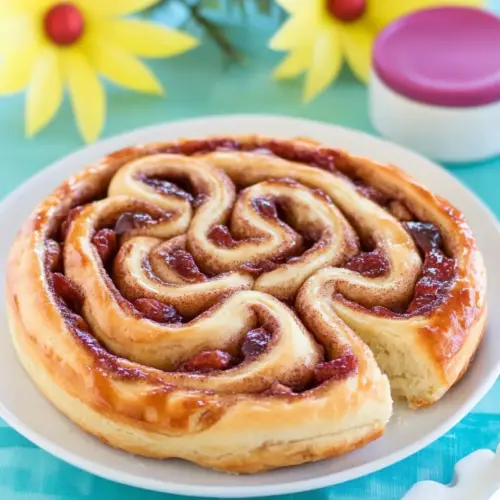
Holiday Cinnamon Rolls
Holiday Cinnamon Rolls offer pillowy, aromatic dough swirled with cinnamon and sweetener for a cozy, irresistible treat. These soft, slightly caramelized rolls are perfect for a weekend brunch or festive morning, delivering warm spice and tender crumb in every bite. Make them ahead or bake fresh for impressive results, ideal when you want an easy crowd pleasing pastry to share.
Equipment
- Large saucepan
- Electric Mixer
- Rolling Pin
- Serrated Knife
- Parchment-lined cookie sheet
Ingredients
- 1/2 cup pure unsalted butter Melted and rich, provides tender crumb and adds buttery flavor to enrich the dough and improve mouthfeel during baking.
- 1/2 cup coconut palm sugar optional 1/3 cup plus one tablespoon honey Granulated unrefined sweetener that supplies caramel-like sweetness and helps with browning; an alternative honey offers moisture and natural sugars if used.
- 2 cups low fat milk 1% to 2%, not skim Low-fat milk contributes liquid, mild dairy flavor, and protein to feed yeast and create a soft, pliable dough while keeping fat moderate.
- 1 yeast package Active dry or instant leavening agent that ferments sugars to produce carbon dioxide, giving the rolls lift and airy texture.
- 1/2 teaspoon kosher or sea salt Fine mineral salt that enhances overall flavor balance and strengthens gluten slightly, controlling fermentation and improving taste.
- 1/2 teaspoon baking powder Chemical leavening agent that can provide additional lift and tenderness when combined with acidic components or baking soda in the dough.
- 1/2 teaspoon baking soda Alkaline leavening agent that reacts with acids to produce carbon dioxide, aiding browning and contributing to rise and softness.
- 4 to 5 cups white whole wheat flour used in this recipe was King Arthur White Whole Wheat Flour Whole-grain white wheat flour supplies structure, fiber, and a slightly nutty taste; measured volume determines dough hydration and consistency.
- 1/4 cup pure unsalted butter melted Clarified or melted butter adds richness and moisture to fillings or dough, creating tender layers and helping cinnamon-sugar adhere.
- 6 tablespoons coconut palm sugar optional, sucant or stevia Sweet filling sugar that caramelizes during baking, contributing to gooey texture; alternative sweeteners can adjust flavor and sweetness level.
- 2 teaspoons cinnamon Warm, fragrant spice that provides characteristic cinnamon flavor and aroma, complementing sugar to create the classic roll filling.
- 1 cup pomegranate seeds optional filling: raisins, minced nuts, coconut, orange zest or cran-raisins Juicy pomegranate arils bring bright tartness and bursts of texture to the filling; optional dried or citrus elements can be substituted for variation.
Instructions
- Add to a large saucepan butter, coconut palm sugar and milk. Bring uncovered mixture to a boil over medium heat. Remove from heat as soon as it starts to boil. Cover saucepan and allow mixture to cool to lukewarm. The mixture should be slightly warm in order to activate the yeast.: You will notice the butter melting and the sugar dissolving as the mixture warms, releasing a toasty, sweet aroma that tells you flavors are marrying. Stir gently to combine and watch the surface for tiny ripples that signal approaching simmer. Avoid leaving the mixture unattended because milk can foam up and spill quickly if it reaches a rolling boil, creating a mess and reducing the liquid you need for a tender dough.
- Use an electric mixer, sprinkle one package yeast over milk mixture and add a little flour at a time while mixing, until the dough resembles cake batter consistency, approximately 1 1/2 cups flour. Cover saucepan, set in a warm place and allow to rise for two hours.: As the pan comes to a gentle boil you should see steady bubbles breaking on the surface and smell a light caramel note from the sugar. Remove promptly from heat the moment it boils to prevent scorching, and allow the mixture to cool until it is just warm to the touch, which is key for activating the yeast without killing it. A common mistake is adding yeast to a too hot mixture which will render it inactive, leading to dense rolls.
- Add salt, baking powder and soda, stir to combine. Add enough flour to resemble a soft biscuit dough, approximately 2 1/2 cups flour. Cover and allow to set in the refrigerator for 2 hours, or up to 24 hours to make ahead.: When you take the pan off the burner the steam will continue to carry aroma, and the residual heat will keep things warm enough for a few minutes. Cover the saucepan to trap heat and bring the temperature down evenly, creating a stable environment for the yeast when added. If you rush and add yeast while the liquid is still piping hot, you risk losing rising power, so always test the warmth on your wrist before proceeding.
- For instructional photos on preparing the cinnamon rolls, click here.: Cooling produces a velvety, warm temperature that feels pleasant on your wrist, not hot. This is the window where yeast thrives, so patience pays off. If it takes longer to cool, swirl occasionally to release extra heat; avoid rapid cooling methods like ice, which can negatively affect the fat structure in the mixture.
- Turn dough out onto a surface lightly dusted with flour, knead and add additional flour as needed, or until dough has lost some of its stickiness. Knead about 2 to 3 minutes. On a lightly floured surfaced, using a rolling pin, roll dough to 1/4" thick rectangle.: When the liquid registers as comfortably warm, sprinkle the yeast on top and let it bloom for a moment. You should see tiny bubbles form as the yeast wakes, a sign of life and fermentation. If nothing happens within ten to fifteen minutes the yeast may be old, so always check expiration dates to avoid a non rising dough experience.
- Evenly spread melted butter on dough, leave about 1/2" around the edges unbuttered. In a small bowl, combine cinnamon with sweetener, sprinkle evenly over butter. Next, sprinkle the pomegranate seeds, or other optional fillings, on the dough.: As you mix, the batter will thicken and emit a yeasty, slightly sweet scent; the texture will shift from liquid to something resembling thick cake batter. Scrape the bowl occasionally to ensure even incorporation and to prevent clumps. Over mixing at this stage can develop too much gluten too soon, which may make the dough tougher after baking.
- Start rolling the dough at the end closest to you. Roll up the dough, tightening the log as you go. After the dough is rolled, pinch the seam to close. Use a serrated knife and cut the rolls into even pieces, about 1 1/2" to 2" each. The yield is approximately 20 cinnamon rolls. Place the rolls on a parchment-lined or non-stick cookie sheet. Make sure the rolls are slightly touching.: At this point the dough should coat the mixer paddle and move as a cohesive mass while still being loose. The sound of the mixer will change, becoming a steady hum rather than a slosh, and visual cues are more reliable than exact measures here. Resist the urge to add the rest of the flour all at once, because you can always add more, but you cannot take it away.
- Allow rolls to rise in a warm place, free of drafts, until doubled in size, about 45 minutes to 1 hour. Bake in a 375 degree oven until golden, about 12 to 15 minutes. Allow to cool about 30 minutes before serving. If desired, drizzle with warm caramel sauce. Click here for the recipe.: As the dough rests you'll begin to detect a faint tang and a pillow like expansion. Put the covered bowl in a draft free spot, perhaps near a warm oven, because drafts slow yeast activity and lead to uneven rise. A common error is placing the dough in a cold room which prolongs or halts rising, so adjust your timing if your kitchen is cool.
- Add salt, baking powder and soda, stir to combine: These dry ingredients slightly change the dough chemistry, balancing flavor and giving a subtle lift. Stirring introduces a soft, grainy sound as the powders blend into the dough and you can feel the mixture tightening under the spoon. Uneven distribution of these agents can create inconsistent texture, so be sure to mix thoroughly but gently.
- Add enough flour to resemble a soft biscuit dough, approximately 2 1/2 cups flour: The dough will move from batter to a tacky, shapable form that holds slight indentations when pressed. On the counter it should feel springy rather than sticky; this is the tactile cue that it is ready for brief kneading. If you under add flour the rolls will be slack and hard to shape, while too much will produce dry, heavy rolls.
- Cover and allow to set in the refrigerator for 2 hours, or up to 24 hours to make ahead: Cooling firms the dough and develops flavor slowly, producing a deeper, more complex crumb. The refrigerated dough will be easier to roll into a uniform rectangle later. A mistake to avoid is skipping the chill entirely, which can lead to overly sticky dough that is difficult to shape evenly.
- For instructional photos on preparing the cinnamon rolls, click here: Visuals can clarify rolling and filling techniques, and when you consult images you often notice details like seam placement or spacing that text alone cannot convey. If you are unsure about shaping, use a photo reference during the first attempt to align your expectations. Relying solely on memory without a visual guide can lead to uneven rolls.
- Turn dough out onto a surface lightly dusted with flour, knead and add additional flour as needed, or until dough has lost some of its stickiness: As you knead, the dough will feel smoother and less tacky, and you will hear a quiet softening as gluten aligns. Kneading for a couple of minutes strengthens the structure without overworking it, which yields a tender interior. If you knead too long the dough may become tough, so stop once the surface feels satiny and slightly elastic.
- Knead about 2 to 3 minutes: Short, deliberate kneading gives good structure while preserving an airy crumb. You should sense the dough resisting slightly then relaxing as you work it. Over kneading is a common trap that leads to dense rolls, so keep this step brief and intentional.
- On a lightly floured surfaced, using a rolling pin, roll dough to 1/4" thick rectangle: The dough should spread smoothly under the pin, and you will feel less resistance as it reaches the uniform thinness you want. Visually, a consistent thickness ensures even baking and uniform swirls. If parts are thicker, the rolls will bake unevenly, so take your time to keep the rectangle even.
- Evenly spread melted butter on dough, leave about 1/2" around the edges unbuttered: The butter should glisten and smell rich as you brush it on, creating a lubricated surface for the filling. Leaving a small margin around the edge allows the seam to seal properly when rolled. A common mistake is overbuttering which can leak during baking and make the bottoms greasy.
- In a small bowl, combine cinnamon with sweetener, sprinkle evenly over butter: The spice mixture should form a fragrant, sandy layer that adheres to the butter and begins to color the dough visually. Press lightly with your hands if needed to ensure the mixture sticks. Uneven sprinkling leads to rolls with some bites overly sweet and others bland, so aim for consistent coverage.
- Next, sprinkle the pomegranate seeds, or other optional fillings, on the dough: The seeds will glint like jewels and add a juicy snap when baked, while dried fillings bring chew and textural contrast. Distribute evenly for predictable bites in every roll. Avoid overfilling which can make rolling messy and cause seepage during baking.
- Start rolling the dough at the end closest to you: As you roll you will feel the dough compress slightly, and the spiral will tighten into a neat log. Keep steady pressure to avoid air pockets and to form uniform swirls. If you roll too loosely, the interior layers will spread apart and the rolls may collapse during baking.
- Roll up the dough, tightening the log as you go: Tight rolling results in compact, even spirals with good internal structure; you should hear a soft creak as the layers compress. Once rolled, the seam should be pinched firmly to prevent unrolling in the oven. A loose seam is the usual cause of messy, unshaped rolls after baking.
- After the dough is rolled, pinch the seam to close: A sealed seam keeps the log intact and ensures the slices hold their shape. Run your finger along the seam to feel for any gaps and press them closed. An unsealed seam can open during slicing or baking, creating uneven rolls.
- Use a serrated knife and cut the rolls into even pieces, about 1 1/2" to 2" each: A serrated knife slices through gently without compressing the spiral, yielding clean edges and preserving the swirl. Aim for consistent thickness so each roll bakes at the same rate. Pressing down with a dull knife or a hand that squashes the roll will deform the spiral and affect appearance.
- The yield is approximately 20 cinnamon rolls: Laying out the rolls, you will see a pleasing uniformity if your cuts were consistent, and this is the moment to adjust any misfits. If some rolls are larger, they will take longer to bake, so try to keep sizes similar for even results.
- Place the rolls on a parchment-lined or non-stick cookie sheet: The parchment will prevent sticking and encourage an even bottom crust. Arrange the rolls so they are slightly touching, which encourages them to rise upward and produce soft sides that press against each other.
- Make sure the rolls are slightly touching: When rolls touch they support one another, creating a soft side crumb where they meet, which I love for its tender texture. If spaced too far apart they will brown more on the sides and may have drier edges.
- Allow rolls to rise in a warm place, free of drafts, until doubled in size: During this final rise you will see the rolls become puffy and nearly double; they should look aerated and feel springy when touched lightly. Aim for forty five minutes to one hour depending on room temperature. If your kitchen is cool, try the oven trick described in the notes, because slow rising can make them dense.
- About 45 minutes to 1 hour: Timing is a guideline; use visual and tactile cues to decide. Overproofing will cause collapse in the oven, while underproofing yields tight, heavy centers, so trust the feel and appearance more than the clock.
- Bake in a 375 degree oven until golden, about 12 to 15 minutes: As they bake you will hear a faint crackle and smell a richer caramel aroma as sugars brown. The tops should turn golden and the centers should bounce back slightly when pressed. Avoid opening the oven repeatedly because temperature drops can affect rise and texture.
- Allow to cool about 30 minutes before serving: Cooling sets the internal structure and makes slicing neater; warm rolls are delightful but too hot and the filling runs. Thirty minutes gives you room temperature centers that are tender and cohesive.
- If desired, drizzle with warm caramel sauce: A warm drizzle adds extra gloss and a sticky finish that many people love; the sauce merges with the filling and enhances sweetness. Be mindful not to add too much, which can overwhelm the delicate crumb and obscure the cinnamon notes.
- Click here for the recipe: If you follow linked visuals or references, they can clarify any remaining uncertainties and help you refine technique on subsequent bakes.
Notes
- Swap sweeteners carefully Replace coconut palm sugar with the suggested honey option sparingly, because honey adds moisture and can change baking times; reduce other liquids slightly if you use the honey pathway.
- Try different fillings Use the optional pomegranate seeds for a fresh burst, or go with dried fruits and nuts to add chew and crunch while maintaining overall sweetness balance.
- Overnight make ahead Refrigerate the dough for up to twenty four hours after the first rise to deepen flavor, then roll and bake the next day for a fresher tasting result with minimal morning effort.
- Faster rise option Preheat the oven briefly and turn it off, then place the covered rolls inside to speed proofing; monitor closely so they do not overproof in a warm pocket.
- Control sweetness level Reduce the filling sugar slightly if you prefer a less cloying result, while keeping the butter ratio the same to preserve mouthfeel.
- Make smaller bites Cut the log into slightly thinner slices to create mini rolls that bake faster and are perfect for parties where guests want sampler portions.