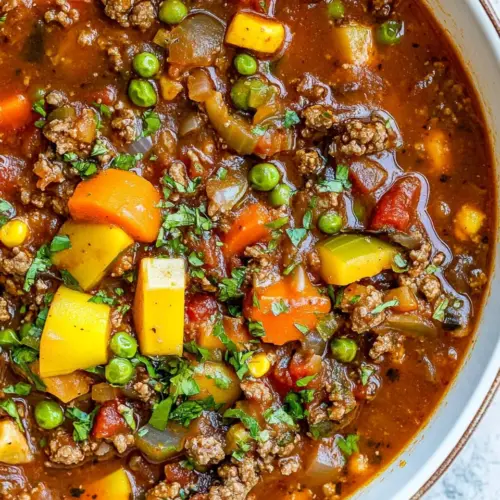
Hobo Stew
Hobo Stew is a hearty, savory one pot meal with tender potatoes, browned ground beef, and a rich tomato broth. Perfect as an easy weeknight dinner, this comforting stew blends earthy mushrooms, sweet corn, and peas for a balanced bowl that reheats well and feeds a crowd. Make it for chilly evenings when you want a simple, soul warming meal.
Equipment
- Dutch Oven
- Wooden Spoon
Ingredients
- 2 tablespoons olive oil Heat and coat the pan to prevent sticking and add a subtle fruity richness; olive oil also helps sauté aromatics and develop browning on the beef. Use it sparingly to control fat content while enhancing overall mouthfeel and flavor integration in the stew.
- 1 1/2 pounds ground beef Brown to develop savory depth and provide the primary protein and texture for the stew; ground beef releases juices that enrich the broth. Break into small pieces while cooking to ensure even distribution and meld with vegetables and seasonings.
- 1 cup diced onion about half a large onion Sauté to build a sweet, savory base and add aromatic complexity; diced onion contributes moisture and natural sugars that deepen flavor. Cook until translucent to balance acidity from tomatoes and to harmonize with other vegetables.
- 1 cup chopped carrots Simmer to add natural sweetness and body while providing bite and color; chopped carrots also contribute nutrients and bulk to the stew. Cut evenly so they cook at the same rate as potatoes and complement the texture of other vegetables.
- 8 ounces sliced mushrooms Sear to impart an earthy, umami depth and tender texture; sliced mushrooms absorb surrounding flavors and enhance savoriness. Add them during browning or simmering to release juices that enrich the broth.
- 2 teaspoons minced garlic about 2 cloves Infuse to provide pungent, aromatic sharpness and boost savory notes; minced garlic releases flavor quickly when heated. Add toward the end of sautéing to avoid bitterness while maximizing aromatic presence.
- 2 tablespoons Worcestershire sauce Enhance with tangy, savory complexity and create a deeper meaty flavor profile; Worcestershire sauce adds umami, acidity, and subtle sweetness. Stir in during simmering to meld with the broth and balance tomato flavors.
- 1 tablespoon Italian seasoning Season to provide a fragrant herb blend that complements tomatoes, meat, and vegetables; Italian seasoning adds rosemary, oregano, basil, and thyme notes. Use according to taste to create an aromatic backbone for the stew.
- 1 (14.5-ounce) can diced tomatoes not drained Contribute bright acidity and chunky tomato pieces while adding liquid to the stew; diced tomatoes introduce tang and texture. Include the undrained juices to bolster the tomato base and enhance overall flavor.
- 2 cups beef broth Simmer to build a rich, savory liquid base and deepen meaty flavors; beef broth adds concentration and complementary seasoning. Use it with tomato liquids to create a balanced, hearty cooking medium for vegetables and meat.
- 2 cups tomato juice or V-8 Dilute and season the broth while adding vegetable-forward flavor and additional liquid; tomato juice or V-8 brings tomatoey tang and complementary seasonings. Combine with beef broth to achieve a well-rounded, flavorful stew consistency.
- 2 cups chopped potatoes peeled and cut into 1-inch cubes Provide hearty starch and a filling texture when peeled and cubed; potatoes thicken the stew slightly and absorb surrounding flavors. Cut into uniform 1-inch pieces to ensure even cooking alongside carrots and meat.
- 1 cup frozen corn Add bursts of sweet, crisp kernels that contribute color, texture, and a hint of natural sugar; frozen corn cooks quickly and holds shape. Toss in near the end of simmering to preserve tenderness and bright flavor.
- 1 cup frozen peas Supply tender, slightly sweet bites that boost color and nutritional value; frozen peas soften quickly and blend into the stew. Add toward the final minutes of cooking to maintain their delicate texture and freshness.
- salt and pepper to taste Balance flavors to taste and enhance overall seasoning; salt and pepper allow control over savory and spicy notes. Season gradually during cooking and adjust at the end for optimal taste.
Instructions
- Heat a large Dutch oven over medium-high heat, add 2 tablespoons olive oil and 1 1/2 pounds ground beef and cook and crumble until it begins to brown and is no longer pink.: The air will fill with a rich, meaty scent as the ground beef hits the hot oil; you should hear a steady sizzle that tells you the pan is properly heated. As the meat browns, it will release browned bits that stick to the pot, and those bits carry deep flavor into the stew, so resist the urge to rush. Use a wooden spoon or spatula to break the meat into small pieces, turning occasionally until there is no visible pink. If the pot looks wet, let the meat continue to brown so the moisture reduces and the Maillard reaction develops a richer aroma and darker color. A common mistake is overcrowding the pot, which causes the meat to steam rather than brown; if you notice a lot of liquid, briefly increase heat to evaporate excess moisture, then reduce before adding other ingredients.
- Add 1 cup diced onion, 1 cup chopped carrots, 8 ounces sliced mushrooms, and 2 teaspoons minced garlic, and cook for 4-5 minutes until the vegetables begin to soften.: Right after adding the vegetables you will smell the onion and garlic waking up; the mushrooms will release a savory perfume and a little liquid. Keep the heat at medium high at first so you get a touch of color on the edges of the vegetables, then lower slightly if anything threatens to brown too fast. Stir frequently so the vegetables sweat evenly and the garlic does not burn, which would introduce bitterness. The carrots should start to yield but remain slightly firm, and the mushrooms will shrink as they release water. A frequent error here is adding garlic too early at high heat and letting it scorch; add the garlic toward the end of this brief sauté to preserve its sweet, garlicky aroma.
- Add 2 tablespoons Worcestershire sauce, 1 tablespoon Italian seasoning, 1 (14.5-ounce) can diced tomatoes, 2 cups beef broth, 2 cups tomato juice, 2 cups chopped potatoes, 1 cup frozen corn, 1 cup frozen peas, and salt and pepper to taste. Bring to a simmer, then turn the heat to medium-low and cover. Simmer for 30-40 minutes, stirring occasionally until the potatoes are tender.: As you add the liquids and seasonings the pot will go quiet then begin to simmer as the flavors meld; the Worcestershire provides an umami lift and the Italian seasoning adds herbal warmth. Stir gently to incorporate the diced tomatoes and to make sure the potatoes are evenly distributed so they cook uniformly. When the tomato juice and broth meet the browned bits in the bottom of the pot, they will release even more aroma and deepen the color of the stew. Taste the liquid for seasoning but remember that flavors concentrate during simmering, so start modest with salt. A common pitfall is adding too much salt early; wait until the end of the simmer to adjust.
- Bring to a simmer, then turn the heat to medium low and cover: You will see small bubbles rise to the surface as the stew comes to a simmer, and steam will begin to escape around the lid. Lowering to medium low ensures a gentle, even cook that softens the potatoes without breaking them down completely. Covering the pot traps steam and concentrates flavor, while preventing the liquid from evaporating too quickly. Check that the simmer is gentle; a vigorous boil can shatter tender vegetables and cloud the broth. One mistake is leaving the heat too high, which can over reduce the liquid before the vegetables are tender, leaving the stew too thick.
- Simmer for 30 to 40 minutes, stirring occasionally until the potatoes are tender: During this long simmer the kitchen will fill with layered aromas from the beef , tomatoes , and herbs; the potatoes will soften and begin to absorb the broth, becoming creamy at their center. Stir every 8 to 10 minutes to prevent sticking and to check doneness; use a fork to test the largest potato cubes, which should yield without dissolving. If the stew reduces too much, add a splash of water or broth to loosen the consistency. A common issue is unevenly sized potato pieces; keep them similar in size so they finish cooking at the same time. Once tender, remove from heat and let the stew rest a few minutes before serving so flavors settle.
Notes
- Swap vegetables sparingly, keep the overall ratio of starchy to sweet veggies similar so the stew stays balanced; adding too many watery vegetables can thin the broth.
- Boost umami without fuss, stir in an extra teaspoon of Worcestershire sauce or an extra can of diced tomatoes if you want a deeper savory profile.
- Make it heartier, increase the potatoes by half a cup for more bulk, which helps stretch the stew for extra servings.
- Adjust thickness, if the stew finishes too thin, simmer uncovered a few minutes to reduce, or add a spoonful of mashed potato to thicken naturally.
- Keep vegetables intact, avoid over stirring once the potatoes are tender to prevent them from breaking down and turning the stew gluey.