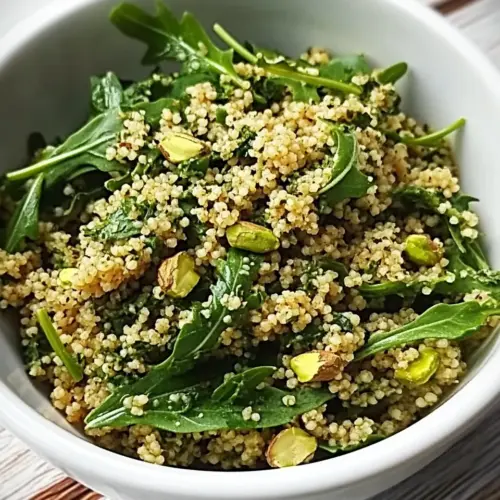
Herbed Couscous with Arugula and Pistachios
Herbed Couscous with Arugula and Pistachios is a bright, easy to make salad featuring nutty whole wheat couscous, fresh herbs, peppery arugula, and crunchy pistachios. This flavorful, quick vegetarian dish is perfect for an easy weeknight dinner or a spring lunch, offering both texture and freshness, making it a must try when you want something simple yet impressive.
Equipment
- Saucepan
- Food Processor
- Large Bowl
Ingredients
- 1 cup whole-wheat couscous Toast to enhance nuttiness and provide a hearty whole-grain base; absorbs the vegetable stock to become tender while retaining a slightly chewy texture. Works as the main bulk of the salad, carrying herbs and dressing so the flavors meld together.
- 1 cup vegetable stock Simmer to infuse the couscous with savory depth; vegetable stock replaces water for added umami and complexity. Helps hydrate the whole-wheat grains evenly so the finished dish is flavorful rather than bland.
- 1 garlic clove Crush to release pungent aromatics and provide a subtle spicy-sweet background; pairs well with lemon and herbs to brighten the dish. Can be minced finely to distribute flavor throughout the couscous without overpowering delicate greens.
- 1 tablespoon olive oil Drizzle to bind ingredients and add silkiness while delivering healthy fats; olive oil also helps carry herb flavors and lemon juice. Emulsifies with lemon to create a light dressing that coats grains and arugula evenly.
- 1 lemon juiced Squeeze to contribute bright acidity and a citrusy lift that balances richness and salt; lemon juice brightens herbs and cuts through the olive oil. Acts as a key component of the dressing, enhancing overall freshness and flavor clarity.
- 1/2 cup parsley chopped Chop to provide vibrant herbaceousness and a fresh green flavor; parsley adds clean, slightly bitter notes that lighten the couscous. Distributes throughout the salad to offer consistent bursts of herbal aroma and texture.
- 1/2 cup cilantro chopped Chop to introduce bright, citrusy, slightly peppery herbal notes that complement parsley and mint; cilantro brings a fresh, lively character. Blends into the dressing and couscous for layered herb flavors throughout the dish.
- 2 tablespoons mint leaves chopped Chop to add cool, aromatic freshness with a menthol-like lift; mint brightens the herb mix and contrasts the peppery arugula. Small amounts provide a fragrant accent that elevates the salad without overwhelming other herbs.
- 1/2 cup pistachios roasted and salted Toast to develop deeper flavor and provide a crunchy contrast; roasted, salted pistachios lend buttery, slightly sweet nuttiness and savory seasoning. Scatter over the finished salad to introduce texture and a pop of color.
- 2 cups baby arugula leaves Toss to contribute a peppery, slightly bitter leafy green that adds volume and a fresh bite; arugula balances the tender couscous and rich nuts. Integrates with herbs and dressing for a lively, textural contrast in every forkful.
- salt and pepper to taste Season to enhance and balance all flavors; salt elevates natural tastes while pepper adds mild heat and complexity. Adjust to taste at the end to ensure the dish is well-balanced and vibrant.
Instructions
- Combine the couscous with the stock in a saucepan. Bring to a boil, cover and turn off the heat. Allow to sit for 10 minutes, covered.: Close your eyes and notice the steam lifting as the hot vegetable stock begins to warm the tiny pearls of couscous , which will look dull and slightly separated at first. The sound is subtle, a gentle simmer and soft bubbling as the liquid moves over the grains. This stage is all about the liquid absorption that transforms dry grains into tender pearls, so use just the measured amount of stock to avoid a mushy texture. A common mistake is adding too much liquid, which results in gluey couscous, so measure carefully and adjust with small amounts if needed. The goal is plump but distinct grains, and you will notice fragrance of the stock lifting as it heats.
- Put the garlic, olive oil, lemon juice, and herbs in a food processor and process until finely chopped. Add the pistachios and pulse until roughly chopped. Transfer to a large bowl and season with salt and pepper.: You will hear a stronger bubbling when the pot reaches a boil, and steam will escape rapidly. Once boiling, cover the saucepan to trap the steam, which finishes cooking the couscous gently; then turn off the heat to let residual warmth do the work. This technique produces tender yet separate grains because it avoids aggressive simmering. A key tip is to keep the lid sealed tight, because lifting it releases steam and may leave the couscous undercooked. If you open the lid and see excess pooling water after resting, drain any small amount off and fluff gently.
- When the couscous is done, add it to the bowl and toss with the herb paste. Stir the arugula into the hot couscous and stir until wilted. Serve warm or at room temperature.: During this quiet resting time, the couscous soaks up all the stock and plumps, giving you a light, fluffy texture. Smell the savory notes rising from the pot, subtle and comforting. Resist the urge to stir while it rests, as that can compress the grains and create a denser result. A typical error is impatience, checking too soon, which yields tougher centers. After ten minutes you should lift the lid and see fully hydrated grains with no visible liquid.
- Put the garlic olive oil lemon juice and herbs in a food processor and process until finely chopped: As you pulse the garlic , olive oil , lemon juice , and herbs, the aroma shifts to vibrant green notes, with citrus and herb blending into a bright paste. The sound is a rapid chopping and whir, and visually you will see the mixture become smooth and glossy. This paste coats the couscous and ensures even distribution of flavor, which is why I finely process it. One thing to avoid is overprocessing into a watery emulsion, which would dilute texture; pulse until the herbs are finely chopped but still retain some body. The goal is a vibrant, slightly textured herb paste that clings to grains.
- Add the pistachios and pulse until roughly chopped: When the pistachios go into the processor they add a nutty fragrance and a thicker texture to the paste. Pulse just enough so you end up with small chunks rather than powder, because those bits provide the satisfying crunch contrast in the final dish. You should see little pale flecks and feel coarse bits when you stir the paste. A common slip is overprocessing into a nut butter, which removes the desired texture, so stop as soon as the nuts are broken into bite sized pieces.
- Transfer to a large bowl and season with salt and pepper: Moving the herb and nut mixture into a roomy bowl lets you combine it freely with the hot couscous later. Take a moment to taste and adjust seasoning now; salt and pepper bring out the herbs and balance the richness from the olive oil and pistachios . Use caution adding salt if your vegetable stock or pistachios are already salty. Over salting is an easy error, so season incrementally and re-taste after mixing with the grains.
- When the couscous is done add it to the bowl and toss with the herb paste: The couscous will be warm and releasing steam as you add it to the herb paste, and as you toss you should notice the dressing clinging to each grain, creating a glossy, aromatic coating. The tactile cue is a light, pillowy texture rather than clumps, and visually you will see flecks of green throughout. Toss gently to avoid crushing the grains, and stop once the dressing is evenly distributed. A frequent mistake is overmixing which compacts the couscous, so fold with care to keep the airy structure intact.
- Stir the arugula into the hot couscous and stir until wilted: Adding the arugula to the still warm couscous softens the leaves slightly and releases a peppery aroma that mellows as it wilts. The sound is subtle, the leaves brushing and collapsing into the grains, and you will notice a glossy sheen as the oil and herb paste coat the greens. This quick wilt preserves some bite while integrating the green flavor; do not cook until limp or you lose the peppery character. A common error is adding the arugula too early into a very hot pot, which can over-wilt it, so add when the couscous is warm but not scorching.
- Serve warm or at room temperature: The final moment is about balance, tasting for any final seasoning and adjusting with a squeeze of fresh lemon if needed. The dish will present as a fragrant bowl with contrasting textures and a bright aromatic profile. Serving warm brings forward the nutty, savory notes, while room temperature highlights the herb freshness. If you overchill the salad it can tighten flavors, so let it come to room temperature before serving if refrigerated. A frequent serving mistake is adding finishing salt only at the start, so always re-taste just before plating.
Notes
- Warm the stock first — Heating the vegetable stock before pouring it over the couscous ensures the grains absorb liquid evenly and reach a tender texture without overcooking, which prevents gummy results.
- Pulse with care — When processing the garlic, herbs, and pistachios, use short pulses to keep a slightly coarse paste, this retains pleasant bites of nut and herb in each forkful.
- Measure liquids precisely — Too much liquid makes the couscous mushy, so follow the stock to grain ratio and correct any small excess by gently fluffing and airing the grains after resting.
- Adjust salt at the end — Because the vegetable stock and roasted pistachios can contain salt, season gradually and taste after tossing to avoid oversalting.
- Serve at flexible temperatures — This dish tastes great warm or at room temperature, which makes it ideal for make ahead meals and gatherings, just avoid serving it straight from very cold storage without letting it rest.