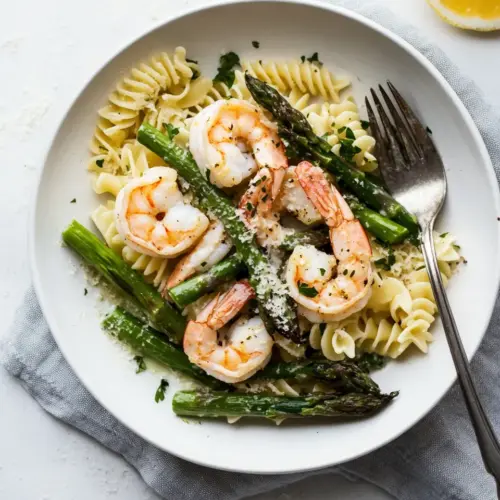
Healthy Shrimp and Asparagus Pasta Recipe
Healthy Shrimp and Asparagus Pasta Recipe is a bright, easy weeknight dinner with tender shrimp, crisp asparagus, and al dente farfalle tossed in a light parmesan and lemon sauce. Creamy yet fresh, this quick pasta delivers satisfying texture and bold flavor in about twenty minutes, perfect for busy evenings when you want something wholesome and impressive to serve.
Equipment
- Large Pot
- Large Skillet
- Colander
- Grater
Ingredients
- 8 ounces farfalle (bow tie) pasta Provides the hearty base and texture for the dish; farfalle holds sauce well in its ruffled pockets and pairs nicely with vegetables and shrimp. Boils quickly and absorbs flavors from the lemony garlic sauce, making the meal satisfying and carb-balanced.
- 1 bunch of asparagus, ends trimmed, cut into bite-size pieces Adds bright, crisp vegetable texture and a fresh green color to the pasta; asparagus cooks quickly and maintains a pleasant snap when cut into bite-size pieces. Contributes vitamins and a mild, slightly sweet flavor that complements the shrimp and lemon.
- 1 tablespoon olive oil Coats ingredients and carries flavors throughout the dish; olive oil provides healthy monounsaturated fats and helps sauté garlic and shrimp without burning. Enhances mouthfeel and aids in creating a light, glossy sauce that clings to pasta and asparagus.
- 1 tablespoon lemon juice + zest from 1/2 lemon Adds bright acidity and aromatic citrus oils that brighten the entire recipe; lemon juice brings tang while the zest provides concentrated lemon flavor. Balances richness from parmesan and olive oil and complements the natural sweetness of shrimp.
- 1 pound medium shrimp, thawed & peeled (tails on optional) Supplies lean protein and a sweet, briny flavor that pairs well with lemon and garlic; medium shrimp cook quickly and absorb surrounding seasonings. Offers a satisfying texture contrast to pasta and asparagus while making the dish protein-rich and filling.
- 4 cloves garlic, minced Infuses the dish with aromatic pungency and savory depth; minced garlic sautés quickly in olive oil to create the flavor base. Enhances overall umami and pairs exceptionally well with lemon, shrimp, and parmesan components.
- 1/2 cup freshly grated parmesan cheese Contributes savory, salty, umami-rich notes and helps bind the sauce to the pasta; freshly grated parmesan melts into a silky coating. Adds depth of flavor and a slightly nutty finish that rounds out the brightness from lemon and vegetables.
- 1 tablespoon fresh parsley, chopped Provides fresh herbal brightness and a mild, clean finish; chopped parsley adds color and a subtle grassy note that lightens richer elements. Serves as a final aromatic garnish that ties together shrimp, lemon, and garlic flavors.
- Salt & pepper to taste Season to taste to enhance and balance all other flavors; salt elevates sweetness and acidity while pepper adds mild heat and complexity. Adjusting seasoning ensures the dish is well-rounded and enjoyable.
Instructions
- Boil a large, salted pot of water for the pasta. Cook al dente according to package directions.: The pot should be roaring with bubbling water so the farfalle cooks evenly and does not stick together. You will hear a steady rolling boil and the steam will smell faintly of mineral water, which signals readiness. Salt the water generously so the pasta itself becomes seasoned, this is foundational to the final flavor. A typical error is under-salting, which results in bland pasta; correct this early because it cannot be fully fixed later. If the water goes quiet when you add the pasta, stir immediately to prevent clumping.
- Meanwhile, prep your other ingredients.: During cooking, test the center of a piece of farfalle for a slight chew, not mushiness. You want it to retain structure since it will finish in the skillet and soak up sauce. The surface should be slightly firm and have a tiny pearly center when bitten. Overcooking here makes the texture floppy and prevents the pasta from holding sauces, so set a timer for a minute less than the package if you plan to toss it in the pan for a short finish.
- Add the oil and lemon juice + zest to a large skillet over medium-high heat. Add the asparagus and sauté for 2 minutes, stirring often.: While the pasta simmers you should have asparagus trimmed and cut, shrimp thawed and patted dry, garlic minced, and parmesan grated. The kitchen will smell of fresh citrus if you zest the lemon now, and that aroma helps you judge balance. Drying the shrimp prevents excess water from steaming the pan. A frequent slip is skipping prep, which makes the cooking feel rushed and increases the chance of overcooking the shrimp .
- Stir in the shrimp and garlic. Cover the skillet, reduce the heat to medium, and let it cook for 3 minutes. If the shrimp are still a little gray, cover the pan again and continue cooking them for another minute or two (be careful not to overcook).: You will see the olive oil shimmer and smell floral when it is ready, which is the cue to add the asparagus . The hot oil extracts the citrus oils from the zest and disperses them, creating a fragrant base. If the oil smokes, lower the heat immediately to avoid a bitter aftertaste. A common mistake is using too high heat and burning the zest, which ruins the bright notes.
- Stir in the parmesan, fresh parsley, and 1 tablespoon of the pasta water. Drain the pasta and add it to the skillet. Season with salt & pepper as needed. Add an extra squeeze of lemon juice as well if desired. Serve immediately.: As you stir, the asparagus should develop small flecks of color on the edges and emit a light vegetal steam. The sound is a soft sizzle, and the pieces should brighten to a vivid green. This quick sauté keeps them tender crisp, preserving texture. If you leave them too long they will soften and lose the pleasant snap, so watch closely and keep moving them in the pan.
- Stir in the shrimp and garlic: When the shrimp hits the skillet you should hear a louder sizzle as juices hit the hot oil, and a faint sweet aroma will rise. The garlic will hiss briefly and bloom, releasing savory notes. This step builds the savory core of the dish. To avoid gummy garlic , ensure it is added when the pan is hot but not smoking, and stir so it does not cling and burn on the surface.
- Cover the skillet, reduce the heat to medium, and let it cook for 3 minutes: The cover traps heat so the shrimp cooks through gently, turning opaque and firm. The steam also finishes the asparagus without drying it. You should see the shrimp change from gray to pink and curl slightly, signaling near doneness. A typical error is leaving it covered too long which leads to rubbery shrimp ; check early to prevent overcooking.
- If the shrimp are still a little gray, cover the pan again and continue cooking them for another minute or two: Use short additional bursts of steam to finish any translucent centers, the texture should be tender and slightly springy when done. Watch for the shrimp to form a loose C shape; a tight O suggests overcooking. To rescue slightly overcooked shrimp , remove them from heat and fold in a splash of pasta water to add moisture and soften the bite.
- Stir in the parmesan, fresh parsley, and 1 tablespoon of the pasta water: The residual heat will melt the parmesan into a silky coating when you stir, and the starchy pasta water helps emulsify it into a light sauce. You will see a glossy sheen as the cheese dissolves and smell a rich, nutty aroma from the parmesan . If the mixture looks dry, add a little more pasta water, one tablespoon at a time. Avoid adding too much water or the sauce will become soupy rather than clingy.
- Drain the pasta and add it to the skillet: Toss the hot farfalle with the skillet contents so the sauce adheres to each piece, and watch the steam lift little curls of herb aroma from the parsley . The visual cue is a glossy coating on the pasta and small flecks of green. If the pasta seems to separate from the sauce you can add another splash of pasta water and toss; under-mixing leaves uneven pockets of flavor.
- Season with salt & pepper as needed: Taste and adjust seasoning now, remembering that the parmesan adds saltiness and may reduce the need for extra salt. Freshly cracked pepper adds a bright bite. Add an extra squeeze of lemon juice if you want more brightness. The common misstep is to season only at the start, so always taste at the end to balance flavors.
- Add an extra squeeze of lemon juice as well if desired: A final dash of acid will make the flavors pop, lifting the richness and uniting the components. The aroma will brighten noticeably with citrus at this point. Go light, taste, and add incrementally, because too much acid can throw the balance off.
- Serve immediately: Serve while warm so the sauce remains silky and the parmesan is freshly melted. You will notice steam drifting and a combination of savory, citrus, and herbal aromas as you plate. Waiting too long can cause the sauce to thicken and the farfalle to absorb liquid, so aim to serve right away for best texture and flavor.
Notes
- Prep everything first, mise en place keeps the cooking flow smooth and prevents overcooking the shrimp or asparagus. When you have all ingredients at hand you can move quickly, ensuring each element hits its ideal doneness without rushing.
- Use starchy pasta water to bind the parmesan into a silky sauce. The tiny bits of starch act as an emulsifier, so add it gradually until you reach a glossy consistency that clings to the farfalle.
- Do not overcrowd the skillet, give the asparagus and shrimp room to sear. Overcrowding lowers the pan temperature and leads to steaming, which softens texture and reduces caramelization that adds flavor.
- Pat the shrimp dry before adding to the pan to get a better sear and a cleaner flavor. Excess moisture causes splatter and prevents the quick browning that enriches the dish.
- Grate parmesan fresh rather than using pregrated powder for creaminess and superior melting quality. Freshly grated cheese melts into the pasta for a more luscious finish and stronger savory notes.