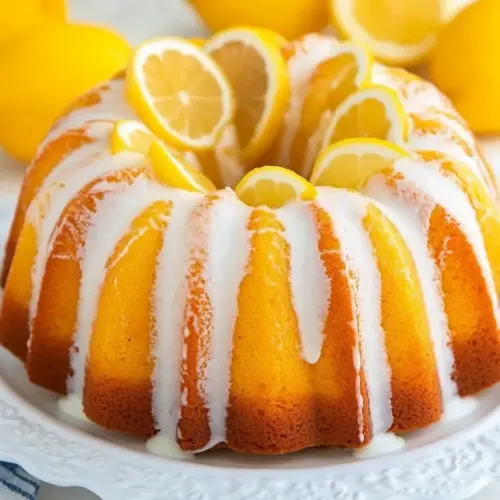
Healthy Lemon Bundt Cake
Healthy Lemon Bundt Cake is a bright, tender cake that balances tangy lemon juice and zest with moistness from Greek yogurt and coconut oil. Lightly sweetened with honey and a touch of sugar, this cake is an easy crowd pleaser for brunch or casual gatherings, offering a flavorful yet approachable dessert worth making again.
Equipment
- Bundt Pan
- Mixing Bowls
- Whisk
- Spatula
- Oven
Ingredients
- 1/2 cup coconut oil Melted and fragrant, provides healthy fat and moisture while adding a subtle tropical flavor that keeps the cake tender and soft during baking.
- 1 cup honey Sweet and liquid, helps dissolve dry ingredients and contributes natural sweetness and moisture, enhancing the cake's browning and shelf life.
- 1 cup sugar Granulated sweetener that contributes structure and caramelization; aids in creating a light crumb and balancing tart lemon flavors in the batter.
- 6 large eggs Beaten to incorporate air, supply structure, richness, and emulsification; eggs help bind ingredients and provide lift for a tender crumb.
- 3 teaspoon vanilla extract Aromatic extract that enriches overall flavor profile, deepening sweetness and complementing lemon notes without adding extra liquid.
- 1/2 cup applesauce, unsweetened Pureed fruit substitute that adds moisture and reduces need for additional oil; contributes natural sweetness and helps keep the cake soft.
- 1 1/4 cup Greek yogurt, plain Thick cultured dairy that adds tang, moisture, and richness; improves texture, keeps crumb tender, and reacts with baking soda for lift.
- 2 tablespoon lemon juice Freshly squeezed juice that provides bright acidity, enhances lemon flavor, and reacts with leavening to help the cake rise.
- 2 tbsp lemon peel, raw Zesty grated peel that delivers concentrated citrus oils and aroma, intensifying lemon flavor and adding fresh, bright notes to the batter.
- 1 1/2 cup flour, whole wheat Hearty whole-grain powder that adds nutty flavor, fiber, and structure; contributes denser texture and wholesome character to the cake.
- 1 1/2 cup flour, all-purpose Refined powder that supplies fine structure and lightness; balances whole wheat flour to yield a softer, more tender crumb.
- 2 teaspoon baking soda Chemical leavening that reacts with acidic components to produce carbon dioxide, creating lift and a light, airy texture in the cake.
- 1/2 teaspoon salt Mineral seasoning that enhances overall flavor balance, controls sweetness perception, and strengthens gluten network for improved texture.
Instructions
- Preheat oven to 350 degrees and grease a bundt pan.: You'll notice a dry, warm oven smell as it comes to temperature, which is your first success signal. Greasing the bundt pan thoroughly ensures the top and edges release cleanly, and I use a thin layer of coconut oil or a baking spray to coat every crevice. If the pan is not fully greased the cake can stick in the deep curves, leaving an uneven surface when you turn it out. A quick test is to run your finger along the cavity and make sure it is evenly coated, especially the center tube where sticking often occurs.
- In a large bowl combine melted coconut oil, honey and sugar. Add egg, vanilla extract, applesauce, Greek yogurt, lemon juice and lemon zest (peel). Stir.: As you stir these wet ingredients together you will feel the coconut oil transform the mixture into a smooth, glossy batter base. The air will fill with the scent of lemon and vanilla , a warm citrus perfume that signals flavor depth. Stir gently until the honey and sugar dissolve into the oil and the mixture looks uniform. Over beating here can incorporate too much air and then collapse the structure, producing a dense bake later, so I aim for homogeneity rather than full aeration.
- In a separate bowl, combine flours, baking soda and salt.: When you whisk the dry ingredients you create an even distribution of leavening and salt which prevents pockets of baking soda from leaving metallic tastes. The color will be uniform and slightly grainy to the touch. Sifting is optional but helpful, especially if your whole wheat flour has clumps. A common mistake is to dump wet into dry without mixing the dry first, which can result in uneven rise or salty bites.
- Combine wet and dry ingredients and stir just until combined.: At the point of combining you should see the batter move from streaky to cohesive, with ribbons of pale yellow turning into a smooth, slightly thick batter. As you fold, listen for the quiet, slightly tacky texture that tells you gluten has not overdeveloped. The risk here is overmixing, which will make the crumb tough; stop folding as soon as you no longer see dry streaks. If small lumps remain, they will usually disappear during baking and will not affect the final cake dramatically.
- Pour into prepared pan and spread out evenly. Bake for 40-48 minutes. Check part way through, if it starts to brown too much on top you can cover the pan with foil as it finishes baking! Bake until an inserted knife comes out clean.: Pouring the batter in, you will see a glossy surface that smooths quickly with a spatula. The oven will first emit a faint yeasty aroma, which deepens into warm sugar and citrus as the sugars caramelize. I begin checking at 40 minutes by inserting a thin knife near the center; a clean pull indicates done, while wet batter means more time. If the top is browning too fast, tent it loosely with foil to prevent burning while the interior finishes. Beware of underbaking which leads to a gummy middle, and overbaking which dries the cake out, so use visual and tactile clues rather than just time alone.
- Let cool in pan and then turn out.: Cooling in the pan for a short period lets the crumb set so it releases cleanly; you will feel the cake relax and the scent will mellow into a deeper lemon warmth. After the initial cool, invert the bundt pan onto a rack and gently ease the cake out, tapping if necessary. If you try to unmold while too hot the cake can break apart, and if you wait too long it may stick more. Aim for a 10 to 15 minute rest before turning out for the best balance between structure and release.
- Optional Lemon Glaze: Combine lemon juice (about 2 tablespoons) and powdered sugar (2 cups) and whisk until smooth. Adjust as needed. Pour over cooled cake!: Combine lemon juice (about 2 tablespoons) and powdered sugar (2 cups) and whisk until smooth. Adjust as needed. Pour over cooled cake! : The glaze should be glossy and pourable, and when you drizzle it over the top it will settle into crevices and highlight the bundt shape. You will smell a fresh, bright citrus hit that complements the baked cake. If the glaze is too thick, add a bit more lemon juice , too thin and add more powdered sugar. A common error is glazing a warm cake, which causes the glaze to run off; always glaze only after the cake has cooled to room temperature.
Notes
- Room temperature ingredients help with even mixing: Let your eggs and Greek yogurt sit out briefly so the batter combines smoothly, preventing cold pockets that can cause uneven rise.
- Lightly grease the bundt pan into every crevice: Use a pastry brush or paper towel to ensure coconut oil reaches the center tube and ornate curves, which prevents sticking and preserves the cake shape.
- Check for doneness early: Start testing with a knife at 40 minutes because ovens vary, this prevents a dry center from overbaking and keeps the crumb tender.
- Adjust sweetness carefully: The honey and sugar together create a balanced sweetness, but if you prefer less, reduce the granulated sugar slightly and keep the honey for moisture.
- Zest before juicing: Grate your lemon peel before you squeeze the juice to get maximum aroma and avoid a slippery lemon that is harder to zest.
- Fresh glaze vs no glaze: For a lighter finish skip the glaze and dust very lightly with powdered sugar, or make the lemon glaze for a glossy, show stopping presentation.