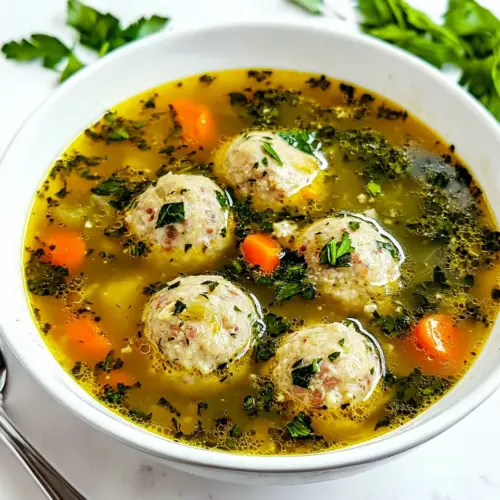
Healthy Italian Wedding Soup
Healthy Italian Wedding Soup is a light and savory bowl featuring tender meatballs, leafy greens, and a fragrant chicken stock base. This creamy yet lean comfort soup makes an easy weeknight dinner and reheats beautifully for meal prep. Packed with fresh basil and aromatic vegetables, it is a wholesome choice you will want again and again.
Equipment
- Rimmed Baking Sheet
- Large Bowl
- Instant read thermometer
- Large Dutch oven
- Cookie Scoop
Ingredients
- 1 lb ground chicken or ground turkey Provide lean protein and binder for the meatballs, creating a tender texture while keeping calories lower than beef or pork; adapts well to seasonings and helps the meatballs hold shape during simmering.
- 1 egg Act as a coagulating agent to help bind the meatball mixture and create a cohesive interior; also adds moisture and a slightly richer mouthfeel to the finished meatballs.
- 1/4 cup almond flour Add light bulk and absorb moisture to help the meatballs hold together without using breadcrumbs; contribute a subtle nuttiness while keeping the recipe gluten-free.
- 2 tablespoons grated parmesan cheese optional Enhance savory, umami, and cheesy flavors within the meatballs when used; sprinkle or mix in sparingly to add depth without overpowering the other seasonings.
- 1/2 teaspoon garlic powder Impart concentrated garlic flavor in a dry form to season the meatballs evenly; provides convenience and consistent intensity without additional chopping.
- 1 teaspoon dried Italian herbs Introduce classic Mediterranean aromatics like oregano, basil, and thyme to the meatballs, reinforcing the soup's Italian profile and complementing the fresh herbs added later.
- 1 teaspoon fine sea salt Season the meatball mixture with a balanced saline note to heighten overall flavor; helps other spices and herbs express their aromas during cooking.
- 1/2 teaspoon red pepper flakes optional Add a hint of heat and smoky red pepper complexity when desired; use sparingly to avoid overwhelming the soup while giving optional warmth.
- 1 tablespoon olive oil Serve as the cooking fat for sautéing vegetables and searing meatballs, contributing a fruity olive note and promoting even browning for depth of flavor.
- 3 carrots peeled and diced fine Contribute natural sweetness and earthy texture when diced finely, softening during simmering to add body and a pleasant bite to the soup.
- 2 cloves garlic minced Deliver fresh pungent garlic aromatics when minced, blooming in hot oil to build the flavor base and infusing the broth with savory depth.
- 2 celery stalks diced fine Provide aromatic vegetal crunch and a mild bitterness when diced, softening in the broth to support the soup's savory backbone and balance sweetness from carrots.
- 1 yellow onion diced fine Offer sweet and savory foundational flavor when diced, caramelizing slightly if sautéed and contributing to a rounded, aromatic soup base.
- 1 teaspoon fine sea salt Season the soup pot-to-table by adding necessary salt to draw out and amplify the flavors of vegetables, meat, and broth for a well-balanced finish.
- 1/2 teaspoon ground black pepper Layer in subtle heat and peppery notes from ground black pepper to brighten flavors and add gentle spice complexity to the broth.
- 2 large handfuls kale or spinach chopped Contribute leafy nutrition, texture, and color; when chopped and wilted into the hot broth, kale or spinach add minerals, fiber, and a pleasant tender bite.
- 6 cups chicken stock homemade or store-bought Form the liquid foundation of the soup, carrying flavors and providing savory body; homemade or store-bought stock will determine sodium and depth of taste.
- 1/2 cup fresh basil roughly chopped Impart bright, sweet, and aromatic freshness when roughly chopped, elevating the soup with herbaceous complexity and a pleasant aromatic finish.
- cup fresh parsley roughly chopped Add fresh, peppery, and slightly bitter herb notes when roughly chopped, enhancing the soup's herbal profile and balancing richness from the meatballs.
- Parmesan cheese for topping Provide a salty, nutty finishing note when grated over bowls, adding umami and a creamy mouthfeel that complements the soup's savory components.
Instructions
- Preheat oven to 350ºF and lightly grease a rimmed baking sheet.: The air warms and you notice a gentle oven hum, giving you the confidence to move on to mixing. Preheating ensures the meatballs begin cooking immediately and set their exterior, which helps them hold shape when they later simmer in broth. A common misstep is skipping this step, which can cause uneven baking and meatballs that fall apart during simmering. Lightly greasing the rimmed baking sheet prevents sticking, and you should hear a slight sizzle when the sheet hits the hot oven, a sign the surface is ready.
- Add ground meat, egg, almond flour, parmesan cheese, garlic powder, herbs, salt and red pepper flakes to a large bowl and mix together until fully incorporated. Roll meat mixture into 1-1/2” balls (about 3 tablespoons each) and place on the rimmed baking sheet.: As you combine the ground chicken , egg , and seasonings, your hands feel the texture change from loose to slightly tacky, and fragrant herb notes rise up. Thorough mixing distributes seasoning evenly so each meatball tastes the same. Overmixing is a trap because it can make the meatballs dense, so combine until just incorporated. If the mixture seems too soft to roll, chill it briefly to firm up, which avoids misshapen balls when scooping. A helpful sound cue is the quiet slap of the mixture against the bowl as you fold, rather than a sticky cling which signals too much handling.
- Bake for 15 minutes, or until the meatballs are fully cooked through to a temperature of 165ºF degrees.: Rolling the mixture into uniform balls ensures even cooking, and you will feel the slight resistance as the surface smooths under your palm. Keeping the size consistent helps with timing and texture, so using a cookie scoop can be a useful shortcut. If you notice any crumbling, that means the mixture needs a brief chill or a touch more binder. The visual cue you want is smooth, compact spheres that sit firmly on the sheet without flattening. Avoid packing too tightly, which can produce a heavy interior.
- Meanwhile, make the soup: Heat oil over medium heat in a large dutch oven. Once hot, add carrots, garlic, celery, onion and salt and pepper and cook until beginning to soften about 10 minutes.: During baking, aromas will lift from the oven, a warm savory scent that promises tenderness. The interior reaching 165ºF is the safe indicator they are done, and probing one for color is useful as well. Baking first gives the meatballs a set exterior so they do not disintegrate when simmered. A common mistake is underbaking then simmering too long, which can leave the meat paste like; use an instant read thermometer to be sure. When you take them out, they should be firm but springy, not soft and raw.
- Add in greens and cook until they are wilted.: The pan should make a steady, quiet hiss when the olive oil meets the heat, and the vegetables will begin to scent the kitchen as they soften. You are looking for a gentle translucence in the onion and a slight caramel hint on the carrot edges, which releases sweet notes into the broth. Stir occasionally to release fond and prevent sticking, and listen for a soft crackle rather than an angry sizzle which would indicate too high heat. Rushing this step loses those mellow aromatics, so take the time to coax out the sweetness without browning aggressively.
- Pour in chicken stock, bring up to a boil and then lower heat to a simmer for 10 minutes. If adding pasta, this is when you would add it here depending on the shape of pasta. Add in cooked meatballs and simmer for 5 more minutes.: As the chopped kale or spinach hits the pot, it will collapse visually and give off a bright green steam. The leaves will wilt quickly, and you want them to retain a little structure rather than turning to mush. Wilting integrates the greens into the soup and releases additional vegetal flavors into the base. Watch the pot because greens reduce in size dramatically, and overcooking will dull their color and texture. Stir briefly until the stems soften and the leaves have lost their rawness.
- Add in herbs, parmesan cheese and season to taste with additional salt and pepper.: When the chicken stock joins the pot, steam rises and aromas deepen into a layered broth. Bringing it to a boil then settling to a simmer gently melds flavors and extracts the sweetness from the vegetables. If you include pasta, adding it here lets it cook with the broth and absorb flavor. Adding the baked meatballs to simmer for 5 minutes warms them through and allows the meat to marry with the broth. A common error is boiling too vigorously which can break apart meatballs and cloud the broth, so keep a soft, steady simmer for clarity and better texture.
- Add in herbs parmesan cheese and season to taste with additional salt and pepper: Turning off the heat or lowering it, fold in the chopped basil , parsley , and a sprinkle of grated Parmesan cheese , and notice how the aroma brightens and the surface takes on a satin sheen. Herbs release their volatile oils at low heat, which is why adding them at the end preserves their fragrance. Taste and adjust seasoning carefully because the cheese adds saltiness. A typical pitfall is adding all salt up front then finding the dish too salty after cheese; always taste before final seasoning. The soup should finish balanced, with savory depth, herbaceous brightness, and a gentle lift from the cheese.
Notes
- Binder Alternatives If you prefer not to use almond flour you can replace it with a similar quantity of another light binder that fits your diet, but be mindful that texture will change; almond flour keeps meatballs moist without gluten.
- Meat Choices Using either ground chicken or ground turkey will keep the meatballs lean, and both respond well to gentle mixing; avoid overworking to keep them tender.
- Herb Timing Add fresh chopped basil and parsley at the end to preserve brightness, since prolonged cooking mutes their aromatic oils.
- Cheese Options Grated Parmesan cheese at the table allows guests to control salt and richness; omit for Whole30 or Paleo friendly versions.
- Freezing and Reheating Freeze cooked meatballs separately on a tray before storing to prevent clumping, then add to reheated broth for quick meals that retain shape and texture.