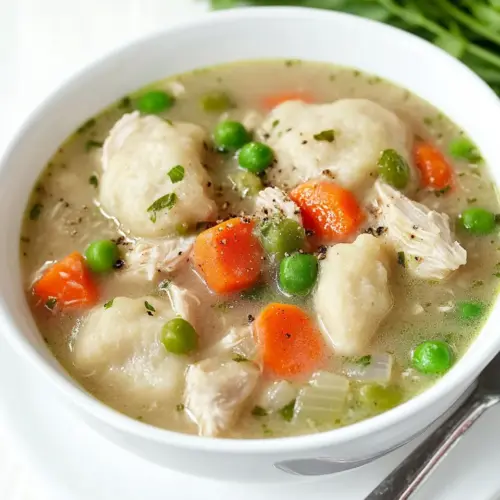
Healthy Irish Chicken and Dumpling Soup
Healthy Irish Chicken and Dumpling Soup is a comforting, light bowl of tender chicken, soft whole wheat dumplings, and colorful vegetables in a savory low sodium chicken broth. Creamy textures meet bright peas and earthy thyme for an easy weeknight dinner that feels homemade and nourishing. Make it when you want a simple, wholesome meal that everyone will ask for again.
Equipment
- Large Pot
- Knife
- Cutting Board
- Measuring Cups
- Wooden Spoon
Ingredients
- 1 pound chicken breast Provide lean protein and body-building amino acids to make the soup hearty; poach or simmer until fully cooked and shred or dice before adding to the broth for even distribution. Add near the end of simmering to prevent overcooking and keep the meat tender and moist.
- 1/2 medium onion Add aromatic sweetness and savory depth when finely diced; sweat gently in a little oil until translucent to build the soup's flavor base without browning. Combine with carrots and celery for a classic mirepoix that enhances the broth's overall complexity.
- 3 medium carrot Contribute natural sweetness, color, and texture when sliced or chopped; cook until just tender to maintain some bite and release sugars that enrich the soup. Pair with root vegetables for balanced mouthfeel and to complement the chicken.
- 2 stalk celery Provide crisp, vegetal flavor and aromatic backbone when chopped; sauté briefly with onion to release subtle savory notes that support the broth. Maintain some firmness by not overcooking so the dumplings and peas contrast texturally.
- 1 medium russet potato Offer starchy body and thickness when peeled and cubed; simmer until tender to slightly thicken the broth and add rustic substance. Potatoes also absorb seasonings, concentrating the soup's savory profile.
- 1/2 teaspoon thyme, dried Impart floral, slightly earthy notes when added sparingly; sprinkle into the broth during simmering to infuse a gentle herbal aroma. Dried thyme pairs well with poultry and helps unify the soup's flavors.
- 1 teaspoon salt Enhance overall seasoning balance and bring out natural flavors when measured carefully; dissolve into the broth gradually to avoid over-salting. Adjust toward the end of cooking after reduction to achieve the desired taste.
- 1/4 teaspoon black pepper, ground Contribute mild heat and pungency that brightens the soup; grind fresh or use pre-ground and add incrementally to control spiciness. Black pepper also enhances perception of other flavors without overpowering them.
- 5 cup chicken broth, low-sodium Provide savory liquid base and concentrated poultry flavor while keeping sodium lower; pour in and bring to a simmer as the foundation for cooking the chicken and vegetables. Low-sodium broth allows better control of final seasoning.
- 1 cup green peas, frozen Add pop of color, sweetness, and tender bite when stirred in near the end of cooking; frozen peas thaw quickly and preserve nutrients and texture. They supply a fresh contrast to the richer broth and dumplings.
- 1 cup flour, whole wheat Create the dumpling structure and provide whole-grain nutrition when combined with baking powder and liquids; whisk together to form a workable dough that yields tender, wholesome dumplings. Whole wheat flour contributes nuttier flavor and more fiber than refined flour.
- 2 teaspoon baking powder Provide leavening power to make dumplings light and fluffy; whisk into the dry ingredients to ensure even distribution and proper rise during cooking. Baking powder helps create soft, tender dumplings that float atop the soup.
- 1/2 teaspoon salt Contribute additional seasoning within the dumplings and overall dish; incorporate into the dry mix to control saltiness and balance flavors. Ensuring correct measurement prevents overly salty results when combined with broth.
- 1/4 teaspoon garlic powder Add subtle savory and aromatic undertones to the dumpling mix; blend with dry ingredients to give a gentle garlic note without overpowering the soup. Garlic powder disperses evenly and enhances overall savory character.
- 1/2 cup milk Bind the dumpling dough and add moisture while contributing a slight richness; stir into the dry ingredients until just combined to avoid tough dumplings. Milk also tenderizes the dough and supports the baking powder's action.
- 2 tablespoon olive oil Provide healthy fat for sautéing vegetables and adding mouthfeel to the broth; heat gently to sweat the mirepoix and coat ingredients for even flavor release. Olive oil contributes a light, fruity richness and supports nutrient absorption.
Instructions
- Cut chicken breast into thin, bite-sized slices. Peel and slice carrot. Chop celery and potato into small pieces. Finely dice onion.: The air will fill with a faint metallic scent of fresh chicken as you slice, and visually you want even, thin pieces so they cook through quickly and uniformly. Use a sharp knife to avoid tearing the meat, which keeps juices intact, and lay slices flat to assess thickness. Why it matters, the thin slices bloom in the simmering liquid, staying tender instead of becoming stringy. A common mistake is cutting uneven pieces, which leads to some bits overcooking while others remain underdone. If the knife drags, chill the chicken briefly to firm it up for cleaner slices. Keep the pieces similar in size, about bite sized, so every spoonful has a balanced meat to vegetable ratio.
- In a large pot, add chicken, veggies, broth, and seasonings and bring the pot to a boil over medium-high heat. Cover and reduce heat to simmer for 10 minutes.: As you peel the skin away, a sweet, earthy aroma will emerge, promising the gentle sweetness the carrot brings to the broth. Aim for uniform slices or coins so they reach tenderness at the same time as the potato and celery. The visual cue is a softened edge and intensified orange color, indicating they have released their sugars into the pot. The reason this technique matters is even cooking prevents some pieces from becoming chalky while others turn mushy. A typical misstep is leaving very large chunks which take longer to soften, so match sizes to other vegetables for synchronized doneness.
- Meanwhile, mix together the dumpling dough. Stir together flour, baking powder, salt, and garlic powder. Then add milk and olive oil and mix until combined.: Chopping the celery and potato produces a fresh, vegetal scent that layers with the aromatic onion . Cut the potato into small cubes to reduce cooking time and to lend a creamy mouthfeel that thickens the broth slightly as starch releases. For celery, smaller pieces soften but still offer herbaceous notes; their aroma should be bright and a little grassy. This matters because similar sized pieces ensure even texture across all vegetables. Avoid leaving the potato too large, or you risk undercooked centers when the dumplings are done.
- After ten minutes, add 1 cup of frozen peas and return to a boil over medium-high heat. Once at a rolling boil, drop teaspoonfuls of dumpling dough into the boiling water until all dough is used.: Finely dicing the onion transforms it into a flavor base that dissolves into the broth, releasing sweet and savory compounds as it softens. The visual cue is translucent edges and a softened texture, and you should hear a gentle hiss when it first hits the pot if you were to sauté it, though here it will simmer with the other ingredients. This technique matters because small pieces integrate smoothly, avoiding bitter raw onion pops in the finished bowl. A common error is leaving chunks which can dominate the texture and create uneven bites.
- Cover the pot and reduce heat to medium, keeping it at a boil without bubbling over. Keep closed for 15 minutes while dumplings cook/steam.: The pot will begin to steam and emit the combined aromas of chicken , thyme , and vegetables as it approaches a boil, a sign that flavors are starting to marry. Watch for a lively set of bubbles along the surface, and then reduce heat to maintain a steady simmer. This step matters because starting at a higher heat encourages extraction of flavor into the broth quickly, but reducing to simmer prevents aggressive agitation that could tear the chicken or make the broth cloudy. A common mistake is keeping it at a rolling boil which toughens the chicken and over reduces the liquid, concentrating flavors too early.
- After 15 minutes, remove lid and check to make sure veggies, chicken and dumplings are cooked. Dumplings should be cooked in the center rather than doughy. If needed, keep the pot boiling for a few more minutes until all parts are cooked to your liking.: As the pot simmers, the noise softens to occasional tiny pops, and the steam carries a comforting, blended aroma. After about ten minutes the vegetables should begin to yield and the chicken should show no pink in the center. Simmering allows gentle collagen release and flavor melding without breaking down delicate textures. Why this matters, a controlled simmer keeps the broth clear and the ingredients intact. Watch out for vigorous bubbling under the lid, which signals too high a heat and risks overcooking; lower the burner slightly if this happens.
- Meanwhile, mix together the dumpling dough: The dry flour , baking powder , salt , and garlic powder will smell faintly toasty when whisked together, and adding the milk and olive oil transforms the mix into a soft, scoopable batter. Use a wooden spoon or spatula to combine until just incorporated; a slightly lumpy texture is fine and prevents overdeveloped gluten. This technique matters because a tender dumpling relies on minimal mixing to stay light. A common mistake is vigorous mixing which creates dense, chewy dumplings instead of fluffy pillows.
- After ten minutes, add 1 cup of frozen peas and return to a boil over medium-high heat: Adding the frozen green peas brings a rush of bright, sweet vegetal aroma as they warm, and the pot will pick up a lively boil again. The peas add color contrast and a fresh pop of flavor, and placing them in at this stage prevents them from overcooking into mush. Why this matters, timing ensures the peas stay tender with a slight bite. Avoid adding them too early, which dulls their color and makes them overly soft.
- Once at a rolling boil, drop teaspoonfuls of dumpling dough into the boiling water until all dough is used: When the pot is at a rolling boil you will see large bubbles and a steady, audible rhythm; this vigor helps set the exterior of each dumpling quickly. Use a teaspoon to drop uniform dumplings so they cook evenly and keep the pot from becoming overcrowded. The exterior should feel softly firm after a few minutes of steaming. This technique matters because a strong initial boil helps the dumplings puff slightly, but crowding will cause them to clump. A common mistake is dropping irregular lumps which yield inconsistent texture.
- Cover the pot and reduce heat to medium, keeping it at a boil without bubbling over: With the lid on, the kitchen fills with a gentle steam and the dumplings begin to cook through from both steam and hot liquid. Keep the heat adjusted so there is steady movement but no violent bubbling that could break the dumplings apart. This matters because gentle, sustained heat ensures the interior of each dumpling cooks without the exterior turning rubbery. If the pot bubbles over, slightly lift the lid to release steam and lower the heat.
- Keep closed for 15 minutes while dumplings cook/steam: Fifteen minutes allows the dumplings to cook through, and you should sense a soft, doughy scent turn into a bready, cooked aroma. Visual cues include slightly puffed dumplings and a broth that has calmed to steady movement. This technique matters because consistent timing yields dumplings that are cooked in the center rather than doughy. A common problem is lifting the lid too often, which drops the temperature and extends cooking time.
- After 15 minutes, remove lid and check to make sure veggies, chicken and dumplings are cooked: The moment you lift the lid warm fragrant steam will wash over you, and you should inspect the dumplings for a set center, the chicken for no pink, and the vegetables for tenderness. If the dumplings are still slightly raw in the center, return the pot to a gentle boil for a few more minutes until all components are done to your preference. This matters because a final check guarantees safety and ideal texture. A common mistake is assuming visual puffing equals doneness, so always test the center of a dumpling and a piece of chicken before serving.
Notes
- Boost Fiber: Swap regular whole wheat flour with a higher fiber whole grain blend for dumplings, watching hydration since denser flours absorb more milk.
- Savory Swap: Increase the aromatic profile by adding an extra 1/4 teaspoon of dried thyme if you prefer stronger herb presence, but reduce added salt slightly to keep balance.
- Broth Control: Start with low sodium chicken broth and adjust salt at the end, tasting after dumplings have cooked because reduction concentrates seasoning.
- Pea Timing: Always add frozen green peas in the last ten to five minutes to maintain their bright color and sweet pop.
- Dumpling Shape: Use a teaspoon to drop dumplings uniformly; smaller dumplings cook more reliably and are easier to test for doneness.
- Texture Balance: If your dumplings are too dense, reduce stirring when combining the dough to avoid overworking the gluten in whole wheat flour.
- Make Ahead: Prepare the vegetables and cut the chicken earlier in the day and refrigerate; combine and cook when ready for a quicker finish.