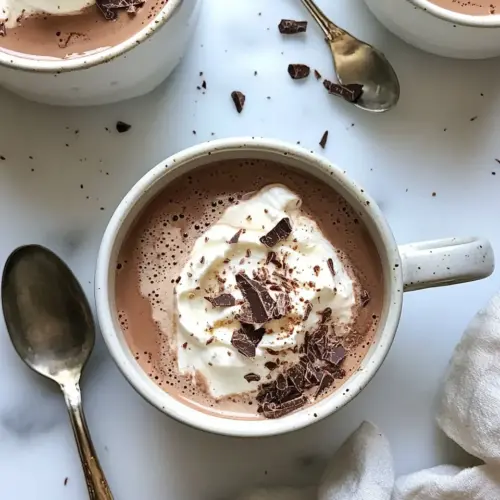
Healthy Hot Chocolate
Healthy Hot Chocolate is a creamy, chocolate forward cozy drink that uses raw cacao powder and almond milk for a lighter take on classic hot chocolate. Rich, smooth, and easy to make, it is perfect for a quick winter warm up or a mindful treat. Try it for a healthier indulgence that still feels luxurious and satisfying.
Equipment
- Saucepan
- Whisk
- Mug
Ingredients
- 1 cup almond milk (or milk of choice) Provides creamy liquid base and subtle nutty flavor, creating the warm body of the drink; use heated but not boiling to preserve texture and prevent scalding. Adjust type (almond or other milk) for desired creaminess and dietary needs, and froth lightly for a café-style finish.
- 1 tablespoon raw cacao powder Adds rich chocolate flavor and deep cocoa aroma while supplying antioxidants and a slightly bitter backbone to balance sweetness; whisk thoroughly to dissolve and avoid lumps for a smooth, velvety cup. Use raw cacao for more intense taste and nutritional benefits compared with sweetened cocoa mixes.
- 1 tablespoon pure maple syrup Sweetens naturally and contributes a nuanced caramel-like taste while dissolving easily in warm liquid; stir in gradually to control sweetness level and maintain a harmonious flavor profile. Choose pure maple syrup for a refined sweetener option and to avoid processed sugars.
- 1/4 teaspoon vanilla extract Enhances overall flavor with warm, aromatic notes and rounds out sweetness; add sparingly and stir to distribute evenly without overpowering the chocolate. Use pure vanilla extract for a clean, complex accent that elevates the beverage.
- pinch of fine sea salt Balances and elevates flavors by accentuating sweetness and reducing bitterness with a tiny mineral edge; sprinkle lightly and taste as needed to avoid over-salting. Fine sea salt dissolves quickly and sharpens the chocolate and maple notes for a more rounded drink.
Instructions
- Combine all of the ingredients in a saucepan over medium heat and stir, using a whisk to break up any lumps. Keep stirring until it's smooth and reaches your desired warm temperature. (There is no need to bring it to a full boil.): As the saucepan warms, you will hear a soft, steady hiss of gentle bubbling, and the mixture will begin to steam. The aroma of chocolate will become more pronounced, carrying a toasted cocoa scent that signals the flavors are coming together. Use a whisk to aggressively break up any dry clumps of raw cacao powder , working in circular motions so the cocoa disperses into the liquid evenly. The whisking action is crucial because it forces the powder into the milk, preventing gritty bits. One common mistake is turning the heat too high, which can scorch the milk and cause an unpleasant cooked flavor. Keep the flame at medium and keep the whisk moving until the texture becomes uniformly smooth and silky, with no visible specks of undissolved powder.
- Carefully taste the hot chocolate and make any necessary adjustments. For a darker chocolate flavor, add an extra dash of cocoa powder. For more sweetness, add an extra splash of maple syrup.: As you continue stirring, watch for tiny steam ribbons rising from the surface and small, gentle ripples in the liquid. The surface should look glossy and slightly thickened, not watery. Touch the outside of the pan carefully to sense the warmth, or use an instant read thermometer if you like, aiming for a comfortably hot temperature rather than a rolling boil. The reason for this careful heating is to preserve the milk's texture and avoid separating or developing a film. A frequent error at this stage is overheating, which can create a skin or make the drink taste flat. If pieces of cocoa still float, keep whisking and scraping the bottom until the mixture is even and smooth, smelling faintly of roasted chocolate but not burned.
- Pour the hot chocolate into a mug right away and serve warm. Top with coconut whipped cream and chocolate shavings, if desired, or any other toppings you love.: You will notice a difference in sound and movement when the mixture nears boiling, with louder bubbling and more vigorous steam. Avoid that, because boiling can change the milk's character and intensify bitterness. Instead, aim for a gentle shimmer and consistent steam where the surface barely trembles. The why here is about preserving creaminess and preventing any separation, which keeps the mouthfeel pleasing. A common pitfall is impatience, allowing the pot to boil. If that happens, remove the pan from heat briefly and whisk to calm the mixture, then return to low heat until the silky texture returns.
- Carefully taste the hot chocolate and make any necessary adjustments: Once warm, use a small spoon to sample, noting sweetness, chocolate intensity, and balance. Your palate will register the interplay of pure maple syrup and raw cacao powder , and the fine sea salt should subtly lift the flavors. If it tastes too bitter, add a little more pure maple syrup , a teaspoon at a time. For a deeper chocolate character, sprinkle in a touch more raw cacao powder , whisking thoroughly. The purpose of tasting now is to fine tune; everyone prefers different levels of sweetness and richness. A typical mistake is adding too much sweetener at once, which can be hard to fix. Adjust incrementally, tasting between additions until the cup reads exactly how you like it.
- Pour the hot chocolate into a mug right away and serve warm: As you transfer the liquid, you will see a glossy sheen and tiny hairline streams as it pours. Serving immediately preserves the ideal temperature and texture. If you wait too long, a thin skin may form, or the drink may cool beyond comfort. For presentation, I like pouring slowly to create a silky surface ready for a topping. A common error is letting it sit in the pot too long, which can lead to cooling and thickening. If this happens, gently rewarm while whisking before serving to restore the original texture.
- Top with coconut whipped cream and chocolate shavings, if desired, or any other toppings you love: Adding a topping introduces contrast in texture and temperature, with the cool, airy coconut whipped cream melting slowly into the warm chocolate and softening each sip. Chocolate shavings add a pleasant snap and visual appeal. Think about how toppings change the drinking experience, offering sweetness, fat, or crunch. One misstep is overloading the cup with heavy toppings, which can make the drink too rich. Choose a modest amount so the balance between the warm chocolate and the topping remains harmonious.
Notes
- Swap the milk: Try different plant based milks one at a time to find your favorite mouthfeel, noting that some may heat differently.
- Adjust sweetness: Add maple syrup in teaspoons, tasting between additions to avoid over sweetening the cup.
- Boost the chocolate: Stir in a little extra raw cacao powder for a richer, more intense chocolate profile, whisking thoroughly.
- Add spices cautiously: If you want warmth, a small pinch of cinnamon can complement the chocolate without overpowering it.
- Keep it smooth: Always whisk vigorously after adding dry ingredients to prevent grittiness from the raw cacao powder.