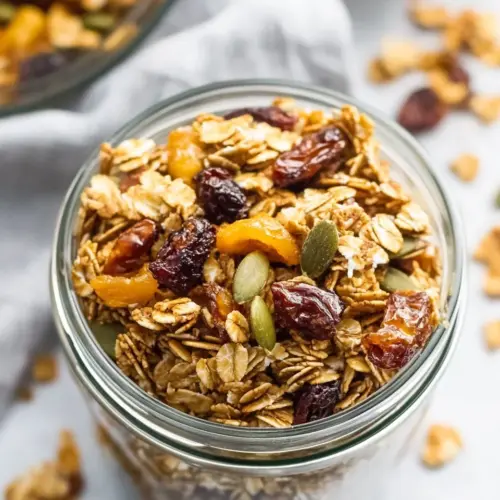
Healthy Granola Recipe
Healthy Granola Recipe delivers crunchy, toasted oats with nutty almonds, pepitas, and a touch of honey for gentle sweetness. This easy to make granola is fragrant with coconut and cinnamon, perfect for breakfast or snacks, and a reliable option for quick, wholesome mornings. Make a batch to enjoy versatile, pantry friendly crunch that keeps you satisfied.
Equipment
- Rimmed cookie sheet
- Non stick spray
- Spatula
- Measuring Cups and Spoons
Ingredients
- 2 cups rolled oats Provide a hearty, chewy base that binds the granola and soaks up sweeteners; toasting develops a nutty aroma and crisp texture while keeping the mixture substantial and wholesome for breakfasts or snacks.
- 1 cup shredded coconut Add a tropical, slightly sweet flavor and crisp texture that toasts quickly; incorporate evenly to provide occasional coconut flakes that enhance aroma and contrast with the oats.
- 3/4 cup slivered almonds Contribute a crunchy, slightly rich texture and mild nutty flavor; chop or toast lightly to release oils and distribute a satisfying almond bite throughout the granola.
- 1/2 cup pepitas (shelled pumpkin seeds) Introduce a tender crunch and subtle vegetal flavor while boosting protein and healthy fats; scatter evenly to add variety and a pleasant seediness in each spoonful.
- 1/4 cup flax seeds Provide a tiny, nutty texture and earthy flavor while offering omega-3s and fiber; sprinkle throughout to improve nutritional density and help bind clusters when mixed with sweetener.
- 2 tablespoons oil or melted butter Coat dry ingredients to help clusters form and carry flavors; use a neutral oil or melted butter to add richness, promote even toasting, and create cohesive granola clusters.
- 3 tablespoons honey Sweeten and help clump the granola while adding mellow floral notes; drizzle and mix thoroughly so it caramelizes slightly during baking and binds ingredients into clusters.
- 1/4 teaspoon cinnamon Impart warm, aromatic spice that complements sweet and nutty elements; sprinkle sparingly to enhance overall flavor without overpowering the other ingredients.
- 1/4 teaspoon salt Balance sweetness and enhance flavor depth while controlling sodium; dissolve into the wet mixture so it seasons the granola uniformly and brings out other flavors.
- 1/2 cup dried cherries Add chewy bursts of tart-sweet fruitiness and color contrast; fold in after baking or near the end of toasting to preserve chewiness and concentrated flavor.
- 1/2 cup golden raisins (or black raisins) Provide plump, sweet chewiness and natural sweetness as an alternative to darker raisins; incorporate after baking to maintain moisture and offer pleasant fruity bites.
Instructions
- Preheat the oven to 350 degrees. Spray a rimmed cookie sheet with non-stick spray. Mix oats, coconut, seeds, and nuts on the cookie sheet. Pour oil and honey over the mixture and sprinkle with salt and cinnamon. Toss well. Spread the mixture evenly over the cookie sheet.: As you let the oven come to temperature you will start to smell the faint warmth that anticipates toasting. Proper preheating ensures even browning across the tray, which matters because uneven heat means some pieces burn while others stay pale. One common mistake is putting the tray in too soon, which can cause uneven texture. You should also prepare a rimmed cookie sheet by spraying it with non stick spray so the granola does not stick and to make flipping easier later. The sound of the oven fan settling and the faint hum are indicators it is ready, and visually you want the oven thermometer to read a steady 350 degrees before you slide the tray in.
- Bake for 20-25 minutes, until the coconut is golden-brown, flipping once and respreading after 10 minutes. Cool on the cookie sheet.: When you spread out the dry mix you will notice the contrast in sizes and colors, with pale oats, green pepitas, and slivered almonds creating a pleasing mosaic. Doing this directly on the cookie sheet saves a bowl and lets you immediately add the oil and honey in place, which helps coat each piece evenly. A pitfall is overcrowding the sheet with too thick a layer, which prevents airflow and can result in steaming rather than toasting. Aim for a single even layer so air circulates and each piece can toast to a golden color.
- Once cooled, mix in the dried fruit and store in an air-tight container.: As the warm, glossy stream of honey and oil hits the dry mix it will begin to sheen and clump, which is the start of cluster formation. The fat helps distribute heat and carry flavor, while the honey binds and caramelizes. Stir to combine so the coating is even, taking care not to over stir because you still want some clumps to form. A common error is adding too much liquid, which makes the mixture soggy and prevents crisping, so measure carefully. You can see the mixture glisten when it is properly coated, and you should be able to pinch small clusters between your fingers.
- Toss well: Tossing brings everything into contact with the sweet coating and ensures that each fragment has a touch of seasoning. You will feel the weight of the coated oats as they clump faintly, and when you lift a handful you should notice a slightly tacky texture. This is important because those small bonds become golden clusters once baked. Avoid vigorous pounding or packing which can crush the nuts and make the texture too powdery. Use a spatula to fold and lift so pieces remain distinct and some cluster formation begins before the oven.
- Spread the mixture evenly over the cookie sheet: Visual evenness is key, because where the layer is thinner it will brown much faster. Aim for a single uniform layer with a little breathing room between clusters, which promotes crisping. A common mistake is leaving high mounds near the sheet edges, causing edges to burn before the center browns. Smooth the top gently and press lightly for denser clusters if you prefer larger chunks. The surface should look connected in places, but not packed into a solid slab.
- Bake for 20 to 25 minutes, until the coconut is golden brown, flipping once and respreading after 10 minutes: During baking the kitchen will fill with a warm, toasty aroma and you will see the coconut and almonds develop a deep golden hue. Flipping at the halfway point ensures even color and prevents the side facing down from staying pale. Listen for a faint crackle as moisture leaves the granola and avoid leaving it unattended in the final minutes, since small differences in oven temperature can change golden to burnt fast. A typical error is flipping too often which interrupts browning, so do one careful flip at the ten minute mark and then let it finish uninterrupted. Visually you are aiming for an overall golden brown, with coconut and nuts showing deeper color than the oats.
- Cool on the cookie sheet: Cooling is where crispness finishes forming, because the honey bonds set as the mixture loses heat. As the tray cools you will hear a quiet settling and the clusters will harden beneath your fingers. If you try to mix in dried fruit while warm the fruit will soften and the texture will change, so patience is essential. Avoid scraping and stirring too soon which breaks clusters; instead let the tray reach room temperature so the clusters stabilize and the aroma mellows into that characteristic granola scent.
- Once cooled, mix in the dried fruit and store in an air tight container: Adding the dried cherries and raisins after cooling preserves their chew and prevents them from melting into the warm granola. When you fold them in you will notice pops of color against the golden clusters. Store in an air tight container to maintain crunch, and keep the jar in a cool, dark spot for up to several weeks. A common mistake is packing the granola while still warm which traps steam and softens the texture, so always ensure it is fully cooled before sealing.
Notes
- Measure liquids precisely, because the balance of honey and oil determines cluster formation and crispness. Use a liquid measuring cup and level teaspoons to avoid a gummy or dry batch.
- Use a single layer on the sheet, so air can circulate and each piece can brown evenly. Thicker layers steam rather than toast, leaving a softer texture.
- Watch the oven in the final minutes, as coconut and nuts can shift from golden to burnt quickly. Set a timer for the first color check to avoid overbaking.
- Cool completely before storing, since residual heat will release steam that softens the granola if it is sealed while warm. Patience here keeps the crunch.
- Swap dried fruits last, folding them in after cooling preserves chew and prevents sticky clumping while still offering bursts of sweetness.