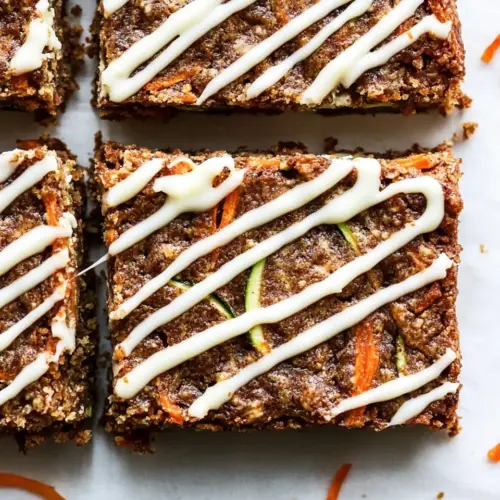
Healthy Carrot Zucchini Bars
Healthy Carrot Zucchini Bars are a tender, slightly chewy treat that balances nutty almond flour with moist shredded carrot and zucchini. This easy, wholesome bar blends warm spices and maple sweetness into a crowd friendly snack perfect for brunch or an easy weeknight dessert, giving you a lighter way to enjoy a sweet bite.
Equipment
- 8 x 8 square baking dish
- Mixing Bowl
- Whisk
- Offset Spatula
- Cheesecloth or thin kitchen towel
- Cooling rack
Ingredients
- 2 eggs Whisk together to provide structure and moisture while helping bind the batter; eggs contribute lift and a tender crumb through protein coagulation during baking.
- 3/4 cup coconut sugar or maple sugar Sweeten the batter naturally while adding a deep caramel-like flavor; coconut or maple sugar helps with browning and balances the vegetables' earthiness without overpowering.
- 1/4 cup coconut oil Melt into the batter to add fat and tenderness; coconut oil contributes moisture, helps carry flavor, and creates a soft texture in the finished bars.
- 2 tablespoons maple syrup Sweeten and add extra moisture, helping to keep the bars soft; maple syrup also contributes a mild flavor note and helps with binding.
- 1 teaspoon vanilla Enhance overall flavor by adding warm, sweet aromatic notes; vanilla rounds out the sweetness and complements the carrots and zucchini.
- 2 cup 200 grams almond flour Provide bulk and a nutty, tender texture while keeping the recipe gluten-free; almond flour adds healthy fats and a slightly dense, moist crumb.
- 1/2 cup 60 grams tapioca starch Lighten the texture and absorb moisture to prevent greasiness; tapioca starch contributes chewiness and helps bind the batter without gluten.
- 2 tablespoons ground flax seed Improve texture and act as an egg replacer or binder by forming a gel with water; ground flax seed also adds a subtle nutty flavor and fiber.
- 1 teaspoon baking powder Help the bars rise and create a lighter texture by releasing carbon dioxide when heated; baking powder balances density from the nut flours.
- 1/2 teaspoon ground ginger Add warm spice and aromatic brightness that complements the carrots; ground ginger provides subtle heat and depth without overpowering the sweetness.
- 1/4 teaspoon baking soda React with acidic components to create additional lift and tenderness; baking soda ensures proper leavening and helps neutralize acidity.
- 1 cup shredded carrot Contribute natural sweetness, moisture, and a pleasant texture; shredded carrot adds color, nutrients, and a tender chew to the bars.
- 1/2 cup shredded peeled zucchini Supply moisture and a delicate, slightly savory contrast to the carrots; shredded peeled zucchini helps keep the bars soft without strong vegetal flavor.
- 1/2 cup raisins Introduce bursts of chewy sweetness and texture variation; raisins add concentrated fruit flavor and small pockets of moisture throughout the bars.
- 4 ounces cream cheese softened (see note) Provide a creamy, tangy topping that contrasts the sweet bars; softened cream cheese yields a smooth, spreadable frosting when mixed with sweetener.
- 3 tablespoons maple syrup Sweeten and flavor the cream cheese topping while helping achieve spreadable consistency; maple syrup adds warming sweetness and pairs with the bars' flavors.
- 1/2 teaspoon vanilla extract Enhance the topping with warm aromatic notes and subtle depth; vanilla extract rounds and brightens the cream cheese frosting for a balanced finish.
Instructions
- Preheat oven to 350ºF. Prepare a 8 x 8 square baking dish by coating with cooking spray and making a parchment paper sling. Set aside.: The room fills with a faint warmth and a cozy smell as the oven approaches temperature, signaling that the pan will meet predictable heat. Preheating ensures even rise and reliable browning across the surface, which is essential for the bars to set correctly. A common misstep is placing the batter in a cold oven, which lengthens baking and yields a dense center, so wait until it reaches the full temperature.
- Add the eggs, coconut sugar, coconut oil, maple syrup, and vanilla to a large bowl and whisk together until fully combined.: The slick sound of spray and the soft rustle of parchment arrange a nonstick cradle, which makes removing the bars effortless after cooling. The sling helps lift the whole slab without breaking, preserving edges and corners. If you skip the sling you risk tearing the bars when transferring them, so take the extra minute to line the pan properly.
- To the bowl add the almond flour, tapioca, flax seed, baking powder, ginger, and baking soda mix it together until it’s fully combined.: As you whisk you’ll notice the mixture lighten slightly and the sugars begin to dissolve, giving a glossy sheen that signals even sweetness distribution. This step develops emulsion, so the fats and liquids marry for a consistent batter. Underwhisking can leave pockets of oil or sugar, creating uneven texture, so blend until smooth.
- Place carrots and zucchini in cheesecloth or a clean, thin kitchen towel and squeeze out any excess moisture.: When the dry mix meets the wet, the aroma of toasted almond and warm ginger emerges, and the batter thickens. This integration builds the structure that holds the shredded vegetables, while the tapioca provides chew and the leaveners give lift. Overmixing can develop a gummy texture from the starch, so stir just until homogenous.
- Fold in the carrots, zucchini and raisins to the batter.: You will feel and hear the liquid being expelled as the cloth is wrung, leaving the vegetables damp but not dripping, which is crucial to maintain the correct batter hydration. Removing excess moisture prevents a soggy center and helps the bars bake evenly. A frequent error is skipping this step, which leads to longer bake times and a wet crumb.
- Transfer the batter into the prepared baking dish and smooth down the top with an offset spatula.: The batter becomes flecked with orange and green, and the raisins tuck in like little jewels, promising bursts of chewy sweetness. Folding gently preserves air in the batter for a tender crumb, while distributing ingredients uniformly. Vigorous stirring can deflate the mixture and create a dense bar, so fold until just incorporated.
- Bake in the middle rack for 30-35 minutes, or until the top is puffy and it springs back when lightly pushed down in the middle.: As the spatula glides, the surface becomes even, and smoothing encourages uniform browning and a neat finished appearance. A smooth top also makes frosting application easier later. If you leave peaks they may brown faster, so take a moment to level the batter carefully.
- Transfer to a cooling rack and let cool completely.: The kitchen fills with the scent of warm spices and toasted almond while the top firms and develops a slight golden hue. The spring back test is the best cue that the crumb is set without overbaking, which keeps it moist. Avoid opening the oven repeatedly, as heat loss can change baking times and lead to underdone centers.
- Add softened cream cheese, maple syrup and vanilla extract to a bowl. Whisk together vigorously until the frosting is smooth. Drizzle over the zucchini bars.: Cooling allows steam to escape slowly, stabilizing the bar so it slices cleanly and the frosting does not melt away. The texture firms during this pause, and flavors meld into a more coherent profile. Cutting too soon risks a crumbly, sunken center, so be patient and allow full cooling.
- Cut into slices and serve!: The ingredients come together into a glossy, silky frosting that smells tangy and sweet, and beating them releases a creaminess that is easy to spread or drizzle. Softening is key for smoothness, or you will end up with lumps that mar the finish. If the frosting is too stiff, a splash of maple syrup helps loosen it while preserving flavor.
- Whisk together vigorously until the frosting is smooth: The beaters or whisk will hum and the texture will transform from grainy to velvety, indicating a well emulsified frosting that will sit attractively atop the bars. Smooth frosting spreads without tearing the crumb and creates a pleasing contrast. Overbeating can aerate the frosting too much, making it runny, so stop once silky.
- Drizzle over the zucchini bars: The maple scented drizzle adds glossy highlights and a tangy finish that complements the tender interior. Use a spoon or piping bag for control, creating long, even lines or a casual drizzle, depending on your style. If you drizzle while the bars are warm the frosting will sink in slightly, so for a pronounced frosting layer wait until completely cooled.
- Cut into slices and serve: A clean knife and confident press yield neat squares with even frosting, and the sound of the blade through the bar is pleasantly soft. Serve at room temperature so the texture is at its best. Refrigerating before slicing can help if you need razor sharp edges, but allow the bars to come back toward room temperature for the best flavor.
Notes
- Make it dairy free Use a plant based cream cheese in the frosting or a vegan cashew vanilla glaze as suggested, this keeps the bars friendly for dairy free eaters while maintaining creamy balance.
- Adjust sweetness Reduce the coconut or maple sugar slightly for less sweetness, or increase for a more dessert like bar, tasting the batter briefly to fine tune before baking.
- Swap to other flours If almond flour is not available, use a similar nut flour, but adjust the tapioca slightly as textures will vary and the bars may dry out with denser flours.
- Add warming spice Increase the ground ginger or add a pinch of cinnamon to play up cozy notes, which pairs especially well in cooler months.
- Change the fruit mix Replace raisins with chopped dried apricots or chopped dates for a different chewy note, keeping the same quantity to maintain batter moisture.
- Make mini bars Bake in a muffin tin for individual portions, reducing bake time and giving portable servings perfect for lunchboxes or snacks.
- Storage tips Store in an airtight container in the fridge to preserve the frosting, or freeze uncut for longer keeping, thawing in the fridge overnight before slicing.