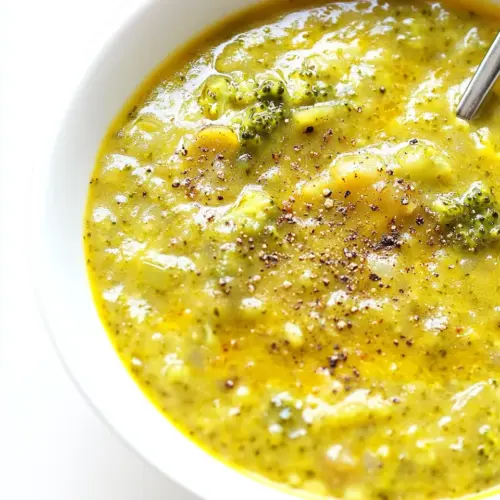
Healthy Broccoli Soup
Healthy Broccoli Soup is a creamy, bright bowl of pureed broccoli and leeks finished with optional cheddar cheese. This easy weeknight soup is comforting yet light, offering velvety texture without heavy cream. Perfect for winter meals or speedy dinners when you want something nourishing and quick to make, it’s a reliable choice that tastes like home.
Equipment
- Large Pot
- Immersion Blender
- Spatula
- Knife
- Cutting Board
Ingredients
- 1 tablespoon butter (omit for dairy-free) Melt gently to provide a rich base and help soften aromatics; offers a mild buttery flavor that rounds out the soup and enhances mouthfeel. Omit as noted for dairy-free versions and substitute with extra olive oil if desired.
- 2 teaspoons olive oil Drizzle early to sauté leeks and garlic, contributing a fruity, slightly peppery backbone; helps prevent sticking and adds a lighter fat alternative to butter. Use at medium heat to release flavors without burning.
- 2 leeks, cleaned well and sliced thin Slice thin to release sweet, mild onion-like flavors and tender texture when cooked; contributes body and aromatic depth that melds with broccoli. Clean thoroughly to remove grit and ensure an even, soft cook.
- 4 garlic cloves, minced Mince finely to add pungent, savory complexity and a warm aroma; helps layer flavor when sweated with leeks and fats. Cook briefly to mellow raw sharpness and integrate into the soup base.
- 1 large head of broccoli, cut into florets (about 4 cups) Cut into florets to provide the primary vegetable body and green, slightly bitter flavor; supplies fiber, nutrients, and a pleasant texture when puréed or left chunky. Steam or simmer until tender for smooth blending.
- 4 cups vegetable broth Simmer to create the cooking liquid that transforms vegetables into a cohesive soup; imparts savory depth and controls final consistency. Choose low-sodium options if you want tighter control over seasoning.
- 1 teaspoon fine sea salt Season lightly to enhance and balance the natural flavors of broccoli and aromatics; helps draw out taste and bind other seasonings together. Add gradually and adjust to preference after simmering.
- 1/2 teaspoon black pepper Season sparingly to contribute warm, earthy heat and balance richer elements like butter and cheese; helps round the soup's flavor profile without overwhelming. Taste as you go to avoid over-pepping.
- Pinch red pepper flakes Sprinkle minimally to introduce a bright, concentrated heat and subtle complexity; acts as a finishing note that lifts the soup without making it spicy. Use more or less depending on heat tolerance.
- 1/2 cup cheddar cheese (omit for dairy-free) Melt for creamy richness, sharpness, and added savory depth when stirred into the hot soup; enhances texture and gives a satisfying finish. Omit for dairy-free versions or swap for a plant-based alternative.
Instructions
- Heat butter and oil over medium-low. Once butter is melted add leeks and garlic and cook for 10 minutes, until the leeks are very tender.: You should notice the butter melting slowly into the olive oil , creating a glossy sheen across the pan. The aroma will be faintly sweet, with the oils warming but not smoking. This gentle heat is important because it prevents burning the next aromatics. If the fat starts to brown quickly, lower the heat immediately to avoid a bitter undertone. A common mistake is turning the heat too high, which ruins the delicate base flavors before the leeks even hit the pan.
- Add in vegetable broth and bring to a boil. Add in half of broccoli florets and cook for 8-10 minutes or until the broccoli is very tender.: As the leeks and garlic cook, they will release a soft, sweet fragrance and the leeks will go from firm to translucent. You want them to feel almost jammy, not crisp, which signals that their natural sugars have come forward. Stir occasionally to prevent sticking, and scrape up any fond with your spatula to incorporate flavor. If the leeks brown, reduce the heat, because too much color will shift the taste from sweet to roasted and can overwhelm the soup.
- Using an immersion blender, blend soup until smooth. Add in remaining broccoli florets, salt, pepper, and red pepper flakes. Let simmer for 6-8 minutes or until the broccoli is just fork tender.: When you pour in the vegetable broth , listen for the immediate hiss as the cool liquid meets the warm pan. Bring the pot up until it reaches a steady boil, then reduce to a gentle simmer so the flavors have time to meld. The broth should smell vegetal and clean, supporting the aromatics. Boiling too vigorously can break down the vegetables unevenly, so keep it lively but controlled.
- If adding cheese, do so here and stir to combine. Taste and adjust seasoning as desired. Serve hot!: The broccoli you add first will soften until the florets yield to a fork easily and the stems are tender. You will see the color deepen to a richer green, and a faint vegetal steam will rise. This initial cook develops the base body of the soup, so make sure the pieces are cooked through before blending. Under cooked broccoli will make your blended soup taste grassy and raw, while overcooked pieces may lose vibrancy.
- Using an immersion blender, blend soup until smooth: The blended portion should transform into a velvety, pale green puree that smells fresh and lightly sweet. The texture will coat the back of a spoon and flow in a thick, even ribbon when stirred. Blending this portion creates the creamy backbone of the soup without cream. If the blender clogs, pause and stir to redistribute the heat and solids, and avoid overworking the motor. A chunky or uneven blend usually means you need more blending time, but avoid overheating which can dull the green color.
- Add in remaining broccoli florets, salt, pepper, and red pepper flakes: After returning the velvety base to the pot, stir in the reserved broccoli and seasonings so you get pockets of tender green against the smooth puree. The contrast of textures is intentional and makes each spoonful interesting. Taste and adjust salt and pepper carefully, since seasoning while hot changes flavor perception. A common slip is adding salt too early or in excess, so add a little, simmer, then taste again.
- Let simmer for 6 to 8 minutes or until the broccoli is just fork tender: During this final simmer the soup will settle and the flavors will knit together. The broth should feel rounded and the aroma should be balanced between vegetable and spice. Keep the simmer gentle to avoid breaking down the reserved florets; they should be tender but still hold shape. If simmered too long at a high boil, the florets will fall apart and you will lose the desired texture contrast.
- If adding cheese, do so here and stir to combine: Off the heat or on very low, add the cheddar cheese so it melts smoothly into the soup, creating a silkier mouthfeel. Stir gently until the cheese is fully incorporated and the soup feels glossy. Adding cheese at high heat can cause it to separate or become grainy, so patience here ensures a silky finish. If you notice any greasiness, lower the heat and stir steadily to bring it back together.
- Taste and adjust seasoning as desired: Now is the time to fine tune the balance with another pinch of sea salt or a crack of black pepper . The soup should taste harmonious, with the green notes of broccoli supported by the savory base. Adjust gradually because seasoning will intensify as the soup cools slightly. A frequent error is to oversalt, so taste in small increments and remember you can always add more later.
- Serve hot: Ladle into warmed bowls so the soup keeps its temperature longer, and notice the steam carrying the herbaceous top notes as you bring it to the table. A garnish is optional, but a light crack of black pepper or tiny sprinkle of reserved cheddar cheese can add a finishing touch. Serving too cool will mute the flavors, while boiling hot can overwhelm delicate aromatics, so aim for comforting warmth.
Notes
- Stovetop roasted note Try lightly sautéing the broccoli florets in a separate pan until they have tiny charred edges before adding them to the broth, this deepens flavor and gives a roasted nuance.
- Dairy free finish Omit the butter and cheddar cheese and finish with an extra splash of olive oil for richness, this preserves creaminess without dairy.
- Bolder spice Increase the pinch of red pepper flakes slightly for a warmer finish, but add incrementally so the heat complements rather than dominates the broccoli.
- Smoother texture For an ultra silkier mouthfeel, pass the blended soup through a fine sieve, pressing with a spatula to remove any fibrous bits for a velvety bowl.
- Cheesy meld If adding cheddar cheese, grate it finely and stir in off heat to prevent separation, this keeps the finish glossy and smooth.