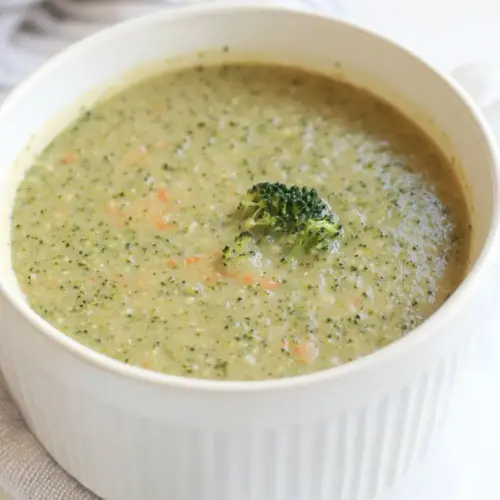
Healthy Broccoli Cheddar Soup
Healthy Broccoli Cheddar Soup is a creamy, comforting bowl that blends bright broccoli with protein rich white beans and nutty cashews for a silky texture. Topped with sharp cheddar cheese, it makes an easy weeknight dinner that feels indulgent yet wholesome. Make it for a cozy family meal or to batch cook for the week because it reheats beautifully.
Equipment
- Large Pot
- Blender
- Wooden Spoon
Ingredients
- 1 tablespoon olive oil Heat gently to create the cooking fat that sautés aromatics and prevents sticking; contributes a light fruitiness and healthy monounsaturated fats to the soup.
- 1/2 yellow onion, chopped Chop finely to release sweetness and savory depth when sautéed; builds the aromatic base and balances the soup's overall flavor profile.
- 2 cloves garlic, minced Mince finely to provide pungent, savory aromatics that enhance depth; adds a bright, slightly spicy note when cooked briefly.
- 4 cups water Simmer steadily to form the liquid base and braising medium for vegetables and legumes; carries flavors and ensures proper consistency for blending.
- 1 (15 oz.) can white beans, rinsed and drained Rinse and drain well before adding to contribute creamy body, protein, and fiber; helps thicken the soup and adds a mild, nutty flavor.
- 1/2 cup cashews (not roasted or salted) Soak or blend until smooth to create a creamy, dairy-free thickening agent and add healthy fats and subtle sweetness; helps lend richness without heavy cream.
- 1 pound broccoli florets, chopped Chop into bite-sized pieces to provide the primary vegetable component, offering substantial texture, vitamins, and the characteristic broccoli flavor when cooked until tender.
- 1 large carrot, shredded Shred thinly to distribute natural sweetness and color evenly; adds texture and a slight vegetal earthiness that complements broccoli and cheese.
- salt & black pepper, to taste Season sparingly to enhance and balance all flavors; adjust at the end to avoid over-salting and to bring out the soup's savory notes.
- 4 ounces extra sharp cheddar cheese, shredded Shred finely to melt smoothly into the warm soup, contributing sharp, tangy flavor and rich creaminess that defines the classic broccoli cheddar profile.
Instructions
- Heat the olive oil in a large pot over medium high heat, and saute the onion until it starts to soften, about 5 minutes. Add in the garlic and stir briefly, just until fragrant, about 1 more minute.: The pan should shimmer gently when the olive oil is heated, releasing a faint fruity aroma that promises savory notes ahead. As the onion softens you will notice its raw sharpness mellow into a sweeter, almost creamy scent. The sound is a soft sizzle, not an aggressive crackle, which tells you the heat is right. This step builds a savory base that carries through the soup, so resist rushing it with high heat which would brown too quickly and add a charred flavor. A common mistake is crowding the pan, which causes steaming instead of sautéing, so give the onion space and stir occasionally for even cooking. If it starts to brown, lower the heat and add a splash of water to deglaze and cool the pan slightly.
- Add the drained beans to a blender, along with the water and cashews (if using). Blend until very smooth, then immediately add it to the pot, so the garlic won't burn.: When you add the minced garlic , listen for a tiny uptick in the sizzle and inhale the immediate burst of aroma. Garlic blossoms quickly, offering sharpness that mellows within moments, so stir constantly and keep the interaction brief to avoid bitterness. This bright note complements the sweet onion and primes your pot for the creamy elements. Avoid leaving the garlic unattended because burnt garlic becomes acrid; if that happens, start the aromatics again in a fresh pan for best flavor.
- Add in the broccoli and shredded carrot, along with 2 teaspoons of salt and a 1/2 teaspoon of ground black pepper. Bring the liquid to a boil.: The blended mix should be silky with no grainy bits from the cashews or white beans , and it will pour into the pot as a pale, creamy stream. This addition thickens the liquid and brings a subtle nuttiness from the cashews. By blending separately you control texture precisely and avoid overcooking the aromatics. If your blender struggles with hot liquid, pulse in batches and hold the lid down with a towel to prevent splatter. A common error is blending too coarsely, which leaves a gritty mouthfeel, so aim for a smooth consistency before adding to the pot.
- Once the liquid is boiling, lower the heat and cover with a lid. Let the soup gently simmer for 15 to 20 minutes, or until the broccoli is very tender.: As you add the chopped broccoli and shredded carrot , the pot will brighten with color and release fresh vegetal scents. The salt is essential here because it seasons the vegetables from the inside as they cook, and the black pepper introduces subtle heat. Bring the pot up to a lively boil so the liquid starts to move fully, creating even cooking; you will hear a steady rolling sound rather than sporadic bubbling. If the boil seems too aggressive, reduce the heat briefly to prevent over-evaporation. A typical mistake is under-salting at this stage, which can leave the final soup flat, so use the recommended amount and adjust later.
- Transfer roughly 3 cups of the soup to a blender, making sure to grab any large pieces of broccoli, so there won't be large chunks in the soup. Blend briefly, pulsing the broccoli into smaller pieces, but not blending until it's totally pureed. You want some texture in this soup! (Alternatively, you can use an immersion blender to blend directly in the soup pot.): The simmer is when the flavors marry and the broccoli yields to tenderness. You want small, regular bubbles and a fragrant, vegetable-forward steam rising from the pot. Visually the broccoli will turn a brighter, deeper green before softening, and the carrot will lose any raw snap. This time allows the starch from the beans to thicken the body naturally. Avoid walking away and letting it scorch; stir occasionally and check tenderness with a fork. An overly vigorous boil can break down the vegetables to mush, so keep the heat controlled for ideal texture.
- Return the blended soup to the pot, then add in the shredded cheese. Stir briefly, just until the cheese has melted, then adjust any seasoning to taste. I usually add in more salt, just a 1/4 teaspoon at a time, until the soup is extra flavorful.: When you move soup to the blender the sound will be a short, controlled whirr instead of a long blur. The goal is a partially blended mix that adds silkiness but retains small bits for bite. The visual cue is a slightly smoother pool of soup with flecks of green rather than a uniform puree. If using an immersion blender, work in short bursts to preserve texture. A mistake is over-blending, which makes the soup too homogenized and loses the pleasing contrast, so pulse sparingly and check the consistency often.
- Serve warm with any extra toppings you love, like extra cheese or a pinch of nutmeg. Leftover soup can be stored in an airtight container in the fridge for up to 5 days.: Off the heat the melted cheddar cheese should melt into the warm broth, releasing its sharp, tangy aroma and enriching the mouthfeel. Stir gently until the cheese becomes a silky ribbon in the soup, then taste and adjust with small increments of salt to achieve balance. Cheese can clump if the soup is too hot, so remove from intense heat while incorporating. If clumping occurs, lower the temperature and stir patiently; a splash of hot liquid helps reincorporate the cheese. Avoid adding too much salt at once, because cheese already contributes sodium.
- Serve warm with any extra toppings you love, like extra cheese or a pinch of nutmeg. Leftover soup can be stored in an airtight container in the fridge for up to 5 days: The final bowl should steam gently, and if you sprinkle extra shredded cheddar cheese on top it will soften into melty ribbons. A tiny pinch of nutmeg can lift flavors without dominating, offering a warm aromatic note. When cooling leftovers, let the soup come close to room temperature before sealing to avoid condensation. Reheat gently on low, stirring so it warms evenly. A common slip is reheating too fast which can separate the texture; slow, even warming preserves creaminess and keeps the flavors cohesive.
Notes
- Preheat the pot: Warming your pot before adding the olive oil ensures the onion begins to sweat rather than sit and steam, producing a cleaner, more developed flavor foundation.
- Soak cashews briefly if your blender is weak: Ten minutes in hot water will soften the cashews, helping them blend into a silkier cream and preventing gritty bits in the soup.
- Reserve a small amount of broccoli for garnish: Save a few florets to steam quickly and scatter on top, offering a bright fresh texture and visual contrast to the blended base.
- Adjust salt gradually: Because the cheddar cheese adds sodium, add salt in small increments after the cheese melts so you do not over-salt the final bowl.
- Use an immersion blender for control: Blending directly in the pot allows you to stop when you reach the ideal consistency, preserving some texture and avoiding transfer of hot liquid.
- Cool before refrigerating: Let the soup cool slightly at room temperature before sealing in containers to reduce condensation and preserve freshness for up to five days.