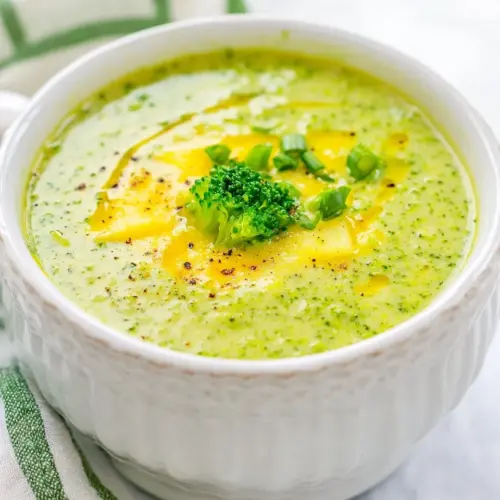
Healthy Broccoli and Potato Soup
Healthy Broccoli and Potato Soup is a creamy, comforting bowl that blends fluffy baked potato, tender broccoli, and melty cheddar cheese into a smooth, cozy soup. This easy weeknight dinner is quick to make with pantry staples and frozen vegetables, delivering wholesome flavor and satisfying texture, a perfect choice when you want warmth without heaviness.
Equipment
- Microwave
- Large Pot
- Immersion Blender
- Spoon
Ingredients
- 1 large russet potato, cleaned, unpeeled Provide starchy body and natural creaminess when cooked; diced or cubed pieces will soften and slightly thicken the soup while adding a mild, earthy flavor and tender texture that complements broccoli.
- 3 ounce s1/3 less fat cream cheese Add tangy creaminess with reduced fat to maintain a rich mouthfeel; soften into the broth to create a smooth, slightly tangy base without overwhelming calories, helping bind the soup's texture.
- 1 tablespoon olive oil Contribute a fruity, healthy fat for sautéing aromatics and preventing sticking; gently heat to bloom flavors from onion and garlic and add a subtle, pleasant background richness.
- 1 medium onion, chopped Supply savory sweetness and aromatic depth when softened; chop and sauté until translucent to build the flavor foundation and add a mellow onion complexity to the broth.
- 1 garlic clove, minced Impart pungent, aromatic sharpness; mince and lightly cook to release oils that enhance savory notes and add a bright, garlicky undertone to the soup's flavor profile.
- 3 tablespoons flour Thicken the base by forming a roux when cooked with oil; whisk into sautéed aromatics to create body and help the liquids emulsify into a smooth, slightly creamy consistency.
- 4 cups chicken broth/stock, water can also be used Provide a savory liquid base and concentrated flavor; pour and simmer to cook potatoes and broccoli while delivering saltiness and depth, with water acceptable as a milder alternative.
- 1 can low-fat evaporated milk Enrich the soup with creamy dairy richness and a velvety texture; stir in low-fat evaporated milk to mellow flavors and increase creaminess without using heavy cream.
- 1/2 teaspoons salt Enhance and balance flavor by seasoning for savory depth; measure carefully and adjust to taste to avoid over-salting while allowing other ingredients to shine.
- 1/4 -1/2 teaspoon black pepper Add mild heat and aromatic warmth to taste; grind in small amounts and adjust gradually to provide subtle peppery complexity without dominating the soup.
- 1 12 ounce bag frozen chopped broccoli Bring concentrated broccoli flavor and convenience; add frozen chopped broccoli to cook through quickly, contributing bright green color, nutrition, and vegetable texture to the soup.
- 1 1/2 cups shredded sharp cheddar cheese Provide sharp, melty cheesiness and savory depth; stir in shredded sharp cheddar toward the end to create a rich finish, add umami, and lend a silky, cheesy consistency.
Instructions
- Bake potato (whole, unpeeled) in microwave for 8-10 minutes or until soft in the center. Allow it to cool slightly and peel the potato. Mash the peeled potato with the cream cheese as if you were making mashed potatoes; set aside.: The scent of warm potato is comforting, and the skin will feel tender when pierced with a fork. After microwaving, let it sit a few minutes so the steam finishes the cook and it is safe to handle. When you peel, the flesh should flake easily; if it resists, return it to the microwave in short bursts. A common mistake is peeling while too hot, which can scald your fingers, so use a towel or let it cool slightly.
- Add olive oil to a large pot. Add the onion and cook it for 5-6 minutes, or until softened.: You will notice a gentle earthy aroma as you remove the skin, and the interior should be fluffy rather than gummy. Cooling a touch helps the potato keep structure as you mash it. If the interior seems watery, it may have been undercooked; microwave briefly until fully tender.
- Add the garlic and flour to onion, stirring for about a minute. Slowly pour in the chicken broth and evaporated milk, stirring continuously to break up any chunks.: The texture should become luxuriously smooth and slightly glossy as the cream cheese melts into the warm potato . Use a fork or small masher and press until lumps disappear. If the mash is cool and the cream cheese resists blending, warm gently to prevent grudgy bits. Overworking starchy potatoes can make them gluey, so mash just until combined.
- Next stir in the mashed potato mixture, salt, pepper, and broccoli. Bring this to a low simmer for 8-10 minutes until it has thickened. Blend with the immersion blender for about a minute until the mixture is creamy.: When the olive oil shimmers faintly, it is ready to accept the aromatics. Pouring the oil into a cold pot prevents splatter and allows for even heating. If the oil smokes, reduce heat immediately to avoid imparting bitterness to the entire dish.
- Turn the heat off and stir in the cheese until it has melted.: As the onion sweats, you will notice it turning translucent and releasing sweet, savory notes. Stir occasionally so the pieces cook evenly and do not brown too quickly. If the onion starts to brown, lower the heat because caramelization will change the flavor profile more than we want here.
- Add the garlic and flour to onion, stirring for about a minute: The brief toasting will eliminate raw flour taste and awaken the garlic aroma. You should detect a nutty scent from the flour and a bright, savory hit from the garlic . Stir constantly to avoid burning, because burnt garlic will make the base bitter.
- Slowly pour in the chicken broth and evaporated milk, stirring continuously to break up any chunks: As the liquid hits the pot, you will hear a soft simmer begin and see the mixture loosen. Continuous stirring prevents lumps and creates a glossy, cohesive base. Stop and scrape the pot bottom if any dry flour gathers, and taste the broth because canned stocks vary in salt; adjust later to avoid over seasoning.
- Next stir in the mashed potato mixture, salt, pepper, and broccoli: When the mash joins the pot, the texture will thicken noticeably and look velvety. The frozen broccoli will cool the liquid briefly, so expect a quiet sizzle as it returns to a simmer. Season gradually with salt and black pepper , because you can always add more at the end. A common error is dumping all seasonings at once, which can’t be undone.
- Bring this to a low simmer for 8 to 10 minutes until it has thickened: Gentle bubbling around the pot edge signals the right simmer, and the aroma will deepen into an inviting, stew like scent. The soup should coat the back of a spoon when ready; if it seems too thin, simmer a bit longer. Avoid a rolling boil, which can break emulsions and change the texture.
- Blend with the immersion blender for about a minute until the mixture is creamy: Swirl the blender slowly and you will see the soup transform into a smooth, uniform color and texture. The action releases steam, so keep the blade submerged to prevent splatter. If you prefer chunks of broccoli , pulse briefly rather than fully pureeing. Over blending can remove desirable texture, so stop when it looks luscious and cohesive.
- Turn the heat off and stir in the cheese until it has melted: With the pot off the stove, the residual warmth melts the cheddar cheese into a glossy finish without risking separation. Stir gently until the cheese is fully integrated and the surface looks silky. If the cheese clumps, a splash of warm broth can smooth it out. Avoid overheating after adding cheese, because excessive heat can make it grainy.
Notes
- Use lower sodium stock to control overall saltiness, especially when using canned broth that varies widely; taste before final seasoning and adjust with small pinches of salt.
- Adjust cheese intensity by choosing sharper or milder cheddar cheese, which shifts the soup from tangy to more neutral without changing other ingredients.
- Keep broccoli texture by pulsing briefly with the immersion blender if you prefer small florets, rather than pureeing completely for a chunkier mouthfeel.
- Make it thinner by adding more chicken broth a little at a time until you reach the desired consistency, then reheat gently to meld flavors.
- Warm the dairy slightly before adding if your kitchen is cool, this helps the evaporated milk and cream cheese incorporate smoothly without clumping.