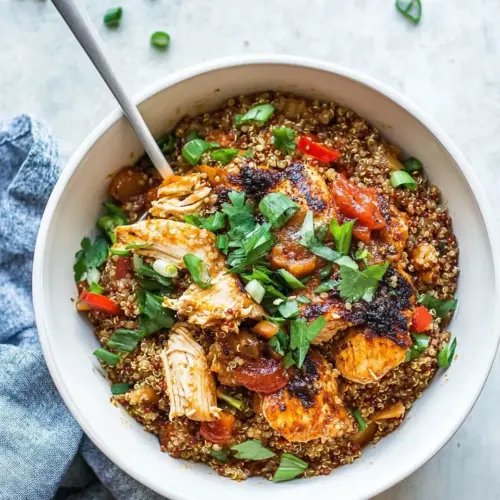
Healthy BBQ Chicken Quinoa Casserole
Healthy BBQ Chicken Quinoa Casserole is a smoky, creamy, and easy weeknight dinner that pairs tender chicken with protein rich quinoa and sweet corn. This casserole is comfort food with a lighter profile, perfect for busy evenings when you want hearty flavor without fuss. Make it for family meals and watch it disappear.
Equipment
- Slow Cooker
- Two forks
Ingredients
- 1 1/4 cups chicken broth Simmer gently to provide a flavorful, low-fat cooking liquid that infuses the quinoa and chicken with savory depth; use as the primary liquid for even absorption and moist results. Ensure it is warm before adding to speed cooking and enhance overall mouthfeel. Adds subtle savory backbone without overpowering other seasonings.
- 1 cup quinoa uncooked Rinse thoroughly and cook until tender to form the hearty, protein-rich base of the casserole; quinoa absorbs flavors and offers a light, fluffy texture that contrasts with the chicken. Use uncooked quinoa to allow it to swell and bind the casserole components during baking.
- 1 cup frozen corn kernels Fold in while frozen or thawed to add sweet, crunchy bursts and natural color contrast that complement the smoky BBQ flavors. Corn contributes texture and a pleasant pop that balances savory and spicy elements.
- 1 cup red bell pepper chopped Chop uniformly to introduce fresh, sweet, slightly crisp notes and vibrant color; distributes evenly for consistent flavor in each bite. Red bell pepper also contributes vitamin C and pleasant juiciness that brightens the casserole.
- 1 cup hickory BBQ sauce plus additional for drizzling Stir through as the primary seasoning to impart sweet, tangy, smoky BBQ character and coat proteins and grains; reserve extra for drizzling to enhance glaze and presentation. Use a hickory-flavored BBQ sauce to reinforce the smoky profile throughout the dish.
- 1/2 cup onion diced Dice finely to provide aromatic sweetness and foundational savory layers when sautéed or mixed into the casserole; onions help build complexity and tenderize during cooking. They caramelize slightly in the oven, adding depth and mellow flavor.
- 2 teaspoons fresh garlic minced Mince fresh to deliver pungent, sharp aromatics that lift the overall savory profile; garlic provides immediate savory warmth and enhances other spices. Fresh minced garlic disperses more evenly than dried, offering a brighter garlic presence.
- 1/2 tablespoon cumin powder Sprinkle evenly to contribute warm, earthy notes with a subtle citrusy undertone that complements the BBQ sauce and chicken. Cumin enhances savory depth and pairs well with smoked paprika and chili powder.
- 1/2 tablespoon smoked paprika Dust across the mixture to provide smoky, slightly sweet heat that reinforces the hickory BBQ elements; smoked paprika deepens color and adds complexity. Use measured amounts to avoid overpowering delicate quinoa and corn flavors.
- 1/2 teaspoon chili powder Add sparingly to introduce mild, background heat and a Southwestern spice character that supports the BBQ profile without overwhelming the dish. Chili powder ties together the cumin and paprika for cohesive seasoning.
- 1/2 teaspoon hickory liquid smoke Include a few drops to intensify the smoky aroma and mimic wood-fired barbecue nuances; liquid smoke amplifies the hickory notes from the BBQ sauce. Use cautiously, as small amounts provide significant flavor impact.
- 1/4 teaspoon salt Season lightly to enhance and balance other flavors, promoting overall profile cohesion; salt helps proteins and grains taste more vibrant. Distribute evenly so the seasoning penetrates during cooking.
- Pepper to taste Grind freshly to taste to provide adjustable heat and aromatic lift that complements the salt and spices; pepper adds subtle bite and rounds out savory notes. Add gradually and taste to reach the preferred spice level.
- 1/2 pound raw chicken breasts Slice or cube as the main protein; raw chicken breasts deliver lean, tender meat that pairs with BBQ sauce and quinoa when cooked through. Cook thoroughly to an internal temperature of 165°F to ensure safety and optimal texture.
- Cilantro for garnish Chop or sprinkle as a finishing herb to add bright, citrusy freshness and visual contrast; cilantro cuts through smoky and sweet elements for a balanced finish. Use as garnish just before serving to retain color and aroma.
- Green onion for garnish Slice thinly to provide mild oniony crunch and a fresh, sharp accent that complements cilantro and cheese garnishes. Green onion tops add color and a delicate allium note when sprinkled over the warm casserole.
- Cheddar cheese for garnish Grate or sprinkle lightly to lend creamy, salty richness and a melty finishing layer that enhances mouthfeel and visual appeal. Cheddar offers sharpness that contrasts the sweet BBQ flavors when added as a garnish.
Instructions
- Combine all ingredients up to the pepper in the bottom of your slow cooker and stir together until well mixed.: The moment you stir the chicken broth , quinoa , corn , chopped red bell pepper , hickory BBQ sauce , diced onion , minced garlic , cumin , smoked paprika , chili powder , hickory liquid smoke , salt , and freshly ground pepper you should notice an immediate, layered scent of sweet smoke and savory aromatics. The liquid will look glossy and slightly thick from the sauce, and the grains of quinoa will be scattered throughout. This even distribution matters because when ingredients are well mixed, the flavors will infuse uniformly and the quinoa will cook consistently. A common mistake is tossing everything haphazardly which can leave pockets of dry quinoa or uneven seasoning. If you see clumps of dry quinoa , stir more thoroughly and scrape the cooker bottom to ensure nothing is stuck.
- Nestle the chicken breasts into the mixture so that the liquid covers them. Cook on high heat for 2-3 hours, or until the broth is absorbed and the chicken is no longer pink inside.: When you tuck the chicken into the saucy bed, press gently so each breast is mostly submerged; the surface tension will ripple and the sauce will cling. As it cooks, the slow cooker will fill the kitchen with a warm smoky aroma and you may hear a faint bubbling at the edges. Visual cues include the quinoa plumping and the liquid level lowering as the grains absorb it. The chicken is done when its internal color turns opaque and flakes easily, and when the broth looks mostly absorbed into the grains. Avoid lifting the lid frequently, because that releases heat and prolongs cooking. If you notice the cooker is steaming excessively or the sauce seems too thin, reduce heat or extend cooking slightly; conversely if it looks dry before the chicken is cooked through, add a few tablespoons of warm broth to prevent dryness.
- Remove the chicken breasts and shred with two forks. Place the shredded chicken back into the slow cooker and mix well.: When you lift each breast out, pay attention to its texture; it should feel tender and offer little resistance, with juices running clear. Shredding creates strings of moist chicken that will readily absorb the remaining sauce and mingle with the plumped quinoa . The sound is gentle shredding, and you can test a small piece to check seasoning. If the meat seems dry, shred and then toss briefly with a splash of warm broth or extra BBQ sauce to add moisture. One mistake here is shredding while the meat is too hot to handle; let it rest a few minutes so you don't lose too much juice.
- Garnish with BBQ sauce, cilantro, green onions, and cheddar cheese (if desired).: As you fold the shredded chicken into the casserole, you should see strands of meat disappear into pockets of fluffy quinoa and colorful veg. The aroma will intensify, and the texture will look cohesive rather than separated. Mixing well matters because it ensures each bite carries both protein and grain, creating balanced mouthfuls. A common issue is under mixing which leaves concentrated sections of plain quinoa or dense chicken; use a gentle turning motion to combine without mashing the grains.
- Enjoy!: The final flourish of drizzled BBQ sauce adds glossy shine and a hit of concentrated flavor, while bright cilantro and sliced green onion deliver lively contrast. As you sprinkle cheddar cheese , it will soften and create little pockets of creamy richness. The visual transformation is immediate, from rustic casserole to plated comfort, and the aroma of fresh herbs cuts through the smoky sweetness. Avoid adding garnishes too early, or they will wilt; reserve them for serving to preserve texture and color.
- Enjoy!: Take a moment to appreciate the steam rising and the layered scent of smoke, spice, and herbs before you scoop a serving. The mouthfeel should be a pleasant mix of tender chicken strands, soft but distinct quinoa grains, and occasional bites of sweet corn and pepper. If a serving tastes slightly flat, a light drizzle of extra BBQ sauce brightens it up. One pitfall is over seasoning at the end; taste first because the garnishes and sauce can tip the balance quickly.
Notes
- Boost smokiness: If you want a deeper smoke profile, stir in a touch more hickory liquid smoke or use an extra smoky BBQ sauce, but add in small increments so it doesn't overpower the dish.
- Make it creamier: For a richer mouthfeel, stir in a small handful of shredded cheddar cheese at the end so it melts into pockets, creating a silkier texture.
- Freshen the finish: Top servings with chopped cilantro and sliced green onion to add bright herbal and oniony notes that cut through the sweet BBQ.
- Adjust heat: If you prefer a little kick, increase the chili powder slightly or add a pinch of cayenne, tasting as you go to maintain balance.
- Layer presentation: Spoon into shallow bowls and finish with a light drizzle of extra hickory BBQ sauce and a sprinkle of cheddar cheese so each portion looks restaurant polished.