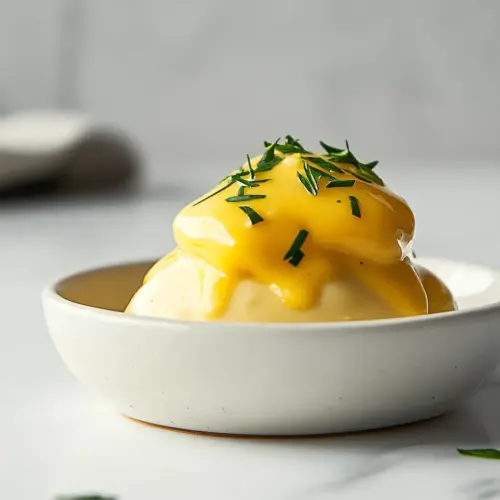
Healthier Hollandaise Sauce
Healthier Hollandaise Sauce is a creamy, bright twist on the classic, offering silky texture with lighter feel. This easy, quick sauce uses simple ingredients to create a smooth emulsion perfect for eggs, vegetables, and light proteins, making it an ideal easy weeknight or weekend brunch addition you will want to make again and again.
Equipment
- Blender
- Double boiler
- Microwave-safe Bowl
Ingredients
- 1 cup unsalted butter Melted to provide a rich, silky base and emulsifying fat, creating the classic creamy texture of hollandaise while contributing buttery flavor and body.
- 2 egg yolks Whisked to supply emulsifying proteins and natural lecithin that stabilize the sauce and add a smooth, custard-like richness when tempered with warm butter.
- 1 tablespoon lemon juice Squeezed to add bright acidity that balances the butteriness, cuts richness, and enhances overall flavor while helping to stabilize the emulsion.
- 1/4 teaspoon salt Measured to season gently, enhancing other flavors without overpowering and helping to bring out the natural savory notes in the sauce.
- 1/4 teaspoon black pepper Ground to provide a mild heat and aromatic warmth that complements the sauce, adding subtle depth and contrast to the creamy base.
- 1/4 teaspoon cayenne pepper, more to taste Sprinkled to introduce a sharp, warming heat that enlivens the sauce and can be adjusted to taste for a spicier finish.
- 1/4 teaspoon onion powder Scattered to offer a sweet, savory background note that enhances overall flavor complexity without adding moisture or texture.
- 1/4 teaspoon garlic powder Sprinkled to contribute a roasted, savory undertone that deepens flavor and complements garlic and onion accents without changing texture.
- 1/4 cup warm water, if needed Added sparingly only if needed to thin the sauce, helping to rescue a breaking emulsion and adjust consistency while preserving flavor.
Instructions
- In a double boiler or microwave, melt butter.: The sound of butter softening is subtle, and visually you want a clear, warm liquid without bubbling or browning; this ensures the flavors remain pure. Using a double boiler keeps the heat diffuse so the butter warms evenly, which prevents scorching and the development of off flavors. If using a microwave, heat in short bursts and swirl to distribute heat. A common mistake is letting the butter get too hot and sizzling, which can cook the egg yolks later; aim for warm to the touch.
- While butter is melting, place egg yolks, lemon juice, and spices in a blender and cover. On low speed, slowly pour the melted butter into the blender in a steady stream until the butter and egg yolk are well blended.: When you blend, you'll hear a steady, low hum as the ingredients aerate slightly, creating a cohesive base. The lemon adds brightness and begins acidifying the yolks, which helps with emulsion stability. Blending these components first makes the next stage smoother and reduces the risk of curdling. Be careful not to overheat the yolks; if they feel warm from the bowl, let them rest briefly.
- If the sauce is thick slowly add in water, until you have reached a slightly thick and runny consistency.: As the butter incorporates you'll notice the sauce thicken and turn glossy, a visual cue that the emulsion is forming. The steady pour is crucial because adding the butter too quickly can break the emulsion and create a separated texture. Listen for a gentle change in blender sound, a sign of increased viscosity. If separation occurs, stop adding butter and blend with a teaspoon of warm water to coax it back together.
- Taste and adjust spices as needed. Serve warm in serving dish of choice!: Warm water will change the feel on your spoon from heavy and clingy to silky and pourable; add it sparingly and whisk to integrate. The aroma will open up as it loosens, making the lemon and spices more apparent. This step controls mouthfeel for different uses, from spooning over eggs to drizzling on vegetables. A frequent error is adding cold water, which can shock the sauce and cause it to seize, so always use warm water.
- Taste and adjust spices as needed.: The final tasting reveals whether the balance is right; you'll want a pleasant tang from the lemon, a warm backbone from the butter , and a subtle lift from the pepper and powders. Adjustments should be incremental, because each addition shifts the profile distinctly. If it needs brightness, add a drop more lemon juice ; for salt, a small pinch will suffice. Avoid oversalting, since the concentrated nature of the sauce magnifies seasoning quickly.
- Serve warm in serving dish of choice!: Serving warm keeps the texture glossy and fluid, making the sauce cling to food instead of pooling. The ideal visual cue is a smooth sheen and slow ribboning when poured; if it looks dull or oily, it may have separated. Keep it over a low warm surface if you need to hold it briefly, but avoid direct heat which can curdle the sauce. A common slip is reheating too aggressively, so gentle warmth is key.
Notes
- Temperature control matters, always aim for warm rather than hot when melting butter, because intense heat can change flavor and jeopardize the emulsion with the egg yolks.
- Slow incorporation, pouring the butter gradually into the blended yolks is the single most important step to a stable hollandaise, so resist the urge to add it quickly.
- Warm water rescues, keep a small cup of warm water nearby to adjust consistency or to rebind the sauce if it starts to separate.
- Fresh lemon is best, fresh lemon juice brightens the sauce more naturally than bottled, giving a cleaner, livelier finish.
- Season last, finish with salt and black pepper to account for the concentrated flavors after emulsification, so you do not over-season early.