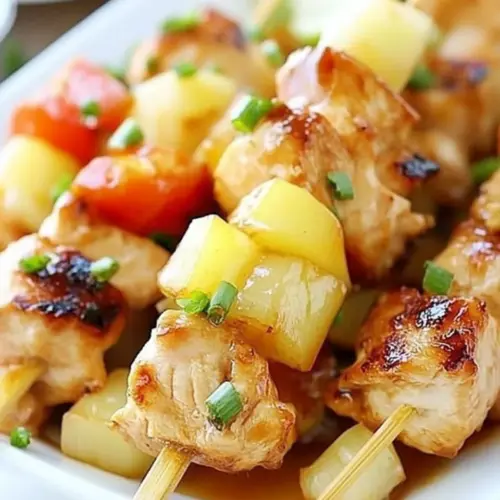
Hawaiian Chicken Kabobs
Hawaiian Chicken Kabobs bring sweet pineapple and savory chicken together for a bright, easy weeknight dinner. Quick to assemble and full of caramelized flavor, these kabobs offer a tender, glossy finish with a sticky BBQ glaze and fresh parsley. Perfect for summer meals and casual gatherings, they deliver bold flavor in minimal time and are irresistible to serve to friends and family.
Equipment
- Bamboo skewers
Ingredients
- 2 lb s (1 kg) chicken, cut into cubes Season and tenderize the chicken pieces by allowing salt to penetrate and enhance natural flavors; use sparingly and adjust to taste. Balances sweetness from pineapple and sauce while promoting proper protein texture during cooking.
- salt Season the kabobs with ground black pepper to add warmth and mild heat; toast briefly in a pan if desired to deepen flavor. Complements salt and other seasonings while highlighting the savory profile of the grilled chicken.
- ground black pepper Coat and sear the chicken with a small amount of oil to prevent sticking and promote even browning; choose a neutral oil for high-heat grilling. Encourages Maillard browning for better flavor and helps distribute marinade or sauce on the pieces.
- 1 tablespoon oil Add juicy fruit pieces by quartering pineapple slices to create tender, caramelizing chunks that contribute sweetness and acidity. Brings bright contrast to savory chicken and concentrates pineapple juices when grilled.
- 1 can Dole Pineapple Slices, quartered Brush or baste the kabobs with Hawaiian-style BBQ sauce to impart sweet, tangy, and umami notes; apply during grilling for glaze and caramelization. Serves as the primary flavor profile tying together chicken and pineapple with a signature regional taste.
- 1/3 cup King’s Hawaiian BBQ Sauce Original Garnish with chopped parsley leaves to introduce a fresh, herbaceous finish that lightens the dish; sprinkle just before serving to preserve color. Offers mild grassy notes and visual contrast against the glazed kabobs.
- 1/2 tablespoon chopped parsley leaves Provide bulk protein by cutting the chicken into uniform cubes to ensure even cooking on skewers; choose consistent sizes for safe internal temperature. Allows for predictable grilling time and pairs readily with pineapple and sauce for balanced bites.
Instructions
- Season the chicken with salt and black pepper. Heat a skillet and add the oil. Pan-fry the chicken until cooked through and nicely browned on the surface. Remove from heat and allow to cool.: The aroma of salt and ground black pepper hitting the surface of the chicken is subtle at first, then becomes inviting as the oils from the meat bloom, adding fragrance. When you season, you want even coverage so each cube has a balanced taste; sprinkle gently and toss in a bowl to coat. Why this matters, the seasoning forms the foundation for the Maillard flavors that develop during searing, enhancing the eventual glaze. A common mistake is over salting early which can draw out moisture, so avoid letting the seasoned chicken sit too long if you used a lot of salt.
- Thread one piece of chicken, followed by one quartered slice of pineapple, and then another piece of chicken. Arrange on a serving platter and continue threading the remaining chicken.: As the skillet warms, you should see a faint shimmer on the surface of the oil , and a whiff of toasted scent when it reaches the right temperature. A properly heated pan ensures the chicken hits a hot surface and begins to brown immediately, creating those desirable browned edges. The technique matters because a cool pan leads to steaming rather than searing, producing pale, less flavorful pieces. Avoid overcrowding the pan; doing so steams the meat rather than browns it.
- Brush the BBQ sauce generously over the chicken, garnish with parsley, and serve immediately.: Listen for a lively sizzle as the chicken meets the skillet, and watch the edges change from pink to a golden brown. Flip pieces only when they release easily, which indicates a proper sear has formed; this prevents tearing and helps even coloring. The sound and sight tell you it is progressing correctly, and the interior should reach a safe doneness while remaining juicy. A frequent error is constant flipping, which prevents a deep crust from forming, so resist the urge to move pieces too often.
- Remove from heat and allow to cool: Once you transfer the seared chicken to a plate, you will notice residual heat continuing to cook the pieces slightly, and the juices will redistribute if you let them rest briefly. Cooling before threading prevents the skewers from steaming the chicken and keeps the pineapple from overheating. This pause also helps the surface settle so sauce adheres evenly later. Do not skip resting, because cutting into hot chicken can release juices and leave pieces drier than intended.
- Thread one piece of chicken, followed by one quartered slice of pineapple, and then another piece of chicken. Arrange on a serving platter and continue threading the remaining chicken: The tactile act of threading creates alternating textures and flavor pockets, and you should feel the slightly resistant give as the skewer passes through chicken and pineapple . The visual rhythm of meat, fruit, meat makes the platter appealing, and arranging the kabobs with space prevents steaming. Threading evenly sized pieces ensures each skewer cooks and presents consistently. A common misstep is using unevenly sized pieces that cook at different rates, so aim for uniformity.
- Brush the BBQ sauce generously over the chicken, garnish with parsley, and serve immediately: As you brush the glossy BBQ Sauce across the skewers, the scent will shift to a sweet smoky note, and the surface will take on a lacquered sheen. The sauce elevates the flavor and provides a sticky, caramelized finish that contrasts with the juicy pineapple . Garnishing with chopped parsley adds a fresh green pop and a herbaceous counterpoint. Serve right away so the sauce remains warm and tacky; waiting too long can make it congeal and lose its appeal. Avoid over saucing if you prefer a lighter touch, but a generous glaze is how I love them.
Notes
- Prep even pieces: Cut the chicken into consistent cubes so they cook uniformly, which avoids dry bits and undercooked centers.
- Dry the chicken: Pat the chicken dry before seasoning to encourage browning instead of steaming in the pan.
- Warm the skillet well: Heat the pan until the oil shimmers so the chicken sears on contact, forming a flavorful crust.
- Work in batches: Cook in small batches to keep the pan hot and maintain a steady sizzle for proper caramelization.
- Brush sauce last: Apply the BBQ Sauce right before serving to keep the glaze vibrant and avoid burning it during searing.