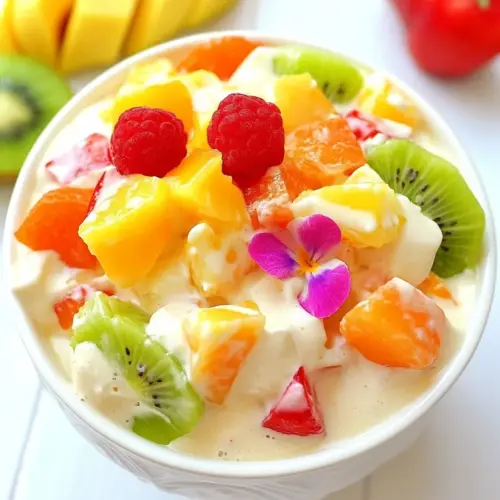
Hawaiian Cheesecake Salad
Hawaiian Cheesecake Salad is a creamy, fruity bowl that blends velvety cream cheese with bright tropical fruits like pineapple, mango, and mandarin slices. It is easy to make, refreshing for summer gatherings, and perfect as an easy weeknight side or potluck winner. Make it to enjoy a creamy tropical twist that everyone will ask for again.
Equipment
- Mixing Bowl
- Hand Mixer
- Knife
- Cutting Board
Ingredients
- 8 oz . package cream cheese softened Soften and beat to a creamy base that adds rich, tangy body and stability to the salad; provides the cheesecake-like texture that binds the fruit and pudding together. Chill briefly after mixing to ensure a smooth consistency and to help the dessert set for easier serving. Use full-fat cream cheese for best flavor and mouthfeel.
- 3.4 oz . box cheesecake pudding mix *Dry* substitute vanilla if unavailable Add and whisk in dry to quickly create a sweet, concentrated cheesecake flavor while helping the mixture thicken without cooking. Substitute vanilla pudding mix if original is unavailable to maintain a similar flavor profile and setting capability. Incorporate gradually to avoid lumps and ensure even distribution.
- 1 cup vanilla creamer Pour in as a liquid sweetener and creamy binder that enhances vanilla flavor while loosening the cream cheese-pudding blend to a spoonable consistency. Use a coffee-cream-style creamer for consistent sweetness and aroma; adjust amount slightly if using less sweet alternatives. Cold creamer blends more smoothly than warm.
- 2 cups mango approximately 2 Chop or purée to contribute tropical sweetness and a bright, fragrant note that complements the cheesecake base; adds texture and fresh fruit flavor. Measure by loosely packed cups to match the recipe’s volume requirement and select ripe mangoes for optimal sweetness. Peel and dice uniformly to ensure even fruit distribution.
- 2 cups mandarin slices drained Drain well and fold in to provide citrusy, sweet segments that add color and a tender bite to the salad without excess syrup. Rinse canned mandarin segments if syrup is too sweet, then pat dry to avoid thinning the mixture. Use quality canned mandarin for consistent flavor and texture.
- 15 oz . can pineapple tidbits drained Drain thoroughly and stir into the mixture to lend classic pineapple tang and small fruity morsels that echo traditional Hawaiian flavors. Pat or sieve to remove excess canned juice so the cream base does not become watery. Reserve a few tidbits for garnish if desired.
- 2 cups kiwi slices approximately 5 kiwis Slice thinly to introduce a slightly tart, tropical green fruit that balances sweetness and adds visual contrast. Peel and slice evenly to prevent browning; toss gently with a bit of lemon juice if preparing ahead of time. Use ripe but firm kiwis for best texture.
- 2 cups strawberries 1 lb package, sliced Hull and slice to bring bright color, natural sweetness, and a soft texture that complements the cream cheese base. Choose ripe strawberries and slice uniformly to ensure even distribution and a pleasant mouthfeel. Add just before serving if fruit release is a concern.
- 2 bananas chopped Chop into bite-sized pieces to provide soft, mellow sweetness and familiar banana flavor that blends smoothly with the cheesecake mixture. Add bananas shortly before serving to prevent excessive browning and maintain texture. Toss with a bit of lemon juice if prepping early to slow oxidation.
- 1 tablespoon lemon juice Squeeze fresh to add acidity that prevents fruit browning and brightens overall flavor; balances the richness of the cream cheese and pudding. Use evenly over sliced fruits like bananas and kiwis to maintain color and improve freshness. Adjust amount to taste to avoid overpowering delicate fruits.
Instructions
- Place the softened cream cheese in a bowl and mix until smooth with a hand or stand mixer.: Close your eyes and notice the change as the cream cheese transforms from lumpy to glossy, the beaters humming steadily as the texture becomes silk like. You want a velvety surface with no visible lumps at all, which signals the base will be uniformly creamy. If the cream cheese resists smoothing, it is often because it is too cold, so pause and let it warm up for a few minutes rather than overworking the mixer which can heat it unevenly. A common mistake is rushing this step, ending with small clumps that leave unpleasant pockets in the final salad.
- Add the dry cheesecake pudding mix into the cream cheese and combine fully.: When you sprinkle the dry pudding mix in, the bowl will smell faintly of sweet, tangy cheesecake, and the mixture will tighten slightly as the powder hydrates. Work it in thoroughly so the flavor distributes evenly; this is what gives the salad its unmistakable cheesecake note. Avoid dumping the whole packet in one spot, which can create streaks of undissolved powder. One issue people run into is under mixing, which leaves grainy pockets of mix that do not dissolve well into the cream cheese .
- Add the vanilla creamer to the cream cheese mixture approximately 1-2 Tablespoons at a time to ensure a smooth consistency. (Adding it all at once will cause the mixture to be lumpy.): As you drizzle in the vanilla creamer , watch the texture loosen into a glossy, spoonable dressing that coats the back of a spoon. Adding it slowly prevents separation and lumps, and lets you achieve a balance between thick and spreadable. If you add it too quickly, the mixture can become runny or curdled; to fix that, chill briefly and then rewhip gently. A trap is over thinning, which will make the salad weep when mixed with fruit.
- Clean and cut all fruit except the bananas into small, bite-sized pieces.: The kitchen will fill with a bright fruity aroma as you chop mango , kiwi , and strawberries , and the visual contrast of colors should make you smile. Aim for uniform, bite sized pieces so the mouthfeel remains consistent and every forkful gets a bit of each fruit. Rushing here can lead to uneven sizes, where tiny pieces vanish into the dressing and large ones dominate single bites. Sharp knives and steady, controlled cuts make the job easier and safer.
- Combine the fresh fruit with the cream cheese mixture.: When you fold the fruit into the creamy base, you will feel a slight resistance as the fruit nestles into the dressing, then everything will become glossy and well coated. Use a light hand so delicate fruits like strawberries do not bruise, and fold until evenly distributed rather than beating, which can break fruit down. Over mixing is a typical misstep, leading to a mushy outcome instead of distinct fruit pieces throughout the salad.
- Cut up bananas and toss them with lemon juice to prevent browning. Gently add bananas to the fruit salad.: As you toss the chopped banana with the lemon juice , you will smell the citrus brighten the fruit, and the acid will keep the banana looking fresh. Add them at the end so their soft texture remains intact, folding just enough for an even spread without crushing them. If bananas are added too early they will brown and soften, making the salad soggy, which is a common pitfall to avoid.
- Chill Hawaiian Fruit Salad until ready to serve.: Cooling the salad lets flavors meld and the dressing set, producing a firmer mouthfeel and a more integrated flavor profile when served. A brief chill will tighten the texture and make it more refreshing, and the bowl will develop a subtle perfume of combined fruits. Do not freeze, as the water in fruit will expand and become watery upon thawing. One mistake to watch for is over chilling, which can mute delicate fruit aromas, so aim for a refreshing cold rather than icy.
Notes
- Try maraschino cherries for a pop of color and a sweet briny note that pairs nicely with the pineapple.
- Add shredded coconut flakes to introduce a toasty texture that complements the tropical fruits and enhances the island vibe.
- Fold in a bit of light whipped topping to create a fluffier, ambrosia like version while maintaining the cheesecake character from the base.
- Use canned fruit when fresh is unavailable, but be sure to drain completely so the salad does not get watery and lose its creamy structure.
- Slice fruit uniformly so each bite balances cream and fruit, which improves presentation and eating experience.