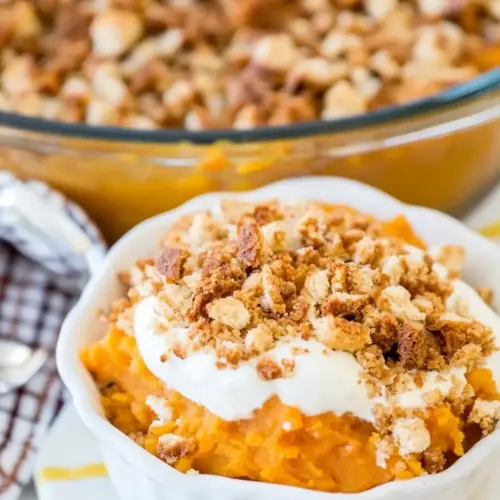
Have it Both Ways Sweet Potato Casserole
Have it Both Ways Sweet Potato Casserole is a creamy, cozy side that blends smooth mashed sweet potatoes with a split topping of gooey marshmallows and crunchy pecan crumble, perfect for an easy weeknight dinner or a festive holiday table. The warm spices and brown sugar make each bite comforting, and the dual textures make it irresistible, a reason you'll want to make it again and again.
Equipment
- 9x13-inch Baking Dish
- Hand-held electric mixer
Ingredients
- 5 medium sweet potatoes Peel and boil or roast until tender, then mash to form the creamy base that provides natural sweetness and body to the casserole. Mash with some of the butter and sugar for a smooth texture and to integrate flavors evenly. Use slightly cooled potatoes to prevent butter from melting too quickly when combining other ingredients.
- 8 tablespoons salted butter Melt and incorporate into the mashed sweet potatoes to add richness and a silky mouthfeel that enhances overall flavor. Cut into pieces to soften quickly while mashing, and reserve a portion for the pecan topping to create a golden, buttery crust.
- 2/3 cup packed light brown sugar Pack firmly and stir into the sweet potato mixture to introduce caramel-like sweetness and moisture balance. Dissolve thoroughly to avoid graininess and to ensure consistent sweetness throughout the dish.
- 1 teaspoon vanilla extract Add for a warm, aromatic lift that brightens the sweet potato mixture and complements the brown sugar notes. Stir in after mashing to preserve its subtle floral and vanilla nuances without overpowering the spices.
- 1/2 teaspoons salt Season gently to enhance and balance the sweetness while preventing the dish from tasting flat. Sprinkle and taste as you combine ingredients to achieve the desired savory-sweet harmony.
- 1/2 teaspoon pumpkin pie spice Season to provide warm, autumnal notes that deepen the flavor profile and pair well with cinnamon and brown sugar. Use sparingly to avoid dominating the subtle sweetness of the potatoes.
- 1/2 teaspoon ground cinnamon Season to add a familiar, sweet-spicy warmth that complements pumpkin pie spice and marries the flavors of the casserole. Mix thoroughly so the cinnamon disperses evenly for consistent flavor in every bite.
- 2 1/2 cups mini marshmallows Top the casserole with for a classic, gooey finish that melts and browns to create a sweet, pillowy contrast to the creamy potatoes. Scatter evenly and bake until golden, then broil briefly for toasted tips if desired.
- 1 cup chopped pecans Sprinkle on top for crunchy texture and a nutty flavor that offsets the sweetness and adds visual appeal. Toast lightly in a skillet or oven to intensify aroma before combining with the butter and brown sugar topping.
- 4 tablespoons salted butter Melt and mix with chopped pecans and brown sugar to form a buttery streusel that bakes into a crisp, caramelized topping. Use room-temperature butter to ensure even coating of the pecans and sugar for optimal texture.
- 1/2 cup packed light brown sugar Pack firmly and combine with butter and pecans to create a sweet, crunchy topping that balances the creamy sweet potato layer. Adjust amount slightly for desired sweetness and to control the degree of caramelization during baking.
Instructions
- Bake sweet potatoes in a 375 degree oven for 60 minutes or until soft. Let cool slightly and then peel skin off and discard.: As the oven warms, you will smell a gentle, caramelizing sweetness as the sweet potatoes roast, and the skins will darken and tighten; that is a clear visual cue they are done. When pierced with a fork the flesh should feel tender and slide off easily, not resist; if the potatoes still feel firm, continue baking in 10 minute increments. The reason roasting at this temperature matters is it concentrates the natural sugars and reduces excess moisture, which yields a creamier mash later. A common mistake is baking at too low a temperature which can leave the flesh dry rather than soft, so aim for the steady 375 degree heat and check for fork tender doneness.
- Place sweet potatoes in a large bowl. Add butter, brown sugar, vanilla, salt, pumpkin pie spice, and cinnamon. Beat with a hand held mixer until smooth.: You will notice a faint steam rising when you split a potato open, and letting them rest for a few minutes makes handling safer and easier. The peel should slip away with minimal effort; if the skins cling, the potatoes may still be too hot or undercooked. Cooling slightly also prevents watery mash, because extremely hot potatoes can hold steam that makes the mixture runny. Avoid rushing this step, as mishandling hot potatoes can lead to burns or a messy peel process.
- Transfer mixture to a greased 9×13-inch baking dish.: Once the cooked flesh is in a bowl you should see a warm, soft mound ready to accept the other ingredients, and the bowl will radiate heat. Using a large bowl gives you room to beat the mixture without splatter. The heat helps the butter melt evenly into the mash, so do not transfer to a cold bowl. A common oversight is using too small a bowl and creating a splatter mess when mixing, so choose a roomy vessel to keep this tidy.
- Sprinkle marshmallows on opposite corners as in the pictures.: When you add the butter and brown sugar the mash will begin to smell rich and warm, while the spices rise on the nose. Let the butter sit for a moment so it softens against the hot potatoes, which helps it integrate smoothly. These ingredients play distinct roles, with the sugar amplifying sweetness and the spices providing balance; skipping or mismeasuring any of them changes the profile significantly. Avoid dumping cold butter straight from the fridge, because it will not blend as readily and can leave pockets in the mash.
- In a bowl, cut butter into brown sugar and stir in pecans. Sprinkle mixture on areas not covered by marshmallows.: As you mix, you will hear a steady whir and see the mixture transform from coarse chunks to a luxuriously smooth texture; stop once it is silky, not gluey. Smoothness signals that the starches have been properly broken down and the fat has emulsified into the mash, which helps the casserole hold together under toppings. Over beating can make the texture gluey and dense, so pulse and check the consistency frequently. If lumps remain, a few longer pulses usually fix it, but be cautious not to overwork the potatoes.
- Bake at 350 degrees for 20 minutes.: Spreading the warm mash into the dish will reveal its glossy surface, and a spatula will leave smooth peaks that set beneath the toppings. Greasing the dish prevents sticking and encourages even browning around the edges. The dish size matters because it determines the mash thickness which affects baking time; using a smaller dish will create a deeper layer and may require longer baking. Avoid packing the mash too tightly, as that can compress air pockets and change the texture during the final bake.
- Sprinkle marshmallows on opposite corners as in the pictures: When you add the marshmallows , they will sit fluffy and bright on the warm surface; as they bake they will puff and brown slightly, offering a toasted sugar aroma. Placing them on one side preserves the division between gooey and crunchy, creating a playful presentation. If the marshmallows spread too thinly they may melt into the mash rather than forming peaks, so pile them generously for a dramatic puff. A common slip is scattering mini marshmallows too sparsely, which reduces the gooey impact you want from this topping.
- In a bowl, cut butter into brown sugar and stir in pecans: Combining softened butter and light brown sugar with the chopped pecans creates a tactile, crumbly topping that glints slightly from the butter. As you work the butter in, you should feel the mixture come together like damp sand; this texture ensures the topping will crisp rather than stay soggy. Stirring in the pecans distributes toasty flavor and structural crunch, which contrasts the marshmallow side. One mistake people make is using melted butter, which can make the topping too wet and prevent it from crisping properly, so work with softened but not liquid butter.
- Sprinkle mixture on areas not covered by marshmallows: As you scatter the pecan crumble over its half of the casserole, you will see a pleasing contrast of textures and colors, from glossy white marshmallow peaks to the caramel brown of the pecan topping. Ensure you leave a clear boundary so the two toppings stay distinct after baking; this is what creates the playful dual experience. Pressing the crumble lightly helps it adhere but avoid compacting it, which can reduce crispness. A common error is overlapping the toppings too much, which blurs the two distinct bites you intended to showcase.
- Bake at 350 degrees for 20 minutes: During this final bake, the kitchen will fill with the warm scent of toasted nuts and melting sugar, and you will see the marshmallows swell and develop light golden peaks while the pecan topping crisps and blacks its edges slightly. The 350 degree bake gently finishes textures without burning, ensuring the mash stays moist while the toppings reach the right color and mouthfeel. If the marshmallows brown too quickly, tent the dish loosely with foil to slow direct heat, and if the pecans are browning unevenly rotate the dish halfway through. Avoid leaving it unattended in the last minutes, because small differences in time can change the level of toasting dramatically.
Notes
- Make ahead strategy The sweet potato mixture can be made up to two days in advance. Spread it in the greased baking dish, cover tightly with plastic wrap, and refrigerate. This saves time on the day of your meal and lets the flavors meld. When ready to serve, remove it from the fridge a bit earlier to take the chill off before adding toppings and baking.
- Assemble toppings last Keep the marshmallows and pecan crumble separate until immediately before baking. This helps the marshmallows maintain their shape and the pecan topping stay crisp. If you add them too early, moisture from the mash can soften the crumble and cause the marshmallows to sink.
- Adjust sweetness to taste Taste the mashed sweet potato mixture before transferring to the dish, and adjust the brown sugar level if needed. Some sweet potatoes are sweeter than others, so a quick taste can prevent an overly sugary result. Remember the toppings add sweetness too, so balance accordingly.
- Control browning If the marshmallows brown faster than the pecan side, tent the marshmallow half with foil while allowing the pecan side to finish crisping. Conversely, if the pecans brown too quickly, lower the oven temperature by ten to twenty degrees and extend the bake to avoid burning.
- Storage and reheating Store leftovers covered in the refrigerator for up to three days. Reheat in a 325 degree oven until warmed through, which helps restore texture. Avoid microwaving large portions as it can make the mash watery and the toppings limp.