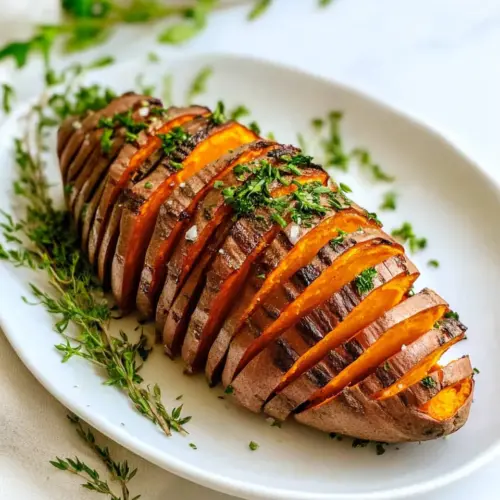
Hasselback Sweet Potatoes
Hasselback Sweet Potatoes deliver crispy edges and a creamy interior with simple ingredients like butter, olive oil, and herbs. This easy side is perfect for weeknight dinners or holiday gatherings, offering elegant texture and savory finish with minimal hands on time. Make it when you want a show stopping dish that feels special without complicated technique.
Equipment
- Oven
- Baking Sheet
- Parchment Paper
- Brush
Ingredients
- 4 medium sweet potatoes scrubbed Scrubbed to remove dirt and debris, providing a clean base for even slicing and roasting; delivers natural sweetness and creamy texture when baked until tender. Retains shape for hasselback cuts so thin slices crisp while interior stays soft, creating contrast in each bite.
- 2 tablespoons unsalted butter melted Melted to create a rich, silky coating that helps carry flavors and promote browning on exposed potato surfaces. Adds a subtle dairy richness that enhances mouthfeel and helps seasonings adhere to the slices.
- 1 tablespoon olive oil Used to lightly coat the potatoes and encourage crisp edges while roasting, contributing a fruity, savory note and higher smoke point for even browning. Blends with butter to create a balanced fat layer that crisps without burning.
- 1 teaspoon fresh thyme finely chopped Finely chopped to infuse herbaceous, aromatic notes throughout the potatoes, brightening richness with a slightly lemony, floral character. Sprinkled between or atop slices to provide bursts of freshness and enhance overall complexity.
- 1/2 teaspoon kosher salt Added to season and amplify the natural flavors of the sweet potatoes while balancing sweetness with savory depth; helps draw out moisture for better texture. Used sparingly to avoid overpowering delicate herbs and cheese.
- 1/4 teaspoon black pepper Ground to add mild heat and depth, enhancing savory elements and balancing sweetness; creates subtle peppery highlights on crisped edges. Incorporated evenly so tiny bursts of heat appear in each bite without overwhelming.
- 1/4 cup grated Parmesan cheese Grated to provide a nutty, umami-rich crust that melts into the crevices of the hasselback cuts, adding savory complexity and a golden finish. Sprinkled toward the end of roasting to form a delicate, crispy topping that contrasts with the tender interior.
- 1 tablespoon fresh parsley finely chopped Finely chopped to offer a fresh, bright finish that cuts through richness and ties flavors together with a clean herbal note. Scattered over finished potatoes to add color, aroma, and a light, palate-cleansing element.
Instructions
- Preheat your oven to 425 degrees Fahrenheit and line a baking sheet with parchment paper.: The first sign that you are ready is the warm, dry air that will circulate in the oven, encouraging surface browning. Using parchment paper keeps the pan cleaner and prevents sticking, while the high temperature promotes caramelization on the exposed ridges. If the oven is not fully preheated, the potatoes will steam rather than roast, resulting in a softer, less crisp exterior. A common mistake is rushing this step, so always wait until the oven registers the full 425 degrees and the interior light goes off before sliding the pan in.
- Carefully make thin slices along each sweet potato, stopping just before you cut through so that the slices stay connected at the bottom.: As you slice, you should hear a faint scraping sound and see the potato accordion slightly open, promising crisp edges. This technique increases surface area for browning while preserving the tender interior. The reason for not cutting through is structural, keeping the slices attached so they roast as one piece. A frequent error is making slices that are too thick, which reduces the amount of crispy edge per bite, or cutting all the way through, which makes the potato fall apart when serving.
- Mix the melted butter, olive oil, thyme, salt, and pepper, and brush the mixture over and between the slices of each sweet potato.: When you brush the warm butter and olive oil into the crevices, you will notice the aromatics releasing, and the surface becomes glossy. This fat infusion helps the edges blister and caramelize, concentrating flavor. Take your time to push the mixture into the gaps so each slice gets seasoned. Mistakes here include applying the mixture only to the surface, which leads to uneven flavor distribution, or using cold butter that won't penetrate the slices.
- Bake for about 60 minutes, until the potatoes are tender inside and crispy on the outside.: While roasting, you will hear a quiet, comforting hiss and smell a sweet, roasted aroma as natural sugars caramelize. Visual cues to watch for are deepening golden brown ridges and a slight pulling apart of the slices as they cook. The interior should yield easily to a skewer, indicating tenderness. If you rush the bake or use a lower temperature, the exterior will not achieve the desired crispness and the interior may remain undercooked. A common misstep is opening the oven frequently, which drops the temperature and extends cooking time.
- Remove from the oven, sprinkle with Parmesan cheese and parsley, and serve.: As soon as the potatoes come out, the hot ridges will welcome the Parmesan , which will melt slightly and add a savory finish, while fresh parsley brings color and brightness. The contrast between the warm, crisp edges and the cool, herbaceous garnish is key. Avoid letting them sit too long before serving, because the edges will soften and lose crispness. One mistake to watch for is adding cheese too early in the oven, which can burn and taste bitter instead of offering that melty umami note.
Notes
- Use even sized potatoes to ensure uniform roasting, so no piece ends up overcooked or underdone.
- Keep slices thin to maximize crispy surface area, which enhances the contrast with the tender interior.
- Warm the butter before brushing so it penetrates between slices easily and carries herbs into the potato.
- Finish with cheese at the end to avoid burning and to give a melty, savory lift right before serving.
- Garnish just before serving with fresh parsley to maintain color and a bright herbal note.