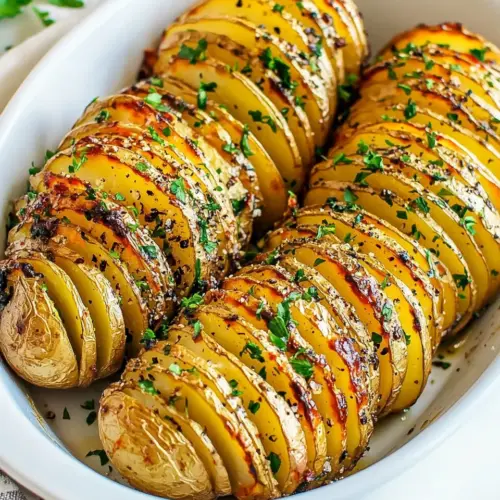
Hasselback Potatoes
Hasselback Potatoes are crispy edged and tender centered, offering a creamy interior and golden, cheesy crust. This easy weeknight dinner side uses simple ingredients like butter, garlic, and parmesan cheese for big flavor, and it scales well for gatherings. Make it when you want an impressive, comforting accompaniment that tastes indulgent yet is straightforward to prepare.
Equipment
- Oven
- Baking Sheet
- Aluminum Foil
- Knife
- Wooden chopsticks
- Pastry Brush
Ingredients
- 6 (7 to 8 oz) red potatoes or Yukon gold potatoes, scrubbed and rinsed clean Provide firm, thinly sliced tubers that hold shape when roasted and develop crisp, fan-like edges; choose red or Yukon gold for their creamy interior and thin skin that crisps beautifully in a hasselback preparation.
- 2 tbsp olive oil Add a light coating of healthy fat to the potatoes before baking to promote even browning and help seasonings adhere; olive oil also contributes a subtle fruity flavor that complements butter and herbs.
- 6 tbsp Danish Creamery Premium Butter, melted Impart rich, creamy flavor and help create a golden, indulgent finish when brushed between slices and on the surface; melted Danish butter adds a decadent mouthfeel and assists with browning.
- 1 tbsp minced garlic Introduce pungent, savory aromatics that infuse the potatoes during roasting; minced garlic delivers depth and a toasty, caramelized flavor when exposed to hot fat.
- 2 tsp minced fresh thyme Contribute bright, earthy herbal notes and a slightly minty aroma that pair well with butter and garlic; minced fresh thyme releases its oils during roasting to enhance overall flavor.
- Kosher salt and ground black pepper, to taste Season the potatoes to enhance and balance flavors throughout cooking; kosher salt draws out moisture for better crisping while black pepper adds mild heat and complexity.
- 3/4 cup finely shredded parmesan cheese Provide a salty, nutty, umami-rich crust when sprinkled over the potatoes before the final bake; finely shredded parmesan melts and browns into a crisp, flavorful layer.
- 2 tbsp minced fresh parsley Add a fresh, herbaceous finish and visual contrast when sprinkled after baking; minced fresh parsley brightens the rich, buttery flavors and complements the cheese.
Instructions
- Preheat oven to 425 degrees. Line a 13 by 9-inch baking sheet with aluminum foil (the foil should also run up the inside edges of the pan so the butter doesn't seep under, make sure there are no holes as well).: As you slide the rack into place and set the oven to 425 degrees , you should notice the faint hum of a warming oven and the scent of residual kitchen air. Preheating ensures the initial blast of heat starts crisping the outermost slices right away, which helps create that delicate lace. A common mistake is to skip full preheat, which can lead to longer cook times and less even browning. Check that the rack is centered so the potatoes roast evenly, and line a 13 by 9-inch baking sheet with aluminum foil to catch the butter and simplify cleanup.
- Place two wooden chopsticks, skewers or wooden spatulas along sides of one potato (this is just to help cut all the way through). Slice potato into thin slices about 1/6 th-inch thick but do not cut through the bottom 1/3-inch of the potato so the slices all stay intact.: Touch the foil and smooth it so it runs up the inside edges, creating a shallow tray for melted butter to collect. The foil should be hole free so juices do not escape and cause smoke or mess. This step matters because it concentrates the butter and juices, allowing you to baste and reclaim flavors from the pan. If the foil has holes or is not secure, butter will leak and cause uneven basting and a difficult cleanup experience.
- Repeat with remaining potatoes.: When you arrange the wooden guides beside the potato , feel the tactile reassurance that they will stop your knife from cutting all the way through. This simple trick keeps the slices attached at the base so the potato fans open but remains intact on the bottom, which is essential for holding butter and parmesan cheese between slices. A common error is using guides that are too thin or sliding while cutting; use steady pressure and steady hands to avoid nicking the base.
- Transfer potatoes to foil lined baking sheet. Brush all over and between slices with olive oil (just brush quickly between slices it doesn't need to be perfect).: As the blade glides, listen for a faint whisper and watch each slice fan slightly, but keep the lower third uncut so the structure holds. These thin slices maximize surface area for crisping while preserving an inner soft core. If slices are uneven, some will overcook while others stay underdone, so aim for consistent thickness. If you cut too deeply you will lose the fanning effect and the potato may fall apart during roasting.
- Bake in preheated oven 50 to 55 minutes until fairly tender (potato slices should be falling open).: While you continue, notice how the rhythm of slicing becomes meditative, each potato developing its own personality. Consistency across potatoes helps ensure even roasting across the pan. A frequent oversight is rushing through later potatoes and ending up with varied thicknesses, which leads to uneven texture after roasting. Take your time and keep the guide placed evenly for each tuber.
- Near the end of that time mix together melted butter, garlic and thyme.: As you move the potatoes, arrange them spaced slightly apart so hot air circulates and edges crisp uniformly. The potatoes should sit snug but not touching. The tactile sense of sliding them into place and the visual of neatly aligned fans is satisfying and functional. Overcrowding will trap steam and prevent crispness, so give each potato breathing room.
- Once time is up remove potatoes from the oven and pour and brush the butter mixture over potatoes (basting between the slices as well. You can brush with butter that's now on bottom of baking sheet. Note that there will be some butter on bottom of sheet as they bake and this is fine).: When you brush with olive oil , notice how the sheen deepens and the slices gleam, telling you the surface will brown well. Brushing between slices ensures heat reaches inner edges and promotes even color development. Take care not to drench them, as excess oil can pool and cause uneven browning. Missing this step can result in dull colored skins and less flavor concentrated between layers.
- Season with salt and pepper (again getting some between the slices). Sprinkle parmesan over potatoes and between slices.: During this long roast, pay attention to the sound and sight of the potatoes as they soften and their edges begin to bend open. The aroma of roasted starches and butter will fill the kitchen, and a fork should slide into the center with resistance that indicates they are nearly done. If you open the oven too often, heat loss can extend cooking time, so only peek toward the end. Underbaking will leave a raw center, while overbaking can dry them out, so aim for that tender but not collapsing texture.
- Return to oven and continue to bake until centers of potatoes are fully tender, about 15 to 20 minutes longer.: As you whisk the melted butter with minced garlic and thyme , inhale the heady fragrance that emerges, which signals the flavor infusion is ready. The warm butter will carry aromatics into the crevices when applied, guaranteeing a fragrant finish. A mistake here is adding raw cold ingredients that can cool the butter and lessen absorption; ensure everything is warm enough to flow into the slices.
- Brush with butter from the baking sheet, sprinkle with parsley, serve warm.: When you pour the aromatic butter over the potatoes, let it pool into the grooves and spoon it between slices so every pocket gets flavored. You should hear a faint sizzle as warm butter hits hot potato, releasing a savory steam. Use a pastry brush to baste and redistribute any butter that collects on the sheet. If you skip basting or brush too gently, some slices will remain dry and flat in flavor, so be generous in this step.
- Season with salt and pepper: As the salt hits the hot surface, it will dissolve and enhance the natural sweetness of the potato , while freshly ground black pepper adds a lively note. Aim to get seasoning between slices where the flavors can mingle. Over-salting is a common pitfall, so season lightly, taste with a small piece if uncertain, and adjust after the final bake if needed.
- Sprinkle parmesan over potatoes and between slices: The finely shredded parmesan cheese should be sprinkled so it melts into the grooves and crisps on the outer edges, forming a nutty crust. Watch as the cheese softens and turns golden, which is the cue that it has melted into the slices. If you wait too long to add cheese, it may not adhere as well, so add before the final bake stage for best adhesion and texture.
- Return to oven and continue to bake until centers of potatoes are fully tender: During this final 15 to 20 minute roast, the cheese will brown and the butter will further deepen flavors, and you should see edges achieving a deeply golden color. The scent will shift to a more toasted, cheesy aroma that signals success. Be mindful of oven hot spots; rotate the pan if one side browns faster to maintain even results. Overbaking at this stage risks burning the cheese, so watch closely.
- Brush with butter from the baking sheet, sprinkle with parsley, serve warm: Finally, reclaim the browned butter from the sheet and brush it over the potatoes for glossy finish and extra flavor. The minced parsley adds a fresh contrast when sprinkled just before serving, and the first forkful should be warm with a crisp edge and soft interior. Serve immediately because the contrast between hot centers and crisp edges is most pronounced when fresh. A common mistake is letting them sit too long, which softens the crisp edges and mutes that fresh herb brightness.
Notes
- Use similar starchy potatoes, such as red or Yukon gold, to ensure the right balance of creaminess and structure during roasting.
- Warm the butter before mixing with garlic and thyme so it penetrates the slices more effectively and carries the aromatics into the potato.
- Thinly shred the cheese to ensure even melting and create a delicate golden crust that blends into the grooves.
- Space potatoes on the sheet so hot air circulates and every edge crisps rather than steaming.
- Use wooden guides like chopsticks or skewers to prevent cutting through the base and to create a consistent fan across all potatoes.
- Brush between slices thoroughly, not just on top, so every pocket gets flavored and no interior slice bakes dry.