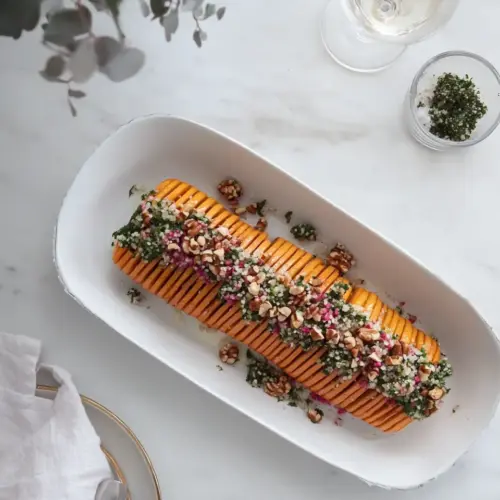
Hasselback Butternut Squash with Walnut Gremolata
Hasselback Butternut Squash with Walnut Gremolata combines creamy roasted squash, warm spices, and a crunchy herb nut gremolata for a crispy and vibrant side. This easy to assemble dish becomes an impressive holiday or weeknight centerpiece with bright lemon and jewel like pomegranate seeds finishing each bite, perfect for an easy weeknight dinner or Thanksgiving table. Make it for flavor and show stopping presentation.
Equipment
- Chef knife
- Vegetable Peeler
- Baking dish or sheet pan
- Small Bowl
Ingredients
- 1 3-pound hasselback butternut squash Slice the squash thinly in a hasselback style to create even, accordion-like cuts that allow flavors to penetrate and edges to caramelize during roasting; ensure the base remains intact to hold the slices together for an attractive presentation.
- 1 tablespoon olive oil Coat the exterior and between the slices with oil to promote browning and prevent sticking; olive oil also adds a fruity backbone that complements the squash’s natural sweetness.
- Kosher salt Season generously with kosher salt to enhance the natural sweetness of the squash and to help draw out moisture for better caramelization; use coarse grains for easier distribution.
- Freshly ground pepper Grind pepper fresh over the squash to introduce bright, pungent heat and to balance sweet and earthy flavors; freshly ground pepper offers a more aromatic, lively bite than pre-ground varieties.
- 1/2 teaspoon ground cumin Sprinkle ground cumin for warm, slightly smoky earthiness that complements roasted squash and pairs well with the coriander; use sparingly to avoid overpowering the dish.
- 1/2 teaspoon ground coriander Add ground coriander for citrusy, floral notes that brighten the roasted squash and work in harmony with cumin and other spices; finely ground coriander distributes flavor evenly.
- 3 tablespoons Countryside Creamery Sweet Cream Unsalted Butter, thinly sliced Dot the thinly sliced butter between cuts to melt into the squash as it roasts, adding richness and a silky mouthfeel; using unsalted butter lets you control overall seasoning precisely.
- 1/4 cup Southern Grove Walnuts, chopped finely Toast and chop walnuts finely to create a crunchy, nutty component that provides texture contrast and savory depth; finely chopping ensures even distribution in the gremolata.
- 2 tablespoons olive oil Drizzle olive oil into the walnut gremolata to bind ingredients and carry the herb and citrus flavors; olive oil also adds a pleasant sheen and mouth-coating richness.
- 2 tablespoons fresh Italian parsley Chop fresh Italian parsley finely to contribute bright, herbaceous freshness and color to the gremolata; parsley helps lift the richness of the squash and butter.
- 2 tablespoons finely grated Priano Parmesan cheese Grate Parmesan finely to add salty, umami complexity and a subtle nutty quality to the gremolata; finely grated cheese integrates smoothly without adding grittiness.
- Kosher salt Season the gremolata with kosher salt to balance acidity and enhance the herb and nut flavors; adjust to taste since other components like Parmesan bring salt too.
- Juice from 1/2 lemon Squeeze juice from half a lemon to add lively acidity and citrus brightness that cuts through the richness and ties herb and nut flavors together; fresh juice yields the best aromatic lift.
- 1/4 teaspoon crushed red pepper Sprinkle crushed red pepper to introduce a gentle, lingering heat that contrasts with the sweet roasted squash and rich butter; use cautiously to maintain balance.
- Seeds from 1/2 pomegranate, as garnish Garnish with pomegranate seeds for jewel-like bursts of tart sweetness and juicy texture that brighten the final plate and add visual appeal.
Instructions
- Preheat oven to 425 degrees F. Trim the ends off the butternut squash and then slice the butternut squash in half; using a spoon, scoop out the seeds. Peel the butternut squash, using a vegetable peeler, until you reach the bright orange flesh. Transfer to a baking dish and drizzle both sides of squash with olive oil and sprinkle with salt and pepper.: The air in the oven should feel noticeably hot and dry when you open the door, creating an environment that encourages quick caramelization on the exposed butternut squash surfaces. You will smell a slight warm sweetness as the squash begins to roast, and the edges should start showing golden hints after the first stage. This high heat is important because it sets up those caramelized edges that contrast the creamy interior. A common mistake is putting the squash into an oven that is still warming, which leads to pale, steamed surfaces instead of browned ridges. Use an oven thermometer if yours runs cool.
- Place in the oven to roast for 20 minutes. Remove from the oven and carefully transfer to a cutting board. Allow the butternut squash to cool until it’s cool enough to handle, about 10 minutes.: As you work, the bright orange flesh should be smooth and fragrant, and scooping the seeds gives you a clean cavity to handle. The tactile cue is that the cavity becomes hollow and the flesh feels firm to the touch. Doing this carefully prevents slippery handling later, and it makes peeling safer. Avoid gouging the flesh too deeply; you only need to remove the seeds and inner stringy bits. Rushing this step can cause uneven halves that roast irregularly.
- Using a sharp knife, make 1/4-inch slices, stopping before you slice completely through it. Repeat with the second half of butternut squash.: The peeled surface should feel satiny and reveal vivid orange color. Peeling thoroughly ensures even heat penetration and a uniformly tender interior. The skins can be tough and bitter if left on, which is why I remove them. Watch your fingers and keep the squash steady on a cutting board; slipping peels are a frequent cause of nicks.
- Sprinkle top with the cumin and coriander. Top with a few thin slices of butter. And then transfer to the oven again for an additional 40 minutes.: When you rub the oil over the flesh, it will take on a slight sheen and the seasonings will look evenly distributed. That glossy coating promotes browning and helps spices stick. If you skip oiling or apply it unevenly, some slices will brown while others remain pale, creating inconsistent texture. Ensure the olive oil reaches into the slices or grooves so flavors penetrate each ridge.
- To a bowl, add the walnuts, olive oil, Italian parsley, grated Parmesan, a few pinches of salt, lemon juice and crushed red pepper. Mix until combined.: During this initial roast, the surface will start to soften and the exposed edges will show the first signs of color. You may hear a faint sizzle as juices concentrate and the oven air works on the flesh. This stage jumpstarts cooking so the squash can be handled for hasselback slicing without collapsing. A common error is leaving it much longer than recommended, which can over soften the squash and make the hasselback slicing tear the flesh instead of creating neat folds.
- When the butternut squash is done, transfer to a serving dish. Spoon the gremolata on top and garnish with pomegranate seeds. Serve immediately.: The squash will finish carrying heat internally, and the aroma will be warmer and deeper after that first roast. Cooling makes slicing safer, and the texture firms slightly so you can stop the knife before cutting all the way through. If you try to slice immediately while piping hot, you risk burns and ragged cuts. Letting it rest also allows juices to redistribute, preventing a watery texture during the second roast.
- Using a sharp knife, make 1/4 inch slices stopping before you slice completely through it: Look for uniform spacing and a clean, crisp cut edge on each slice, which will spread slightly when roasted. The visual cue is parallel ridges that fan but remain attached at the base, creating those classic hasselback folds. A dull knife will crush the meat, so sharpen or use a very thin bladed knife. One typical misstep is cutting all the way through, which causes the halves to fall apart during roasting.
- Repeat with the second half: Match the same rhythm and spacing so both halves roast evenly. When both halves are prepared, they should mirror each other and fit comfortably on your baking dish. This symmetry ensures consistent cooking and a pleasing presentation. Inconsistent slicing between halves leads to uneven doneness and an awkward look on the plate.
- Sprinkle top with the cumin and coriander and top with a few thin slices of butter: The spices will bloom on the hot surface, releasing warm aromas, and the butter will melt into the grooves, basted pockets of richness. As the butter melts, you can smell toasted notes and spiced butter wheeling into the flesh. This step amplifies flavor and encourages caramelization. Too much butter will pool and steam rather than brown, so use thin slices distributed across the surface.
- Transfer to the oven again for an additional 40 minutes: During this longer roast, edges will deepen to golden brown and the interior will become tender and yielding when probed. You may hear gentle crackling as surface sugars caramelize. This extended time is necessary for the flavors to concentrate and for the ridges to crisp while the interior remains creamy. A common problem is overcooking so the flesh becomes dry, so check for a fork tender texture before the time is up if your squash is smaller than listed.
- To a bowl add the walnuts olive oil Italian parsley grated Parmesan a few pinches of salt lemon juice and crushed red pepper mix until combined: The mixture should come together as a loose, textured paste, the oil binding the chopped walnut and herbs, while the lemon brightens and the Parmesan cheese adds savory depth. The aroma will be fresh and nutty, and you can adjust salt to taste. Making the gremolata while the squash roasts ensures the flavors are lively at assembly. One mistake I see is overprocessing the nuts which makes the gremolata paste like; keep it a bit coarse for crunch.
- When the butternut squash is done transfer to a serving dish: The finished squash should glisten and show deep color along the ridges, with fork tenderness throughout. As you move it to a platter, you will notice a toasty, buttery scent and slightly crisp edges. Proper transfer avoids mashing the ridges, preserving that beautiful presentation. If the squash is underdone, it will feel firm and resist the fork; if overdone, it may collapse and lose the hasselback effect.
- Spoon the gremolata on top and garnish with pomegranate seeds: The gremolata should settle into the grooves and the pomegranate seeds will glint like jewels. Each bite will combine creamy squash, crunchy walnuts, and bursts of tartness. Serve immediately to keep the seeds crisp and the textures distinct. A common oversight is adding the garnish too early, which softens the seeds and blunts their bright snap.
- Serve immediately: The dish tastes best warm, when the butter is still glossy and the gremolata is fresh. Serve while the squash retains its contrast of creamy interior and slightly crisped ridges. Reheating later will soften the edges and reduce textural interest, so plan timing accordingly. If you must hold it, keep it in a warm oven for a short time to preserve textures.
Notes
- Choose a dense squash When selecting a butternut squash, pick one that feels heavy for its size and has no soft spots, this signals ripe, sweet flesh and ensures even roasting.
- Sharpen your knife A very sharp chef knife gives clean, even hasselback slices, which create better caramelization and a prettier final presentation.
- Distribute butter thinly Use thin slices of the unsalted butter so it melts into the grooves and bastes the flesh without pooling, for balanced richness and better browning.
- Toast walnuts briefly Lightly toasting the walnuts enhances their flavor, but watch carefully as they can turn from toasted to bitter quickly.
- Finish with acid A squeeze of fresh lemon juice in the gremolata brightens the dish and balances the butter, keeping the overall flavor lively.
- Hold pomegranate seeds until serving Add the pomegranate seeds just before plating to preserve their crunch and jewel like color, which adds a beautiful contrast.