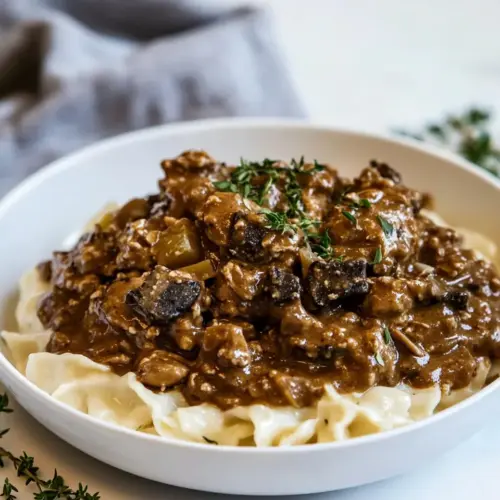
Hamburger Stroganoff
Hamburger Stroganoff is a creamy, savory weeknight favorite that brings together browned ground beef, earthy mushrooms, and a tangy creamy finish over tender egg noodles. This easy weeknight dinner is comforting, quick to make, and perfect for feeding a family of four, delivering rich umami and cozy textures in about thirty minutes, making it a must make when you want satisfying flavor with minimal fuss.
Equipment
- Large deep skillet
- Pot for noodles
- Sturdy spatula or spoon
- Strainer
Ingredients
- 1 tablespoon extra-virgin olive oil Heatable fat used to brown meat and sauté aromatics, adding a fruity, slightly peppery finish; coats the pan so ingredients don’t stick and helps distribute heat evenly during cooking.
- 1 pound lean ground beef 90% or 93% lean Leaner ground beef providing rich savory flavor and hearty texture while keeping the dish lower in fat; crumbles quickly for even browning and forms the base protein of the stroganoff.
- 2 teaspoons smoked paprika Smoky spice that imparts deep, warm flavor and subtle sweetness; sprinkles over meat during cooking to enhance overall savory profile and add color.
- 1 teaspoon dried thyme Earthy, aromatic dried herb that brings a subtle lemony and minty note; blends with other seasonings to uplift the sauce without overpowering delicate dairy.
- 1 1/2 teaspoons garlic powder Concentrated garlic flavor in powdered form, offering savory depth and convenience; dissolves into the sauce and seasons the beef evenly without risking burned fresh garlic.
- 1/2 teaspoon onion powder Fine onion seasoning that provides mild sweet onion notes throughout the dish; helps round out savory flavors and integrates smoothly into the sauce.
- 1/2 teaspoon kosher salt Coarse salt used to season meat and sauce, enhancing natural flavors and balancing richness; measured to bring out umami without making the dish overly salty.
- 1/2 teaspoon ground black pepper Ground black pepper that adds mild heat and aromatic bite; cracked into the pan to brighten flavors and offset the creaminess of the sauce.
- 6 ounces egg noodles whole wheat if possible Starchy pasta that delivers tender, chewy texture to carry the creamy sauce; cooks quickly and soaks up flavors, providing the classic noodle component of stroganoff.
- 16 ounces cremini baby bella mushrooms sliced Meaty mushrooms contributing an earthy, umami depth and substantial bite; release flavorful juices when sautéed that enrich the sauce's body and complexity.
- 2 tablespoons all-purpose flour Thickening agent that helps create a velvety sauce when cooked with fat and liquid; sprinkles into the pan to bind juices and prevent a watery consistency.
- 15 -ounce can beef broth divided Savory liquid that forms the base of the sauce, supplying depth and beefy flavor; use in portions to deglaze the pan and build a rich, cohesive gravy.
- 1 tablespoon Worcestershire sauce Umami-rich condiment that layers in tangy, savory complexity; stirs into the sauce to boost depth and complement the beefy broth.
- 1 teaspoon Dijon mustard optional Sharp mustard that adds a bright, slightly piquant note to cut through richness; emulsifies into the sauce to lift flavors and provide subtle tang.
- 2/3 cup full-fat Greek yogurt at room temperature or sour cream about 5 1/2 ounces Creamy cultured dairy that brings tang, silkiness, and body to the sauce; folded in off heat to thicken and lend a balanced acidity similar to sour cream.
- Chopped fresh parsley or thyme optional Fresh herb garnish offering a burst of green flavor and visual contrast; sprinkled on finish to provide brightness and a light herbal aroma.
Instructions
- If your Greek yogurt is still in the refrigerator, remove it now. In a large, deep skillet heat the oil over medium high. Once the oil is hot, add the beef, smoked paprika, thyme, garlic powder, onion powder, salt, and pepper. Cook, breaking apart the meat with a spoon or sturdy spatula, until it is fully browned and cooked through, about 6 to 8 minutes. If there’s excess grease pooling in the pan, drain it off (if you are using 93% lean you likely will not need to).: You will notice a significant difference in texture when the Greek yogurt is at room temperature, it blends into the sauce smoothly and resists curdling, plus it yields a silkier mouthfeel when stirred in at the end. The aroma of the pan at this stage is not yet dominant, you are simply preparing the final cream element, and a common mistake is adding cold yogurt which can shock the sauce and create graininess, so pull it out early.
- Reduce the heat to medium and add the sliced mushrooms. Cook, stirring occasionally, until the mushrooms soften, brown and shrink, about 8 to 10 minutes.: When the extra-virgin olive oil shimmers and becomes a little glossy, that is the sign it is hot enough to start browning, you will hear a gentle sizzle as the meat hits the pan and that sound signals proper searing. This step matters because searing locks in flavor and creates caramelized bits on the pan, and avoid crowding the pan which can steam the meat instead of browning it.
- Meanwhile, bring a pot of salted water to a boil. Cook noodles to al dente according to package instructions, then drain and set aside.: As the ground beef cooks you will see it change color and release juices, and the spices will bloom in the hot oil releasing savory aromatics that smell warm and slightly smoky. Stir occasionally to expose different surfaces to the pan so even browning occurs, and a common mistake here is constant stirring which prevents the Maillard reaction and results in paler, less flavorful beef.
- Sprinkle the flour over the top of the beef and mushrooms, then stir to coat. Pour in about one-third of the beef broth. Stir, scraping off any bits that are stuck to the bottom of the pan. Stir in the Worcestershire and mustard.: You should notice browned bits collecting on the pan and the ground beef should be uniformly brown without pink, those browned bits are flavor gold for the sauce that follows. Use a spatula to break the meat into bite sized pieces, and avoid undercooking which leaves a raw flavor, while overcooking can dry out the meat.
- Add the rest of the broth. Bring the liquid to a boil, then reduce the heat to a gentle bubble. Continue simmering, stirring from time to time, for 10 minutes.: Excess rendered fat can make the final sauce feel greasy and mask flavors; draining a little will help the sauce cling to the noodles better. Use care when draining so you do not lose browned bits stuck to the pan as those are flavor, and watch out for spills that could burn on the stovetop which is a common safety issue.
- Remove the pan from the heat and let sit 1 minute to cool slightly. Stir in the room-temperature Greek yogurt. Taste and adjust seasonings as desired. Serve hot over the egg noodles with a sprinkle of parsley or thyme. Or, you can stir the pasta into the pan with the noodles and serve the stroganoff as a mix.: As you add the mushrooms you will hear a renewed sizzling, and over the next several minutes they will soften, release liquid, and then begin to brown and concentrate in flavor, the aroma becomes deeply earthy and savory. Let the mushrooms sit undisturbed for short bursts to promote browning, and the mistake to avoid is stirring too often which keeps them pale and spongy.
- Cook, stirring occasionally, until the mushrooms soften, brown and shrink, about 8 to 10 minutes: The visual cue is a reduction in size and deepening color, they should feel tender but still hold shape, and this change intensifies the umami which complements the ground beef . If the pan becomes dry, add a splash of broth to prevent sticking, and avoid cooking at too low a heat which will make them stew rather than brown.
- Meanwhile, bring a pot of salted water to a boil: The water should taste like the sea when you drop a piece of pasta in for a taste test, that level of seasoning ensures your egg noodles will be flavorful. A rolling boil is needed for even cooking, and a common error is under salting the pasta water which results in bland noodles that cannot be rescued after cooking.
- Cook noodles to al dente according to package instructions, then drain and set aside: Al dente noodles have a slight resistance when bitten, they will continue to soften slightly when mixed with the hot sauce so aim for a firm tender texture. Drain well so excess water does not thin the sauce, and avoid rinsing unless you plan to chill the noodles because rinsing removes surface starch that helps the sauce cling.
- Sprinkle the flour over the top of the beef and mushrooms, then stir to coat: The flour will absorb fat and liquid and help thicken the sauce, you should see it form a light paste that dulls the gloss on the meat and mushrooms. Cooking the flour briefly removes a raw taste, and the common mistake is adding liquid immediately without mixing which can cause lumps, so stir thoroughly before pouring any broth.
- Pour in about one third of the beef broth: Adding broth incrementally lets you scrape up those browned bits and hydrate the thickening base without overwhelming it, a bubbling sound signals the stock integrating and releasing savory aroma. This staged addition helps you control the sauce consistency, and avoid pouring all the broth at once which can prevent a proper reduction.
- Stir, scraping off any bits that are stuck to the bottom of the pan: The fond you lift off becomes part of the sauce and deepens the flavor; you will notice the liquid darkening slightly and smelling rich. Use a wooden spoon to scrape gently, and a common oversight is to ignore those stuck bits which wastes a lot of flavor potential.
- Stir in the Worcestershire and mustard: These concentrated seasonings add umami and a bright counterpoint to the richness, their aroma will add complexity with only a small amount. Whisk them in to distribute evenly, and avoid overdoing the mustard as it can create an off putt sharpness.
- Add the rest of the broth: With the remaining beef broth the sauce will have enough volume to simmer and concentrate, you will see small bubbles rising as it comes to a boil. This is the stage where the sauce begins to thicken and unify, and avoid leaving it at a high boil which can evaporate too quickly and leave you with a too salty or reduced sauce.
- Bring the liquid to a boil, then reduce the heat to a gentle bubble: A vigorous boil can make the sauce break or cook too quickly, while a gentle bubble lets flavors meld and the sauce thicken evenly, you will hear a quieter simmer and smell the sauce intensify. Patience at this stage rewards you with balanced body, and a frequent mistake is rushing this step which yields an underdeveloped sauce.
- Continue simmering, stirring from time to time, for 10 minutes: During this simmer the sauce should reduce slightly and coat the back of a spoon, and the aroma should be concentrated and savory, signaling that the flavors are marrying. Stir occasionally to prevent sticking and watch the thickness, and avoid letting it cook dry which will over concentrate salt and alter texture.
- Remove the pan from the heat and let sit 1 minute to cool slightly: Letting the pan rest prevents the Greek yogurt from curdling when added and helps the sauce stabilize, you will notice the bubbling slow and the surface calm. This short pause is important for texture, and a common error is adding the dairy while the pan is too hot which can break the sauce.
- Stir in the room-temperature Greek yogurt: Off the heat the Greek yogurt will blend into the sauce to create a creamy, tangy finish, and the mouthfeel will be noticeably silkier. Fold it in gently until uniform, and avoid overheating after adding it because prolonged heat can cause separation.
- Taste and adjust seasonings as desired: Now is the time to correct salt, pepper, or acidity, the sauce should sing with balanced savory, tang, and richness. Adjust in small increments, tasting between additions, and a typical mistake is adding too much at once which makes correction difficult.
- Serve hot over the egg noodles with a sprinkle of parsley or thyme: The final presentation should be steaming bowls where the sauce glistens over egg noodles , and the fresh herbs add a bright visual and flavor contrast. Serve immediately so textures remain optimal, and avoid letting the dish sit too long which will cause the noodles to absorb too much sauce and become heavy.
- Or, you can stir the pasta into the pan with the noodles and serve the stroganoff as a mix: Folding the egg noodles into the pan lets them soak up sauce for a more integrated dish, you will see the sauce cling and coat each strand creating a cohesive plate. This approach is great for serving family style, and watch out for over mixing which can break delicate noodles.
Notes
- Room temperature yogurt: Allow the Greek yogurt to sit out for at least 20 minutes before adding to the sauce so it incorporates smoothly and does not curdle.
- Proper browning: Heat the oil until it shimmers and give the ground beef time to develop a deep brown color, that Maillard reaction is key for depth of flavor.
- Manage mushroom moisture: Cook the mushrooms until they release and then reabsorb their juices and begin to brown, this concentrates umami and avoids a watery sauce.
- Stir flour in evenly: Sprinkle the flour and mix thoroughly with the hot ingredients to prevent lumps, then add liquid slowly for a smooth sauce.
- Salt in stages: Season progressively and taste near the end; concentrated reductions can become too salty if you add all the salt early.
- Serve immediately: For best texture serve the stroganoff as soon as it is assembled so the egg noodles stay tender and the sauce keeps a creamy consistency.