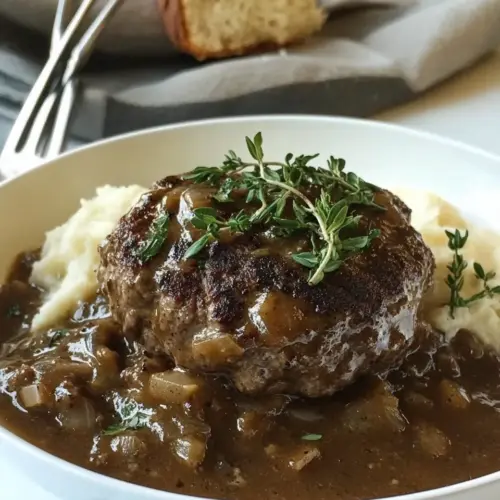
Hamburger Steak
Hamburger Steak is a juicy, savory skillet supper featuring tender beef patties and a rich onion gravy. This easy weeknight dinner delivers crispy seared edges, caramelized onion sweetness, and a velvety sauce, perfect for family meals. Make it for a crowd or for cozy leftovers, and enjoy a reliably satisfying dish that highlights simple ingredients and solid technique.
Equipment
- Large Bowl
- Rondeau or large saucepan
- Spatula or tongs
Ingredients
- 2 large eggs Beat and bind the mixture while adding moisture; eggs help hold the ground beef together for tender patties. Provide richness and assist browning during cooking to create a cohesive hamburger steak texture.
- 1/3 cup breadcrumbs Add light structure and absorbency to the meat mix; breadcrumbs prevent patties from becoming too dense or falling apart. Soak up excess juices and contribute a tender crumb in the cooked steak.
- 2 pounds 85/15 ground beef Provide the primary protein and savory base of the dish; 85/15 beef offers a balance of flavor and fat for juicy patties. Supply beefy depth and render fat that bastes the hamburger steak as it cooks.
- 1/4 cup finely minced yellow onion Contribute a mild onion flavor and small texture without large pieces; finely minced yellow onion integrates into the meat. Add subtle sweetness and moisture that enhances overall savory notes.
- 2 finely grated garlic cloves Impart a pungent, aromatic garlic presence dispersed through the meat; finely grating releases intense flavor and aroma. Enhance savory depth and complement the beef and seasonings throughout the patty.
- 2 teaspoons Worcestershire sauce Introduce a savory, umami tang that deepens beef flavors; Worcestershire adds complexity and subtle acidity. Help round out the seasoning profile and elevate the meat’s richness.
- 1 teaspoon Tabasco sauce Provide concentrated heat and a vinegary spike to brighten the patties; Tabasco adds controlled spiciness. Balance richness and add a sharp counterpoint to other savory ingredients.
- 3 tablespoons olive oil Facilitate searing and prevent sticking while adding a fruity, rich fat character; olive oil is used for cooking the steaks or caramelizing onions. Promote even browning and carry flavors during sautéing.
- coarse salt and freshly cracked pepper to taste Season to taste to enhance all flavors; coarse salt and freshly cracked pepper intensify and balance the dish. Use sparingly during mixing and adjust after cooking for proper seasoning.
- 2 peeled thickly sliced yellow onions Offer substantial rings for caramelization and gravy base; peeled thickly sliced yellow onions become sweet and soft when browned. Provide body and sweetness to the sauce served with the hamburger steaks.
- 2 finely minced garlic cloves Layer in fresh garlic flavor for the sauce; finely minced garlic disperses evenly during sautéing. Boost aroma and savory complexity in the onion gravy.
- 1/4 cup all-purpose flour Thicken the pan sauce by forming a roux or slurry; all-purpose flour helps bind liquids into a glossy gravy. Cook briefly to remove raw flour taste and achieve desired sauce consistency.
- 4 cups beef stock Create a rich, beefy liquid base for the gravy; beef stock adds depth, saltiness, and body to the sauce. Deglaze the pan and simmer with onions to concentrate flavor.
- 1 tablespoon unsalted butter Enrich the sauce with silky mouthfeel and glossy finish; unsalted butter adds richness without extra salt. Stir into the gravy at the end for sheen and to round flavors.
- coarse salt and freshly cracked pepper to taste Season the finished dish to personal preference; coarse salt and freshly cracked pepper adjust and sharpen overall flavor. Finish after cooking for precise seasoning control and balance.
Instructions
- In a large bowl whisk the eggs and then mix in the breadcrumbs and let it sit for 2 to 3 minutes or until the breadcrumbs are completely soaked in.: The aroma at this stage is mild, with the eggs offering a faint richness that the breadcrumbs quickly absorb, transforming into a pasty binder. You should notice the mixture turning from liquid to a cohesive, tacky mass, which will help the patties hold juices during cooking. This rest prevents dry crumb pockets and keeps the interior moist, because the crumbs absorb and then release liquid as the meat cooks. A common mistake is rushing this step, which leaves dry crumbs that suck moisture from the ground beef , so be patient and let the crumbs fully hydrate.
- Next, mix in the beef, minced onions, garlic cloves, Worcestershire, Tabasco, salt, and pepper until combined.: When you add the ground beef and aromatics, the mixture starts to look glossy and evenly speckled with onion and garlic . Use your hands gently to fold components together; you want cohesion, not compaction. The scent will become more savory and slightly tangy from the Worcestershire sauce . Overmixing squeezes out fat and leads to a dense texture, so stop mixing as soon as ingredients are uniform.
- Form 6 equal sized hamburger steak patties and place them on a plate or platter.: As you shape the patties, the surface should feel smooth but not tightly packed. Press just enough to hold each one together, and make a shallow indentation in the center of each patty if you like, which helps even cooking. You will see slightly different textures on the surface depending on how much handling it received; aim for tender firmness. A frequent error is pressing too hard while shaping, which creates compact patties that lose juiciness during cooking.
- Add the olive oil to a large rondeau or sauce pot and heat to medium high heat and heat for 90 seconds.: The oil should shimmer and move fluidly in the pan, signaling it is hot enough to sear. You may smell a faint fruitiness from the olive oil , and the pan surface should look slick. Heating the oil properly promotes an immediate sear on contact, preventing sticking. If the oil smokes, reduce the heat slightly, because burnt oil can create bitter flavors.
- Place in the hamburger steaks and cook for 3 to 4 minutes or until well browned on both sides. It’s ok to cook this in batches if your pan is not big enough. In addition, do not worry about them cooking through.: You will hear a robust sizzle and see browned edges form, with the surface taking on a deep, mahogany color. The sear locks in juices and creates Maillard complexity that tastes savory and slightly sweet. Cooking in batches preserves pan temperature, which ensures each patty develops that golden crust. Avoid flipping too often; constant turning prevents proper browning.
- Set the burgers to the side and add in the sliced onions. Gently season with salt and sauté for 5 minutes. Turn the heat down to low and cook for a further 10 to 12 minutes or until browned and tender.: The pan will release sweet, caramelizing scents as the onion softens and transforms from crisp white rings to tender, amber ribbons. Salt helps draw moisture out, accelerating the browning. Lowering the heat allows the natural sugars to develop without burning, yielding a jammy texture perfect for gravy. A common misstep is keeping the heat too high, which scorches the onion rather than letting it sweeten slowly.
- Stir in the garlic and cook just until fragrant, which takes 30 to 45 seconds. Then stir in the flour until combined.: The moment you add the minced garlic , the kitchen will fill with a warm, nutty aroma; keep it moving because garlic browns quickly. Incorporating the flour next creates a roux like base, which will thicken the gravy and carry the browned onion flavors into a glossy sauce. Cook the flour briefly to remove its raw taste, stirring constantly for a uniform, sandy texture before introducing liquid. Burning the garlic here results in bitterness, so stay attentive.
- Pour in the beef stock and bring it to a boil which thickens it. Season it gently with salt and pepper.: As the beef stock hits the pan, the mixture will bubble and lift the browned bits into the liquid, creating a deep, savory base. The gravy will darken and begin to coat the spoon, a visual cue that it is thickening. Gentle seasoning after the stock helps you avoid over salting, because condensation and reduction concentrate flavors. If the gravy seems too thin, simmer a bit longer; if it becomes too thick, add a splash more beef stock .
- Add back in the beef and cook for 5 to 6 minutes to heat up and finish cooking. Stir in butter and serve.: Returning the patties to the pot lets them finish cooking gently in the gravy, melding flavors and keeping the meat juicy. You might hear a soft simmer and notice steam carrying the rich aroma of beef and caramelized onion . Swirling in the butter at the end gives the sauce a glossy sheen and rounded mouthfeel. Be cautious not to overcook the patties during this stage, because extended simmering can dry them out.
Notes
- Mind the mix: When combining the ground beef with binders and seasonings, use clean hands and fold gently until just combined to avoid a dense result.
- Chill if needed: If your patties feel too fragile, rest them in the refrigerator for 15 to 30 minutes to firm up, which helps them hold shape during searing.
- Sear in batches: Cook the patties in batches if your pan is crowded; maintaining high pan temperature ensures a deep brown crust and better flavor.
- Toast the flour: After adding the flour to the sautéed onion, cook it briefly to eliminate any raw taste before adding the beef stock for a cleaner gravy.
- Finish with butter: Stirring in a tablespoon of butter at the end enriches the gravy and gives it a glossy finish that clings to the steaks.
- Adjust heat gently: If the gravy thickens too quickly, add small splashes of extra beef stock to loosen it while maintaining flavor balance.