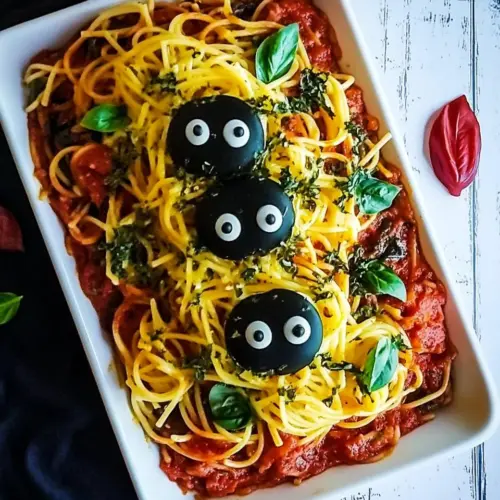
Halloween Spaghetti
Halloween Spaghetti delivers a creamy, comforting tomato sauce with playful mozzarella eyeballs, perfect for an easy weeknight dinner or festive fall gathering. The sauce is rich, slightly sweet, and herbaceous, with a silky finish that clings to al dente spaghetti, making it a crowd pleasing and fun dish to serve.
Equipment
- 6-quart Dutch Oven
- Strawsone regular, one wide
Ingredients
- 1 medium white onion minced Minced to provide a sweet, savory base and tender texture that caramelizes when sautéed, building depth in the sauce. Adds aromatic complexity that balances acidity from tomatoes and brightens overall flavor. Works as an essential backbone for layering savory notes in the recipe.
- 6 large cloves of garlic minced Minced to infuse a pungent, aromatic bite that complements the onion and enriches the sauce. Provides sharpness and warmth that mellows with cooking while adding savory umami. Helps create a robust aromatic profile when sautéed early in the process.
- 2 tablespoons (30 ml) olive oil Used to sauté aromatics and create a silky base for the sauce while adding fruity, peppery notes. Contributes to mouthfeel and helps bloom tomato paste and spices for deeper flavor. Also aids in preventing sticking during cooking.
- 3 tablespoons (45 ml) tomato paste Concentrated and cooked briefly to develop rich, caramelized tomato flavor and color in the sauce. Enhances umami and sweetness while thickening the sauce slightly for body and complexity. Acts as a flavor amplifier when combined with oil and heat.
- 1 1/2 tablespoons dark brown sugar Added to bring balanced sweetness and counteract tomato acidity while deepening the sauce’s flavor profile. Provides molasses-like notes that enrich savory elements and create a rounded taste. Helps harmonize sharp and tangy components.
- 1 tablespoon (15 ml) balsamic vinegar Used to add bright acidity and subtle sweetness that enhances tomato flavors and deepens savory notes. Provides a gentle sharpness that lifts the sauce and balances richness from oil and cheese. Acts as a finishing boost to harmonize flavors.
- 2 (28 oz) cans of crushed tomatoes Poured in as the primary tomato base, supplying body, acidity, and classic tomato flavor for the sauce. Creates a rich, saucy texture and serves as the main vehicle for seasonings and aromatics. Provides plenty of liquid to simmer and meld all flavors.
- 2 teaspoons Italian seasoning Sprinkled to impart a blend of Mediterranean herbs that add depth, oregano-forward earthiness, and a savory background. Balances tomato sweetness and enhances Italian-style flavor character in the sauce. Works well when allowed to steep during simmering.
- 1 teaspoon dried parsley Added dried to provide subtle green herbaceous notes and a mild grassy aroma that complements Italian seasoning. Offers a gentle parsley flavor without adding moisture, helping round out the herb profile. Blends unobtrusively into the sauce.
- 1 teaspoon salt Measured to season and enhance all components, boosting savory perception and balancing sweetness. Ensures flavors pop and helps preserve the intended taste profile throughout cooking. Important for controlling overall seasoning during simmering.
- 1/2 teaspoon ground black pepper Ground and used to deliver mild heat and aromatic warmth that brightens the sauce’s flavor. Provides subtle peppery bite that enhances savory elements and prevents the sauce from tasting flat. Adjustable to taste to achieve desired seasoning balance.
- 1/4 teaspoon baking soda Added sparingly to neutralize excess acidity from tomatoes and yield a smoother, less sharp flavor. Reacts with acids to mellow the sauce while helping create a rounder, more balanced taste. Ensures a pleasant mouthfeel without altering intended flavors.
- 1/4 teaspoon red pepper flakes Sprinkled to introduce heat and a touch of smokiness that lifts the sauce with subtle spice. Adds interest and a warming finish without overpowering other seasonings when used judiciously. Can be adjusted for desired spiciness.
- 2 tablespoons parmesan cheese Used to finish and enrich the sauce with savory, umami-rich notes and a hint of salty creaminess. Adds complexity and a lightly granular texture that melts into the sauce, enhancing mouthfeel. Complements basil and tomatoes when stirred in at the end.
- 1/2 cup chopped basil Chopped and folded in to add fresh, aromatic brightness and a sweet, peppery lift to the finished dish. Provides contrast to cooked flavors and enhances the sauce with vibrant herbaceousness. Adds visual appeal and a refreshing finish.
- 1 lb (450 g) spaghetti noodles cooked Cooked and tossed to provide the main carbohydrate component, offering structure and a canvas for the sauce. Absorbs flavors and provides satisfying bite and texture to the dish. Ensures the meal is filling and cohesive when combined with sauce.
- 8 oz (225 g) fresh mozzarella ciliegine Used whole to add milky, stretchy creaminess and tender cheese bites throughout the dish. Melts slightly against warm pasta to create pockets of luxe texture and a mild, milky flavor. Balances acidity and adds richness.
- 8 -10 large pitted black olives Pitted and sliced or shaped to create dark, briny accents that resemble 'eyes' for a Halloween presentation. Offers salty, umami richness and a contrasting firm texture that complements creamy cheese. Adds visual and flavor contrast when arranged on top.
- 2 -3 tablespoons extra virgin olive oil Drizzled to finish the dish with fruity richness and to bind toppings while enhancing mouthfeel and sheen. Adds a final layer of flavor and smoothness that complements herbs and cheese. Helps dress the pasta evenly and enriches each bite.
Instructions
- Add 2 tablespoons of olive oil, minced onions, and minced garlic to a medium or large heavy bottomed pot. Saute over medium high heat until fragrant and golden.: The moment the olive oil shimmers and you add the onion and garlic you will notice a sweet, savory smell rising in the kitchen, a clear sign that flavors are developing. Keep the heat steady so the onions soften and turn translucent, then a gentle golden edge appears, releasing natural sugars. The garlic should sizzle briefly and perfume the oil, but you must stir frequently to prevent it from browning too quickly, as burnt garlic becomes bitter. If the pan seems too hot, lower it slightly and lift the aromatics out of direct contact by stirring, which preserves a clean, sweet profile. A common mistake here is rushing the process with very high heat, which can char the onion before it becomes tender, so be patient and enjoy the evolving scents and the softening texture.
- Add tomato paste, brown sugar, and balsamic vinegar to the garlic and onions. Saute for 2 minutes.: When you add the concentrated tomato paste , it should stick slightly to the pan and darken as it cooks, releasing a deep, caramelized aroma that amplifies umami. The dark brown sugar will melt and blend into these caramel notes, smoothing acidity, while the balsamic vinegar adds a rounded, tangy sweetness that layers complexity. Listen for a gentle bubbling as the moisture from the vinegar evaporates and the paste loosens, which signals readiness. Stir constantly to avoid scorching, because burnt paste tastes acrid and will dominate the sauce. If you see dark bits forming too quickly, lower the heat and deglaze with a splash of the canned tomato liquid to lift flavorful fond from the pan.
- Add the crushed tomatoes and the seasonings including the baking soda, stir well. Bring to a simmer.: Pour in the crushed tomatoes and add the dried herbs, salt , ground black pepper , and a tiny pinch of baking soda . As you stir, notice the sauce transform from thick paste to a more saucy, cohesive texture. The baking soda will foam briefly as it neutralizes sharp acids, then subside leaving a smoother mouthfeel. Bring the mixture up to a gentle simmer where small bubbles break the surface, not a rolling boil, which keeps the sauce from reducing too quickly. Hear the soft, consistent bubbling and smell the tomato meld with the aromatics, a sign the flavors are marrying. A frequent error is using too much baking soda which flattens flavor, so stick to the measured amount and taste as it cooks.
- Once simmering add the fresh basil and parmesan cheese. Stir to combine, then cover and simmer for at least 10-15 minutes, stirring occasionally.: At this stage add the chopped basil and parmesan cheese , which will release herbal fragrance and a savory richness as they melt and infuse the sauce. Stir so the cheese dissolves and the basil wilts slightly, brightening the color. Cover the pot to trap steam and allow steady, even heat which helps the flavors develop over 10 to 15 minutes; the sauce should thicken slightly and smell layered, with a sweet tomato backbone and herbaceous top notes. Stir occasionally so nothing sticks to the bottom, and watch the consistency—too thin means simmer longer, too thick means add a tablespoon of pasta water. A common pitfall is leaving the lid off and letting it reduce too quickly, concentrating acidity.
- While the sauce is simmering you can make the mozzarella eyeballs. Start by draining and lightly rinsing the mozzarella balls.: The tactile part begins here, and it's satisfying to work with the soft mozzarella . Drain them thoroughly and give a quick rinse to remove packing liquid, then pat dry with a paper towel so they hold shape and do not dilute the oil. The balls should feel cool and slightly springy; if they are waterlogged they will leak when you make the cavity. Keep them chilled until assembly to preserve their firmness. A typical mistake is skipping the drying step which leads to oily spills and diluted flavors when you fill them later.
- Use a wide mouthed straw (boba style works great) as a cutter, gently press one end of the straw about halfway through the mozzarella ball, do not puncture all the way through. Remove the straw and use a small paring knife to remove the small circle of mozzarella that the straw cut. Do this to all of the mozzarella balls, set aside.: As you press the straw into the mozzarella you will feel slight resistance, then a clean pop when you extract the core, creating a hollow cup. The small paring knife helps release the little plug without tearing the ball, and the removed piece becomes a tiny lid or can be discarded. Work on a flat surface, and keep motions gentle to maintain a neat rim; rough handling can distort the ball and make filling uneven. The cooled, slightly elastic texture should hold a shallow cavity; if your straw goes through entirely, set that ball aside to use differently or reshape it. Avoid forcing the straw so you do not split the mozzarella.
- Slice all of the olives in half lengthwise. Use an averaged size drinking straw as a cookie cutter to cut small circles out of the olives, these will become the pupils of the eyes, cut as many as you have mozzarella balls. Set aside.: When slicing the black olives , you will see glossy flesh and briny juices; halve them and then use a small cutter to punch out neat circular pupils. The small olive circles should be firm enough to sit atop the filled mozzarella without sinking. If they are too heavy, trim a sliver from the back to reduce weight so they float, as noted in the tips. Keep the olive pieces dry so they hold position and do not slide when placed on the oily surface.
- To serve on a large platter, create nests of the cooked spaghetti noodles by twisting around a fork then slipping off the fork onto a platter. Spoon the hot sauce over the top of the spaghetti.: With freshly cooked spaghetti noodles that are hot and al dente, twirl portions around a fork to form tidy nests and gently slide them onto a warmed platter. The heat of the spaghetti will help the sauce adhere, creating glossy strands coated in the rich tomato base. Spoon the hot sauce over each nest so steam rises and aroma carries across the table. Avoid overpacking the nests which can cool the center and make them clump; warm the platter if possible to maintain heat during assembly.
- Place one mozzarella eyeball onto the top of each spaghetti nest. Using a spoon or a dropper, carefully fill each mozzarella ball with olive oil, then place one of the pupils in the middle.: Set a drained mozzarella cup atop each nest, then use a small spoon or dropper to add a little extra virgin olive oil into the hollow, creating a glossy pool. The oil adds richness and helps the olive pupil sit in place while imparting flavor. Gently nestle the olive pupil so it centers and looks like an eye; the contrast is striking against the deep red sauce. If oil spills, dab the edge with a towel so it does not pool excessively on the pasta. A common error is overfilling which causes oil to run off and make the presentation messy.
- Garnish with fresh basil and fresh parmesan if desired.: Finish by scattering a few torn basil leaves and a light grating of parmesan cheese over the platter, adding herbal aroma and savory sparkles. The green and white accents create visual contrast and a final flavor lift that ties each bite together. Serve immediately so the mozzarella keeps its shape and the oil remains contained. Resist the urge to preassemble too far in advance, as the mozzarella can release moisture and soften the effect.
Notes
- Substitute cutters if you lack straws Use small piping tips or the end of a paring knife to create the mozzarella cavities, working gently to avoid splitting the balls; this keeps the playful presentation intact without special tools.
- Manage olive pupil buoyancy If the black olive pupils do not float in the oil, shave a tiny bit off the back of the olive circle to reduce weight, which helps them sit centrally in the mozzarella cup and improves the finished look.
- Enhance flavor with a finishing salt Sprinkle a pinch of salt on the mozzarella eyeballs right before serving to make their mild creaminess pop against the savory sauce, providing a contrast that brightens every bite.
- Serve individually for easy portions Make larger spaghetti nests that hold two mozzarella eyeballs each for charming single person plates, which simplifies serving and keeps presentation tidy at a party.
- Keep mozzarella chilled until assembly Store the mozzarella balls in the fridge until you are ready to fill them, this preserves their shape and makes cutting the cavities easier and cleaner.