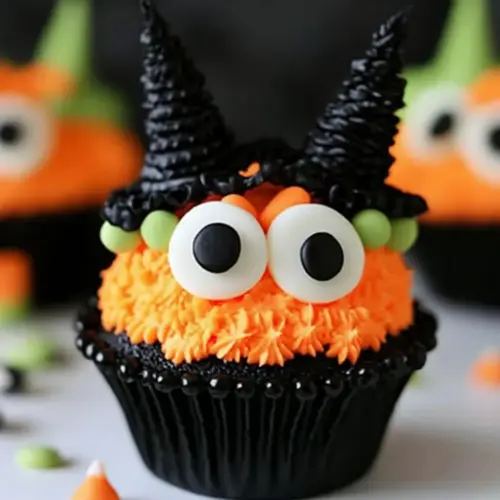
Halloween Cupcakes
Halloween Cupcakes deliver moist, deeply chocolatey cupcakes with a tender crumb and glossy buttercream finish. The combination of devil's food and instant pudding keeps each bite rich and soft, while a touch of espresso water intensifies the cocoa notes. Perfect for Halloween parties or classroom treats, these easy cupcakes offer crowd pleasing flavor and simple decorating potential, making them a must make for fall festivities.
Equipment
- Stand mixer or hand mixer
- Muffin Tin
- large cookie scoop
- Wire Rack
- Mixing Bowls
Ingredients
- 115.25 ounce package devil’s food cake mix Enhances chocolate richness and structure in the batter while providing the base for cupcake volume and texture; follow package directions for measurements and mixing to ensure consistent crumb and bake time.
- 13.4 ounce package instant chocolate pudding mix Boosts moistness and deepens chocolate flavor while helping the crumb stay tender; whisk into the dry mix to evenly distribute powdery sweetness and stabilize the batter.
- 3/4 cup sour cream Adds tangy moisture and tenderness to balance sweetness, contributing to a tender crumb and slight acidity that reacts with leaveners; fold in gently to avoid overmixing while keeping batter smooth.
- 3/4 cup vegetable oil Provides fat for richness and moist mouthfeel while helping with emulsion and tenderness; incorporate with wet ingredients until homogenous to ensure even distribution throughout the batter.
- 3 large eggs slightly beaten Contributes structure, richness, and leavening support while aiding in binding ingredients; beat slightly before adding to promote uniform incorporation and a lighter texture.
- 2 teaspoons pure vanilla extract Imparts aromatic sweetness and rounds out flavors while enhancing the chocolate profile; stir into wet ingredients to evenly infuse flavor without overmixing.
- 1 tablespoon instant espresso granules dissolved in 1/2 cup warm water Introduces concentrated coffee flavor and amplifies chocolate depth while thinning the batter slightly for easier mixing; dissolve granules fully in warm water before adding to ensure even flavor distribution.
Instructions
- Preheat oven to 350 degrees F. Line muffin tin with paper liners or spray with non-stick cooking spray.: The oven will smell faintly warm and slightly toasty as it comes to temperature, which primes it for even rise and color. I always set my rack to the center so heat circulates evenly; uneven positioning can cause domes that brown too quickly. A common mistake is not waiting for a full preheat, which leads to slow rise and denser cupcakes. You should hear a gentle hum from the oven as it maintains heat, and visually the interior should look uniformly lit and warm. Ensuring the oven is stable at 350 degrees F helps the batter develop the correct structure and prevents pale, underbaked centers.
- In the bowl of a stand mixer, fitted with the paddle attachment, or with a hand mixer in a large bowl, beat together the cake and pudding mixes, sour cream, oil, eggs, vanilla and espresso water mixture. Beat for about two minutes on medium speed until well combined.: The liners will feel dry and slightly papery; using them makes removal cleaner and presentation easier. If you skip liners, spraying the tin helps prevent sticking, but you may lose some crisp edge. Press liners firmly into each well so batter settles evenly, and if you use spray, coat each well thoroughly to avoid tearing. A frequent slipup is uneven placement, which can cause cupcakes to bake at different rates, so take a moment to level each liner in its well.
- Using a large cookie scoop, distribute the batter between 24 muffin wells; about 3 tablespoons of batter per well.: As the mixer runs you will hear a steady whipping, and the batter will transform from dry granules into a glossy, cohesive mass. The aroma of chocolate will become richer and rounder, and you may notice a faint roasted note from the espresso water. Beat for about two minutes on medium speed until well combined, making sure there are no streaks of dry mix. The texture should be thick yet smooth, and it should ribbon slightly when lifted. Avoid overmixing, which can create a tight crumb, and be cautious about splashing if you start the mixer too fast. Ensuring everything is well incorporated prevents pockets of dry mix that show up as uncooked specks after baking.
- Bake in preheated oven for 18-22 minutes or until the tops of the cakes spring back when lightly touched. Allow cupcakes to cool inside muffin tins for about 10 minutes.: The scoop will help you portion about 3 tablespoons per well, which creates evenly sized cupcakes that bake uniformly. As you fill each liner, you should see batter settle and level with a slightly domed surface, not overflowing. Even distribution avoids uneven baking and ensures every cupcake has similar texture and timing. A common issue is overfilling, which causes spillover and uneven domes, so keep a consistent scoop size. You'll hear a soft, wet thud as batter drops into each liner, and visually the tray should look balanced and tidy when finished.
- Remove cupcakes from muffin tins and allow to fully cool on a wire rack. Once cupcakes are cool, top with your favorite buttercream recipe.: During baking you'll notice the aroma intensify, filling the kitchen with warm chocolate scent and a hint of toasted sugar. The tops should become set and slightly glossy, with edges pulling just a touch away from the liners. A gentle press on the center should make the surface spring back, signaling doneness; if a skewer comes out with wet batter, they need more time. Avoid opening the oven repeatedly, which can cause collapse and uneven texture. The sound is quiet, but visually you want an even golden hue at the edges and a firm top to indicate proper bake.
- Allow cupcakes to cool inside muffin tins for about 10 minutes: Resting in the tin lets residual heat finish the set of the crumb without drying the tops. You'll feel warmth rising from the tins and notice steam dissipating, which helps the interior finish cooking gently. Ten minutes prevents fragile cupcake centers from tearing when you remove them, and it makes transfer to a rack easier. A typical mistake is trying to remove cupcakes immediately, which often causes them to break; patience here preserves shape and texture. The liners will release more cleanly after this short rest because the cake firms up slightly.
- Remove cupcakes from muffin tins and allow to fully cool on a wire rack: Placing cupcakes on a wire rack allows air to circulate and prevents soggy bottoms, and you will see faint wisps of steam stop after several minutes. They will feel completely cool to the touch before frosting, which is crucial to avoid melting your buttercream. If you frost warm cupcakes, the icing will slide and lose shape, so be patient until they are room temperature. Watch for condensation if you move them from a warm to a cool environment too quickly; that can affect frosting adherence. A fully cooled cupcake should be steady in your hand and free of warmth, giving you a perfect canvas for decoration.
- Top with your favorite buttercream recipe: When you pipe buttercream, it should feel smooth and silky between your fingers, and the piping motion will create clean ridges that hold shape. The contrast of glossy buttercream on a deep chocolate base is striking, and the aroma of sweet butter and cocoa will mingle. Use a piping bag fitted with your preferred tip for decorative control, and apply even pressure to avoid air pockets. Common mistakes include using frosting that is too warm, which will droop, or too stiff, which will tear the cupcake surface, so aim for a spreadable consistency. Decorating is where you can personalize each cupcake for Halloween themes, and finishing touches like candies or sprinkles add texture and visual appeal.
Notes
- Use room temperature ingredients: Allow the eggs and sour cream to come to room temperature so they blend smoothly, which helps create an even, tender crumb. Cold ingredients can create a lumpy batter and reduce volume, leading to uneven texture.
- Stick to the scoop size: Portioning with a large cookie scoop ensures each cupcake bakes at the same rate, preventing some from overbaking while others remain underdone. Consistent sizing also gives your decorated platter a professional look.
- Dissolve espresso granules fully: Mix the granules into warm water so they dissolve completely, distributing flavor evenly and avoiding gritty pockets. This step deepens chocolate notes without making the cupcakes taste like coffee.
- Cool in the tin briefly: Let cupcakes rest about ten minutes in the muffin tin before transferring to a rack to prevent them from breaking and to finish setting the crumb gently. Removing them too soon often causes tearing.
- Frost only when cool: Ensure cupcakes are at room temperature before applying buttercream to keep decorations neat and prevent melting. Warm cakes will cause frosting to slide and lose detail.
- Store properly for best texture: Keep frosted cupcakes in a single layer in an airtight container at room temperature for up to two days, or refrigerate if your buttercream contains perishable ingredients. Bring refrigerated cupcakes to room temperature before serving for optimal flavor.