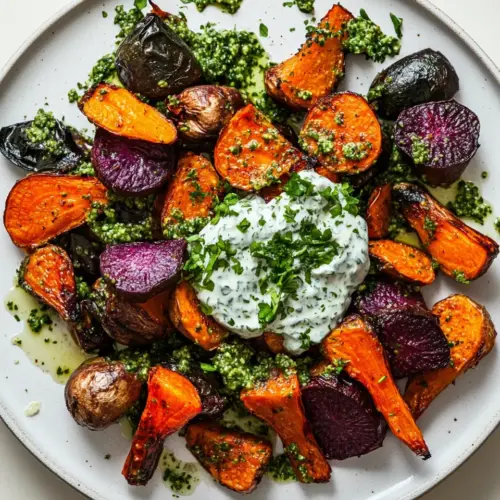
Grounding Roasted Roots with Herbed Jalapeño Yogurt Sauce
Grounding Roasted Roots with Herbed Jalapeño Yogurt Sauce blends caramel roasted carrots and beets with a creamy, herb packed non dairy yogurt for a creamy, crispy, easy weeknight dinner. Bright jalapeño and lemon lift the sauce, while pistachios add crunch, making this an ideal easy weeknight dinner or shareable side. Try it for its bold contrast and reliable, wholesome flavor.
Equipment
- Oven
- Baking Dish
- Parchment Paper
- Food Processor
- Spatula
Ingredients
- 1 lb carrots (5 medium), peeled and chopped into 2-inch pieces Provide vibrant sweetness and body to the dish while roasting; chopped into 2-inch pieces so carrots cook evenly and develop caramelized edges, contributing grounding flavor and tender texture.
- 1/2 lb beets (3 medium/4 small), peeled and chopped into 1-inch wedges Add earthy, sweet, and slightly earthy notes while holding shape as 1-inch wedges; beets lend deep color and an earthy counterpoint that complements the carrots when roasted.
- 1 tablespoon olive oil Coat the root vegetables to promote even browning and crisping in the oven; olive oil also carries the za’atar and seasonings, helping flavors adhere to the vegetables.
- 1 1/2 teaspoons za’atar spice Impart aromatic Middle Eastern warmth and herbal-savory complexity; za’atar seasons the roots with thyme-like, sesame, and sumac notes that elevate the roasted profile.
- sea salt and ground black pepper, to taste Enhance and balance flavors to taste while seasoning during and after roasting; salt and pepper bring out natural sweetness and provide necessary savory contrast.
- 1 cup mixed herbs, packed (I used parsley, dill & basil), plus extra for garnish Introduce fresh, bright herbaceousness when packed into the sauce; the mixed herbs contribute freshness, layered green flavors, and visual appeal for garnish.
- 1 small jalapeño pepper, seeded and chopped (I left some of the seeds because I like the heat) Deliver a bright, spicy kick to the sauce when seeded and chopped; jalapeño provides controlled heat and vegetal flavor that lifts the creamy yogurt.
- 1 garlic clove, peeled Infuse pungent, aromatic depth when blended into the sauce; garlic adds savory umami and anchors the herbs and jalapeño with classic aromatic complexity.
- 2 tablespoons shelled and salted pistachios, plus extra for garnish Contribute crunchy texture and toasty, slightly salty nuttiness when blended and reserved for garnish; pistachios add richness and a pleasant contrast to creamy yogurt and tender roots.
- 2 tablespoons olive oil Emulsify and smooth the herbed jalapeño yogurt; additional olive oil helps bind the herbs, nuts, and yogurt into a silky sauce while adding richness.
- 1 tablespoon lemon juice Brighten and balance the sauce with acidity; lemon juice cuts through richness and highlights the herbs and jalapeño for a fresher finish.
- sea salt and ground black pepper, to taste Season the sauce to taste to ensure balanced flavor; salt and pepper adjust seasoning levels and enhance the brightness of the lemon and herbs.
- 1 cup thick non-dairy yogurt (see notes for recommendations) Provide a tangy, creamy base for the herbed jalapeño sauce while remaining dairy-free; thick non-dairy yogurt gives body, cooling contrast, and a creamy mouthfeel to pair with roasted roots.
Instructions
- Preheat the oven to 375°F. Line a 9 x 13 x 2 baking dish with parchment paper.: Warmth from the oven creates the environment for caramelization, and the parchment helps prevent sticking while making cleanup simpler. You should feel the kitchen shift as the oven comes to temperature, and the preheated surface ensures even browning rather than slow sweating. If you skip lining the dish, vegetables can cling and char unevenly, so always prep this first. A common mistake is putting the tray into a not fully heated oven, which delays browning and leads to a drier interior.
- Place the chopped carrots and beets in the baking dish and toss them with the olive oil, za’atar, salt and pepper. Once the vegetables are evenly coated, spread them out into a single layer and slide the dish into the oven. Roast the vegetables for 1 hour, taking them out at the halfway point to stir them up and flip them over.: As you toss, notice how the olive oil glistens across each piece and how the za’atar clings to surfaces, promising that complex aroma when roasted. Spreading the roots into a single layer encourages direct contact with hot air so edges go golden and slightly crisp while centers become tender. At the halfway stir you will hear a soft scrape and see steam rise, that brief release helps each piece brown on multiple sides. Avoid crowding the pan, which traps moisture and prevents caramelization; if pieces steam rather than roast they will lack that toasty flavor. If you skip turning them, one side may overcook, so be deliberate when you stir.
- Make the herbed jalapeño yogurt sauce: In a food processor, combine the herbs, jalapeño, garlic, pistachios, olive oil, lemon juice, salt, and pepper. Pulse the machine a few times until everything is finely chopped, scraping down the sides of the bowl with a spatula if necessary. Add the non-dairy yogurt to the food processor and pulse until the sauce is fully combined and uniformly light green. Check the sauce for seasoning and adjust if necessary.: In a food processor, combine the herbs, jalapeño, garlic, pistachios, olive oil, lemon juice, salt, and pepper. Pulse the machine a few times until everything is finely chopped, scraping down the sides of the bowl with a spatula if necessary. Add the non-dairy yogurt to the food processor and pulse until the sauce is fully combined and uniformly light green. Check the sauce for seasoning and adjust if necessary. : The fragrant whir of the processor will blend bright green herbs into a cohesive body, releasing oils from the herbs and garlic that perfume the mixture. You will see flecks of pistachio and herbs suspended in creamy yogurt, with steam free from heat, creating a cool color and fresh scent. Taste as you go, because freshness and heat levels vary; adjust lemon and salt to find the right brightness. Overprocessing can turn textures too smooth and diminish the pleasant bite, so pulse to preserve a little texture. A typical error is adding the yogurt too early and thinning the sauce; instead, process the solids first, then incorporate the yogurt for control.
- To serve: Spread the herbed jalapeño yogurt sauce out on the base of your serving plate. Pile the roasted root vegetables on top of the yogurt sauce.: Spread the herbed jalapeño yogurt sauce out on the base of your serving plate. Pile the roasted root vegetables on top of the yogurt sauce. : The visual contrast is immediate, a pale green canvas supporting warm orange and ruby tones. Use a spoon to create a shallow well of sauce so the vegetables sit slightly embedded, catching every dribble. When you plate, listen for the soft clink of spoon and plate, and take a moment to breath in the mingling aromas. If you mound too high, the sauce may not make contact with all pieces, so arrange thoughtfully. A common slip is serving everything piping hot directly from the oven onto cold yogurt; let the roots cool for a few minutes so the yogurt keeps its texture without splitting.
- Garnish the grounding roasted roots and herbed jalapeño yogurt sauce with extra chopped herbs and pistachios. Serve warm or at room temperature.: The finishing sprinkle of chopped herbs and crushed pistachios introduces fresh green color and a last crunch that sings against the softer roots. If you watch closely you will see steam mingle with herb oils, and you may smell the toasted note from the nuts. Serving at room temperature lets flavors settle and marry, while serving warm offers immediate comfort. Avoid garnishing too early, which can wilt herbs and soften nuts; add them right before serving to maintain contrast.
Notes
- Room temperature roots allow for more even roasting, so let peeled carrots and beets sit briefly after chopping, especially if they were refrigerated.
- Use a light hand with oil so vegetables brown rather than stew, just enough to coat surfaces and assist the za’atar in adhering.
- Pulse don’t puree when blending the sauce if you want visible herb flecks and a bit of texture from the pistachios.
- Season gradually because the pistachios contribute salt; add finishing salt only after tasting the combined sauce and roots.
- Serve at room temperature when bringing to gatherings, it keeps textures pleasant and flavors meld for a more integrated profile.