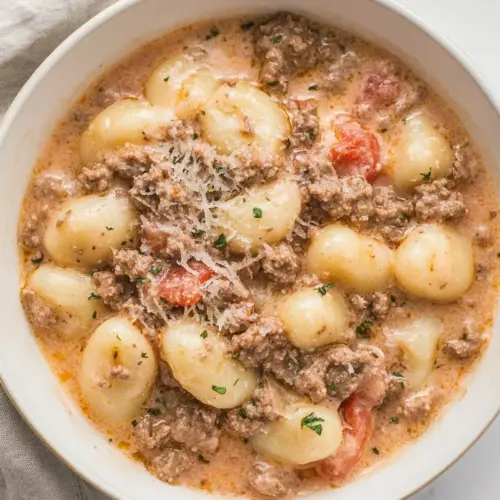
Ground Beef Gnocchi
Ground Beef Gnocchi is a creamy, comforting skillet dinner combining tender gnocchi, savory browned ground beef, and a tomato cream sauce. This easy weeknight dinner offers rich, silky texture with a quick prep and big flavor, perfect for busy evenings when you want something hearty and satisfying. Try it for a reliable family favorite that comes together in under thirty minutes.
Equipment
- Skillet
- Spatula
- Measuring Cup
Ingredients
- 1 pound lean ground beef Brown and crumble to build a savory, meaty base that provides rich flavor and hearty texture to the sauce; drain excess fat if desired for a leaner dish and cook until no pink remains for food safety.
- 1/2 medium onion chopped Sauté until translucent to add sweet, aromatic depth and a mild crunch when lightly cooked; finely chop to distribute flavor evenly throughout the sauce and prevent large onion bites.
- 3 cloves garlic minced Mince and cook briefly to release pungent, garlicky aromatics that brighten the overall flavor profile; add toward the beginning of cooking to infuse the oil and meat with savory complexity without burning.
- 1/4 teaspoon Italian seasoning or to taste Season lightly to introduce a balanced blend of Mediterranean herbs that complement tomatoes and cream; adjust amount to taste and add incrementally to avoid overpowering the other flavors.
- 1 (14 ounce) can diced tomatoes with juices Simmer with juices to contribute bright acidity, body, and tomatoey sweetness that cuts through the richness of the cream and beef; crush or stir to integrate into a cohesive sauce.
- 1/3 cup chicken or beef broth Deglaze the pan and thin the sauce while adding savory depth; choose chicken or beef broth to enhance umami and adjust quantity to reach the desired sauce consistency.
- 3/4 cup heavy/whipping cream Enrich and thicken the sauce with a silky, creamy texture that mellows acidity and binds the flavors together; stir in near the end of cooking and gently simmer to avoid curdling.
- 1 pound uncooked potato gnocchi Boil or cook according to package directions to provide pillowy, tender dumplings that absorb the sauce; add to the finished sauce or combine briefly to allow gnocchi to soak up flavor without falling apart.
- 1/2 cup freshly grated parmesan cheese Grate freshly to contribute a nutty, salty finish and help bind the sauce with melting proteins; sprinkle and stir in at the end of cooking for maximum flavor and creamy texture.
- Salt & pepper to taste Season generously to taste to balance flavors and enhance all components; adjust salt and pepper after cooking as needed to achieve a well-rounded final dish.
Instructions
- Brown the ground beef and onion in a skillet over medium-high heat for 7-10 minutes. If there's lots of excess fat, spoon most of it out.: The moment the meat hits a hot pan you should hear an energetic sizzle, and soon the scent of browned meat and sweetened onion will fill the kitchen, signaling Maillard reactions that build deep flavor. As the ground beef cooks, break it into pieces with your spatula so it browns evenly rather than steaming in big clumps. Watch for edges turning golden to deep brown, and keep the heat high enough for good color but not so high that the onion or meat scorches. I like to tilt the pan occasionally and spoon off excess rendered fat if there is a pool forming, because too much fat can make the final sauce greasy and prevent the tomatoes and cream from binding properly. A common mistake here is overcrowding the pan; if the skillet is too full, the meat releases moisture and simmers rather than browns. If that happens, cook in batches or use a larger pan to ensure that each morsel gets good contact with the hot surface.
- Stir in the garlic and Italian seasoning.: Once the meat and onion are nicely colored, the brief addition of minced garlic and dried herbs releases a fragrant lift. You will notice a quick perfume of garlic as it touches the pan, and that aroma is an indicator to keep stirring and not walk away. The tiny toasted flecks of herb and softened garlic meld into the oily base, lending their bouquet to the whole dish. Add these aromatics toward the end of the browning step so they do not burn and turn bitter. If you smell sharp, acrid notes, the garlic has likely overheated and you should reduce heat and scrape the pan to avoid passing that flavor on to the sauce.
- Add the diced tomatoes, chicken broth, cream, and gnocchi to the pan, and give it a good stir. Once the sauce starts to bubble again, cover the pan and reduce the heat to medium. Cook for 5 minutes.: When you pour in the canned diced tomatoes with their juices and the broth , you will see the mixture steam and begin to simmer, and the pan will smell brighter and less concentrated than the browned meat alone. Stirring helps deglaze the fond, lifting those caramelized bits into the liquid, which becomes the backbone of the sauce. Adding the heavy/whipping cream brings a creamy cloud to the surface, transforming the sauce into a velvety body that will coat the gnocchi . Scatter the uncooked gnocchi across the pan so they nestle into the simmering liquid rather than stacking; this encourages even cooking. Once the sauce bubbles, covering traps steam and cooks the gnocchi through. Keep the heat at medium so the simmer is gentle; an aggressive boil can make the cream separate and the gnocchi catch on the bottom. A frequent oversight is failing to stir before covering which can cause the gnocchi at the bottom to stick and swell unevenly, so give it one good stir before you close the lid.
- Uncover the pan, stir it, and let it cook for another few minutes, or until the gnocchi has cooked through and is nice and soft and the sauce has thickened to your liking.: As you lift the lid you should see the sauce reduce slightly and the surface shimmer as water evaporates. Stirring now distributes heat and prevents sticking while allowing you to check the gnocchi for doneness; cooked gnocchi will be tender and slightly plump, with no dense center. The sauce should cling to the pieces rather than run off, indicating it has thickened. If the sauce still seems thin, simmer uncovered for a couple more minutes while stirring occasionally, but watch closely so it does not scorch or over reduce. A common pitfall is leaving the pan unattended during this stage, which can lead to a scorched bottom or overly soft, collapsing gnocchi .
- Stir in the parmesan cheese and salt & pepper as needed. Serve immediately.: Off the heat, sprinkle in the freshly grated parmesan cheese and gently fold it through so it melts and binds with the sauce, adding savory complexity and a silky finish. Taste and season with salt and pepper gradually, because the cheese already contributes saltiness. The final texture should be creamy and cohesive, the aroma a warm mix of tomatoes, herbs, and browned ground beef with a cheesy top note. Serve at once to enjoy the gnocchi at its ideal pillowy texture. One mistake to avoid is aggressive reheating, which can break the sauce and over soften the gnocchi ; reheat gently if needed.
Notes
- Do not pre cook the gnocchi The recipe works best when you add uncooked gnocchi directly to the sauce because they absorb flavor as they cook. Pre cooking can make them too soft and cause texture loss when simmered in the sauce.
- Spoon off excess fat If your ground beef renders a lot of fat, remove most of it before adding liquids so the sauce does not become greasy. Leave a little for flavor, but not so much that the cream separates.
- Adjust cream late Add the heavy/whipping cream after the tomatoes and broth have come together so it blends smoothly without curdling. Keep the simmer gentle once the cream is in.
- Test gnocchi early Check a piece a minute or two before the recommended time because brands vary in density. The gnocchi should be tender and not doughy at the center.
- Freshly grated cheese matters Use freshly grated parmesan cheese for the best melt and flavor. It integrates into the sauce for a glossy finish and balanced saltiness.