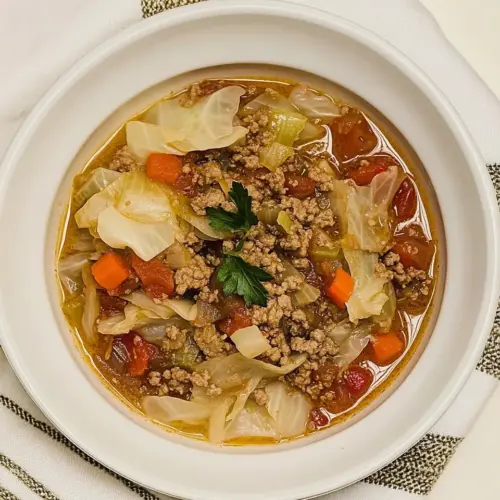
Ground Beef and Cabbage Soup
Ground Beef and Cabbage Soup is a savory, comforting bowl with tender cabbage, browned ground beef, and bright tomatoes. This easy weeknight dinner is hearty yet light, perfect for cold evenings and meal prep. The rich broth and simple seasoning make it an approachable family favorite that comes together quickly and rewards you with satisfying leftovers.
Equipment
- large pot such as a Dutch oven
Ingredients
- 2 tbsp avocado oil Sear in a hot pot to develop a flavorful base and lightly coat the pan to prevent sticking; contributes healthy fats and a mild, neutral flavor that carries aromatics into the soup. Use at the start of cooking to gently soften vegetables without burning them, improving mouthfeel and richness.
- 1 medium yellow onion chopped Sauté until translucent to build sweetness and depth in the soup; provides a savory backbone and aromatic complexity when cooked down. Chop uniformly to ensure even cooking and release its natural sugars for balanced flavor.
- 3 large carrots chopped Simmer until tender to add natural sweetness, texture, and body; imparts an earthy, slightly sweet note and soft bite that contrasts with cabbage. Chop into pieces that will cook through alongside other vegetables for a cohesive stew-like consistency.
- 4 cloves garlic minced Mince finely and cook briefly to release pungent, aromatic oils that enhance overall flavor; adds brightness and savory depth when added early in the sautéing process. Avoid overcooking to preserve some fresh garlicky sharpness that lingers in the broth.
- 1 lb ground beef Brown thoroughly to create savory umami, caramelized bits, and hearty substance; supplies protein and richness that make the soup filling. Break into crumbles while cooking so it integrates evenly and releases flavorful juices into the broth.
- 4 large ripe tomatoes chopped Cook down to contribute acidity, sweetness, and tomatoey body; adds moisture and a bright counterpoint to the richness of beef and broth. Chop uniformly to meld into the soup and help form a cohesive, slightly chunky texture.
- 4 cups chicken broth or beef broth Pour in as the primary liquid to simmer the ingredients, providing savory depth and seasoning; choice of broth influences overall flavor profile and saltiness. Use enough to properly cover solids so vegetables and meat cook evenly and the soup reaches desired consistency.
- 1 tbsp Italian Seasoning Add to season and unify Mediterranean-style herbs, bringing earthy, herbal notes and warmth; enhances complexity without extra effort. Sprinkle during cooking to allow flavors to infuse the broth and meld with other aromatics.
- 1/4 tsp black pepper to taste Grind freshly or add to taste to introduce mild heat and depth; balances the richness and brightens other seasonings when adjusted toward preference. Use sparingly at first and adjust after simmering to avoid overpowering subtle flavors.
- Sea salt to taste Season gradually and adjust to balance flavors, as it enhances aromatics and brings out natural tastes of ingredients; controls final salinity and can be added to taste during cooking and at the end. Preferentially add in small increments, tasting as the soup reduces.
- 1 large head green cabbage chopped (about 6 – 8 cups) Chop and simmer until wilted to provide bulk, mild sweetness, and a pleasant tender-crisp texture; contributes volume and a fresh, green flavor that complements beef. Core and slice uniformly so the cabbage cooks evenly and absorbs the broth and seasonings.
Instructions
- Add the avocado oil to a large thick-bottomed pot (I use a Dutch oven) and heat to medium-high.: As the oil warms it should shimmer gently, not smoke, which tells you it is ready for aromatics. You will notice a faint gloss on the pot surface and a soft heat wave above it. This step matters because a properly heated oil encourages even saut e9ing, preventing sticking and promoting browning, which builds the flavor base. A common mistake is overheating so the oil smokes, which can impart bitterness; if you see smoke, lower the heat and let the pot cool slightly. Also watch for hot spots in thinner pans, the thick bottom prevents burning and distributes heat evenly.
- Add the chopped onion, carrots and garlic. Sauté, stirring occasionally, until vegetables begin to soften, about 3 to 5 minutes.: When you introduce the onion and carrots they should sizzle softly, releasing a sweet, fragrant steam. Stir them so they coat in oil and begin to soften; after a minute you will smell the onion turning sweet and the carrots releasing an earthy scent. This step unlocks sugars that deepen the final broth, and the gentle sizzle is a good cue to keep the heat at medium to avoid quick browning. Common troubleshooting: if the vegetables brown too fast, lower the heat and add a splash of broth to regulate temperature and keep them tender.
- Scoot the vegetables off to one side of the pot and add the ground beef. Allow it to brown for 3 minutes without touching it. Flip and brown for another 2 to 3 minutes. Break up the meat into smaller pieces using a spatula and stir it into the vegetables.: You want the onion to be translucent and the carrots to yield when pressed with a spoon, not be mushy. The sound will change from aggressive sizzling to a softer, steady hiss, and little browned bits may appear, which adds flavor. This technique matters because softened aromatics integrate into the broth, preventing raw vegetable notes. A misstep is rushing this stage, which leaves raw textures and underdeveloped sweetness, so be patient and adjust heat as needed.
- Add the rest of the ingredients to the pot. Stir well, cover, and bring to a full boil. Reduce the heat to a simmer and cook, stirring occasionally, until the cabbage has wilted, about 30 minutes.: When you push the vegetables aside and expose the hot metal, the ground beef will hit the surface and you should hear a pronounced sizzle. Let it sit undisturbed for the first few minutes to form a golden brown crust, which creates savory, caramelized bits. That crust imparts deep meaty flavor to the whole soup. Avoid constantly stirring right away, which prevents browning; instead let it brown for a minute or two before breaking it up.
- Taste the soup for flavor and add sea salt to taste.: The first minute will produce a robust sear and the meat will release aromas of toasted beef, signaling the Maillard reaction. The crust will darken and you will see fat rendering out, which tastes rich and delicious. This matters because those browned bits dissolve into the broth and enrich the final bowl. A frequent error is crowding the pot with too much meat, which steams rather than browns, so brown in batches if necessary.
- Serve and enjoy!: During this second period the exposed sides of the meat develop additional caramelization, and the pot will become fragrant in a deeper, roasted way. Break the meat gently to expose more surface for browning after this stage. This step enhances complexity and creates a savory foundation for the soup. If the meat starts to stick aggressively, lower the heat slightly and use a spatula to gently lift browned bits so they do not burn.
- Break up the meat into smaller pieces using a spatula and stir it into the vegetables: As you break the meat it will release more juices that mingle with the softened aromatics, creating a cohesive base. The texture should feel meaty but not clumpy, with small crumbles entwined with softened bits of onion and carrot . This ensures even distribution of flavor in each spoonful and prevents pockets of plain broth. Avoid overworking the meat to keep some texture; smashing it too finely can yield a uniform, less interesting mouthfeel.
- Add the rest of the ingredients to the pot: When you pour in the chopped tomatoes , the broth , and sprinkle the Italian Seasoning you will hear a gentle shift to simmering; steam will rise and aromas will bloom. The tomatoes will lend bright acidity that balances the rich meat, and the broth carries those flavors through the pot. Adding everything at once lets the components meld during the simmer, infusing the cabbage as it softens. A common mistake is adding too much salt early; hold off and season toward the end so you can control the final balance.
- Stir well, cover, and bring to a full boil: Stirring distributes heat and ingredients so nothing sticks to the bottom. A full boil is vigorous and audible, but once reached you should lower heat to a gentle simmer. Boiling briefly helps incorporate the tomatoes into the liquid, but prolonged rolling boils can over soften the vegetables. If you see a rapid boil that threatens to overreduce the liquid, drop to a simmer and partially uncover to control evaporation.
- Reduce the heat to a simmer and cook, stirring occasionally, until the cabbage has wilted, about 30 minutes: As the soup simmers the cabbage will collapse and become tender, the broth will take on a deeper color, and the aroma will shift from raw tomato and onion to a developed, mellow profile. Stir occasionally so the cabbage softens evenly and nothing sticks to the pot bottom. This gentle simmer extracts sweetness from the vegetables and allows flavors to harmonize. Avoid high heat here, which can break down the cabbage too aggressively and make the texture mushy.
- Taste the soup for flavor and add sea salt to taste: After simmering, the flavors concentrate, so tasting now lets you correct seasoning. The right salt level will brighten the entire pot, balancing acidity and sweetness. I recommend adding salt gradually and tasting between additions. A common pitfall is over-salting early then finding the soup too salty after reduction, so adjust at the end.
- Serve and enjoy!: The final bowl should be steaming, with tender ribbons of cabbage , flecks of browned ground beef , and a clear, flavorful broth studded with softened vegetables. The aroma will be warm and savory, and the texture will be comforting without feeling heavy. When plating, ladle gently to include a mix of meat and vegetables in each bowl. One mistake is letting it sit uncovered too long which can cool quickly; serve while hot for the best experience.
Notes
- Preheat the pot properly - Heating the large pot first ensures even saute9ing and better browning of the ground beef, which amplifies savory notes.
- Control the browning - Allow the meat to sit undisturbed to develop a crust, those browned bits dissolve into the broth and give the soup depth.
- Measure your herbs - Use the specified amount of Italian Seasoning to maintain balance, then tweak at the end if you prefer more herbal lift.
- Simmer gently - A low steady simmer softens the cabbage evenly and helps flavors meld without turning the texture mushy.
- Reserve salt for finishing - Because the broth reduces, adding salt at the end prevents over salting and ensures a well balanced final bowl.
- Use fresh tomatoes when possible - They add brightness and natural acidity that lifts the rich elements of the soup.
- Store and reheat thoughtfully - Cool the soup before refrigerating, then reheat gently on the stove to retain texture and flavor.