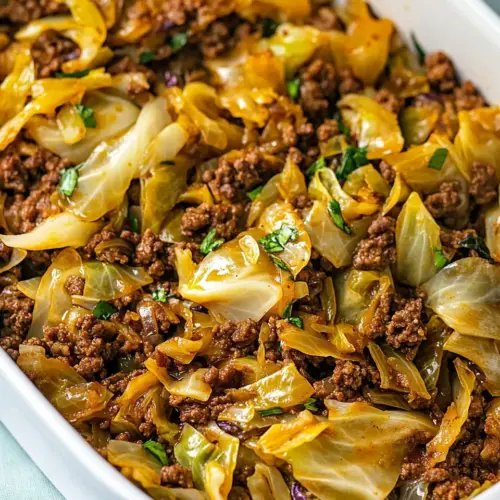
Ground Beef and Cabbage
Ground Beef and Cabbage is an easy weeknight dinner that combines savory browned beef with tender cabbage and warm spices. This skillet meal is hearty, comforting, and simple to make, offering rich aromas and satisfying textures. Perfect for busy evenings, it yields a family friendly supper that is quick to prepare and full of homestyle flavor, making it a recipe you'll want to repeat.
Equipment
- Skillet
- Spatula
- Paper towels
Ingredients
- 1 pound lean ground beef Brown thoroughly to develop deep savory flavor and render fat; use medium-high heat and break into small pieces for even cooking. Continue until no pink remains and any excess liquid has evaporated to concentrate taste.
- 2 tablespoons butter Melt gently to provide a rich cooking medium and subtle sweetness; add early so it coats the pan and helps prevent sticking. Adjust amount if needed to achieve desired browning on the beef and vegetables.
- 1 medium onion chopped Sauté until translucent to add aromatic sweetness and body; chop finely so it melds into the dish and distributes flavor evenly. Cook long enough to soften but avoid heavy browning unless a caramelized flavor is desired.
- 1 medium green cabbage cored & chopped Wilt and soften to provide bulk, texture, and a mild cabbage sweetness; core and chop into bite-sized pieces for even cooking. Add to the pan when the beef is partially cooked so it absorbs savory juices and reduces down nicely.
- 2 cloves garlic minced Mince and cook briefly to release a pungent, aromatic kick that brightens the overall dish; add after the onion softens to prevent burning. Stir continuously for 30–60 seconds until fragrant to integrate with the beef and cabbage.
- 1 teaspoon paprika Season to impart warm, mildly smoky undertones that complement beef; sprinkle while cooking to build layers of flavor. Balance with other seasonings so paprika enhances but does not overpower the dish.
- 1/2 teaspoon Italian seasoning Add for herbaceous, slightly peppery complexity; measure sparingly and taste as you go to avoid masking other flavors. If using a blend, crush lightly to release oils before adding for greater impact.
- 1/2 cup beef broth or more, to taste Pour to loosen the pan and create a flavorful cooking liquid that helps steam and soften the cabbage; start with the stated amount and add more if needed. Use beef broth to intensify meaty notes and deglaze browned bits from the bottom of the pan.
- Seasoning salt & pepper to taste, see note Adjust generously to achieve balanced savory seasoning; use seasoning salt and black pepper to taste, keeping in mind any salt in the broth or other components. Start conservatively, then finish-taste and refine before serving.
- Sour cream optional, for serving Spoon optional dollops at serving to add creamy tang and a cooling contrast; offer on the side for guests who prefer extra richness. Combine with a bit of the hot mixture if desired to create a smoother finish.
Instructions
- Add the ground beef to a skillet over medium-high heat. Cook, breaking it up as you go along, until it's nicely browned (about 8-10 minutes).: Listen for a steady sizzling that signals proper searing, and watch for deep brown flecks forming on the meat, which are flavor gold. As the ground beef browns, the pan will give off a rich savory aroma that tells you Maillard reactions are happening, which is crucial for complexity. Use a sturdy spatula to crumble the meat so pieces are small and cook evenly, and tilt the pan occasionally to let any rendered juices collect so you can spoon them away if the meat seems greasy. If the meat steams instead of browns, it is too crowded or the heat is too low, leading to a flatter flavor profile. A common pitfall is stirring too frequently, which prevents browning. Aim to let sections sit long enough to develop color before stirring.
- Transfer the beef to a paper towel lined plate. If there's a lot of excess fat left in the skillet, drain it.: After draining, you should notice the pan smells cleaner with browned meat residues left behind, which will help the next layer of ingredients pick up flavor. The paper towel absorbs excess grease so the final dish is not oily, helping the cabbage to wilt rather than swim. If you skip this, the finished texture can be greasy and heavy. Watch the pan surface: too much fat can prevent proper browning of the onion and cabbage , so take a moment to manage it now.
- Add the butter and onions to the skillet and sauté for 3 minutes.: When the butter melts and the onion hits the pan, you will hear a gentle sizzle and smell a sweet, toasty aroma as sugars start to release. The translucent edges are your visual cue that the onion is softening; after three minutes you should see the pieces soften and begin to take on light color. This early browning is important because it deepens the overall flavor. Avoid high heat here, or the butter will brown too quickly and the onion may scorch, turning bitter. Stir occasionally so pieces cook evenly.
- Add the cabbage to the pan and cook for about 10-15 minutes uncovered, stirring fairly often, until the cabbage is nice and soft (or cooked to desired tenderness). The cabbage at the bottom of the pan will start to wilt after a few minutes and it will become easier to stir. The onions will also start to lightly brown and become more flavorful. Don't rush this process – it adds a lot of flavor to the dish!: Early in this stage the bottom leaves will begin to wilt and darken, releasing a slightly sweet scent and reducing in volume, which is satisfying to watch. As the cabbage softens, it will become pliable and glossy, with some edges taking on a faint golden color that adds complexity. Stirring often prevents sticking and ensures even cooking, but allow small pockets to caramelize briefly for additional flavor. If the cabbage steams rather than browns, the pan lid may be trapping moisture or the heat is too low, which results in a blander profile. Do not rush this step, because the gentle transformation from crisp to tender builds the character of the dish. Common mistakes include chopping pieces too large, which prolongs cooking, or adding liquid too early, which prevents fond development.
- Stir in the garlic, paprika, and Italian seasoning.: The moment you add minced garlic , the pan will exhale a bright, aromatic note that complements the sweet onion and savory meat. The paprika brings color and warmth, while the Italian seasoning infuses herbs that round the flavor. These spices bloom when exposed to the residual heat, releasing essential oils and becoming more fragrant, which is why we add them now. Be cautious not to let garlic sit too long on high heat, as it can burn and turn bitter. A quick stir to incorporate and a brief scent check tells you you are on the right track.
- Pour in the beef broth and add the cooked beef back in, and cook until it's heated through, stirring/tossing fairly often. This should only take a few minutes. If needed, add a splash more beef broth for moisture.: As the beef broth hits the pan the mixture will steam slightly and aromas will lift, melding meat, spice, and vegetable notes into a cohesive sauce. The liquid helps lift browned bits from the pan, deepening the flavor as you scrape them in. Reintroducing the ground beef lets the juices mingle with the softened cabbage , creating a balanced texture where neither component overwhelms the other. Stirring often ensures even heating and prevents drying. If the mixture looks too dry, add a splash more broth; if it is puddly, simmer a minute longer to concentrate flavors. A typical error is not adjusting liquid, which can leave the dish either too wet or too dry.
- Taste and season with seasoning salt & pepper as needed (there's a lot of cabbage so I use a fair amount of salt). Serve with a dollop or two of sour cream if desired.: Now is the time for balance. The large volume of cabbage can mute flavors, so taste for salt and pepper and adjust gradually. The final seasoning rounds everything and makes the flavors pop. A spoonful of optional sour cream cools and enriches the bite, adding a pleasant contrast to the warm savory notes. Avoid over-salting in one go; instead add in small increments and taste between additions. Common mistakes include failing to taste at the end or adding too much acid or salt without tasting first.
Notes
- Manage pan fat: After browning ground beef, drain excess if needed so the cabbage sautés rather than steams in grease.
- Enhance color and flavor: Allow small patches of the cabbage and onion to brown slightly, it adds a caramelized sweetness that deepens the dish.
- Broth adjustments: Start with the stated amount of beef broth, then add more in splashes if the mixture looks dry, as this preserves texture and concentration of flavor.
- Salt mindfully: Because cabbage is voluminous, taste and adjust seasoning toward the end so you do not over-salt early in the cook.
- Sour cream serving: Offer the sour cream on the side so diners can choose how much creaminess they want; a little goes a long way in brightening the plate.