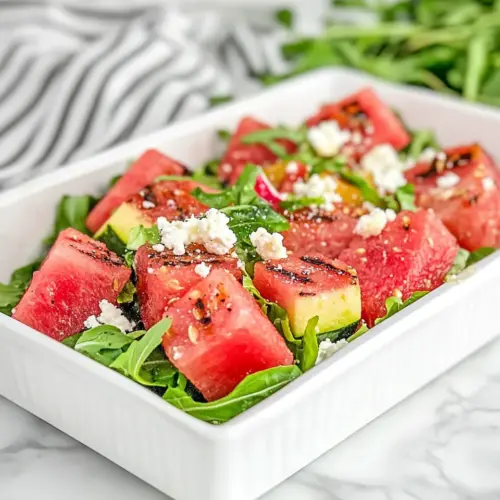
Grilled Watermelon Salad
Grilled Watermelon Salad combines smoky charred watermelon with peppery arugula and creamy feta for a fresh, easy summer dish. This light, colorful salad delivers sweet and salty contrasts and is perfect for an easy weeknight dinner or a casual backyard gathering, offering surprising depth with minimal effort.
Equipment
- Grill
- Tongs
- Medium Bowl
Ingredients
- One small 5-pound seedless watermelon, cut into eight 1-inch wedges Cut into eight 1-inch wedges to provide sturdy, grillable portions that hold shape when charred; offers sweet, juicy contrast to savory salad elements. Serve slightly warm or room temperature to release natural sugars and enhance smoky flavors from grilling.
- 2 tablespoons olive oil Brush lightly with oil to prevent sticking and promote even charring on the watermelon surfaces; adds subtle fruit-friendly richness without overpowering delicate flavors. Use measured tablespoons to control added fat while achieving attractive grill marks.
- salt and freshly ground black pepper, to taste Season sparingly with salt and freshly ground black pepper to amplify natural sweetness and add savory balance; freshly ground pepper contributes bright, aromatic heat. Adjust to taste so the seasoning complements rather than masks the watermelon and greens.
- 8 cups arugula (washed and dried) Toss or arrange 8 cups of washed and dried arugula as the peppery green base that provides a crisp, slightly bitter counterpoint to sweet watermelon; ensures a substantial salad volume. Dry thoroughly to help dressings adhere and prevent wilting from residual moisture.
- 2 tablespoons balsamic vinegar Drizzle or toss with balsamic vinegar to introduce tangy acidity and a touch of sweetness that ties together fruit, cheese, and greens; helps deglaze any sticky grill marks. Use measured tablespoons to balance acidity without overwhelming delicate ingredients.
- 1 cup crumbled feta or goat cheese Crumble 1 cup of feta or goat cheese to add creamy, salty richness and a tangy finish that contrasts the watermelon’s sweetness; crumbled texture distributes flavor throughout each bite. Scatter evenly to ensure every serving gets both creamy and salty elements.
Instructions
- Preheat your grill to medium.: The air will warm and there will be a steady heat that creates a sizzling sound when food hits the grates, signaling the right moment to cook. A true medium heat ensures the watermelon picks up those attractive char marks without burning, and it allows the flesh to caramelize slightly, giving you a nuanced smoky sweetness. If the grill is too hot, the outside will blacken while the inside stays cold and underripe, so patience matters here. One troubleshooting tip is to test with a small piece first to confirm the surface sizzles gently rather than bursting into flames. Visual cues include steady, even smoke and a consistent radiant heat across the cooking surface.
- Brush the watermelon with oil. Season with salt and pepper. Grill the watermelon wedges for 1 to 2 minutes on each side.: You will notice a light sheen on the watermelon that helps prevent sticking, and the oil will amplify any caramelization that forms on the grill lines. Brushing also adds a subtle roundness to each bite, round enough to balance the fruit's bright acidity. Use just enough olive oil so the surface glistens without pooling, because excess oil can cause flare ups. If the oil smokes heavily, lower the grill temperature slightly to avoid a bitter burnt taste. A common misstep is over oiling, which makes the wedges greasy and masks the clean fruit flavor.
- In a medium bowl, toss the greens with the vinegar. Season with salt and pepper to taste. Set aside.: As you season, inhale the immediate aroma of cracked black pepper and the slightly savory presence of salt , which will draw out the watermelon juices and deepen the flavor when grilled. This step matters because seasoning before grilling integrates the seasoning into the flesh rather than just sitting on top afterward. Be cautious with quantity, especially if you plan to add crumbled feta later, since the cheese contributes saltiness. A mistake to watch for is heavy salting that shadows the fruit's sweetness rather than enhancing it.
- To assemble the salads, sprinkle each grilled watermelon wedge with feta or goat cheese. Top with the greens. Sprinkle a little more cheese on top, if you'd like.: You will hear a soft sizzle as each wedge hits the grates, and after one to two minutes, expect well defined grill marks and a faint toasty aroma. Flip carefully with tongs so the wedges hold their shape; the flesh should feel slightly softened but still juicy. This quick sear creates a caramelized layer while preserving the cool interior, producing contrast in every bite. The key error people make is leaving the wedges too long, which dries them out; aim for brief contact and visual confirmation of golden to deep amber marks depending on your grill.
- In a medium bowl toss the greens with the vinegar: The arugula will wilt slightly when it touches the tangy balsamic vinegar , releasing a fragrant, green aroma that complements the grilled fruit. Toss gently so the leaves are coated but not saturated, maintaining their crispness and peppery character. This light dressing accentuates the natural flavors without making the salad soggy. Avoid overdressing because excess vinegar can overpower the delicate watermelon . If you notice the greens becoming limp, serve immediately to preserve texture.
- Season with salt and pepper to taste: After the arugula meets the balsamic vinegar , take a moment to taste and adjust. The salt will round out the acidity, and the pepper will add a final lift. Balancing here is essential, since you will later add feta which brings its own saltiness. A common pitfall is making the dressing too assertive at this stage, which can make the overall salad taste unbalanced once assembled. Aim for a light, harmonious seasoning that anticipates the cheese.
- Set aside: Let the dressed arugula rest briefly while you finish the watermelon so the flavors meld without the greens wilting. The brief pause allows the vinegar to mellow and the leaves to absorb a touch of flavor, enhancing the final plate. Keep the greens in a cool spot away from direct heat to maintain crispness. A mistake here is leaving the greens sitting in a warm area, which will cause premature wilting and a loss of texture.
- To assemble the salads sprinkle each grilled watermelon wedge with feta or goat cheese: The moment you crumble the cold, creamy feta onto the warm watermelon , you will notice a gentle steam and a tantalizing contrast between the salty cheese and the sweet, smoky flesh. The temperature difference enhances the mouthfeel, making every bite intriguing. Distribute the cheese evenly so it becomes part of the texture rather than a single overpowering clump. Overdoing the cheese can mask the fruit's nuance, so err on the side of moderate crumbling.
- Top with the greens: Place a generous handful of the dressed arugula atop each wedge, creating a layered effect that looks as good as it tastes. The peppery, slightly dressed leaves will offer a crisp counterpoint to the warm watermelon and the creamy feta . Be mindful of placement so each forkful has a balance of elements, and avoid piling the greens so high they overwhelm the wedge. A common error is overstuffing, which makes the salad awkward to eat.
- Sprinkle a little more cheese on top if you'd like: Adding a final dusting of feta gives a finishing pop of salt and cream that ties the flavors together. The visual contrast of white cheese against the charred, pink watermelon is appealing, and the additional texture lifts the presentation. Use this as a moment to taste and adjust for seasoning and balance. Resist the temptation to over garnish, because a subtle finish often highlights the best contrasts.
Notes
- Swap the cheese - Try crumbled goat cheese for a tangier finish that still offers creamy contrast against the watermelon.
- Add herbs sparingly - A few torn mint leaves can introduce a bright herbal lift that complements the grilled fruit without overwhelming the salad.
- Use flavored vinegar - A drizzle of balsamic reduction adds concentrated sweetness and glossy presentation, use modestly to avoid overpowering the fruit.
- Toast your nuts - If you prefer a nutty crunch, lightly toasted pine nuts or walnuts can add texture, scatter them just before serving to keep them crisp.
- Serve family style - Arrange wedges on a large platter and pass bowls of arugula and feta so guests can compose their own portions, making it interactive for gatherings.
- Adjust acidity - If your balsamic is particularly sharp, reduce the amount slightly and let the natural sweetness of the watermelon shine through.