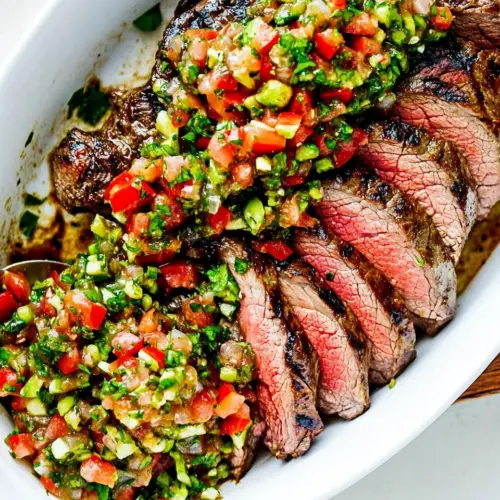
Grilled Tri Tip with Santa Maria Salsa
Grilled Tri Tip with Santa Maria Salsa delivers smoky, savory tri-tip paired with a bright, tomato and herb salsa. This easy weeknight dinner or weekend grill recipe balances charred crust and juicy interior, with tangy lime and fresh cilantro cutting through rich beef. It’s perfect for summer gatherings and any time you want an impressive, fuss free main to share.
Equipment
- Gas, charcoal, or electric grill
Ingredients
- 12 lb tri-tip steak fat trimmed off Trimmed and rich, helps provide the primary protein and hearty flavor for the dish while benefiting from a deeply flavored crust when grilled to medium-rare or preferred doneness.
- 2 tablespoon coarse Kosher salt or sea salt Coarse and briny, enhances meat seasoning by drawing out moisture, creating a savory crust, and balancing richer flavors in the rub for the tri-tip.
- 2 teaspoon black pepper Pungent and warming, offers sharp, earthy heat that complements the salt and other spices, contributing to a robust, meaty seasoning profile.
- 2 teaspoon garlic powder Aromatic and savory, supplies a concentrated garlic flavor that deepens the overall umami of the rub without adding moisture.
- 2 teaspoon chili powder Smoky and slightly spicy, introduces a warm chili heat that layers with other spices to provide complexity in the meat seasoning.
- 1 tablespoon brown sugar dark Rich and caramel-like, adds a touch of sweetness to balance savory and spicy elements while encouraging browning during grilling.
- 2 teaspoon smoked paprika Deep and smoky, imparts an intensified smoked flavor note that complements grilled meat and reinforces the barbecue character.
- 1 teaspoon dry mustard Sharp and tangy, contributes a bright mustard bite that cuts through fattiness and lifts the overall seasoning blend.
- 128 oz can diced tomatoes drained Juicy and acidic, provides a chunky tomato base for the salsa once drained, contributing bulk and a tangy tomato presence to the sauce.
- 2 stalks celery finely chopped Crunchy and aromatic, adds fresh vegetal texture and a mild, slightly bitter backbone that enhances the salsa’s complexity.
- 3 scallions chopped, green and white parts Fresh and oniony, brings crisp, mild allium flavor with both green and white parts contributing brightness and subtle sweetness to the salsa.
- 2 Anaheim peppers seeded and finely chopped Mild and slightly sweet, supplies gentle pepper heat and crisp texture when finely chopped, enhancing the salsa’s fresh pepper notes.
- 1/4 cup cilantro chopped Herbaceous and citrusy, offers bright, leafy freshness that lifts the salsa and pairs well with lime and tomato components.
- 2 tablespoon lime juice Bright and acidic, introduces fresh citrus tang that balances richness and enhances the overall freshness of the salsa.
- 1 tablespoon distilled white vinegar Sharp and acidic, adds a clean vinegar bite that heightens brightness and stabilizes the salsa’s flavors.
- 1 tablespoon Worcestershire sauce Savory and umami-rich, contributes depth and a subtle savory backbone that ties the grilled meat and salsa flavors together.
- 1 teaspoon oregano dried Earthy and aromatic, provides a warm, slightly bitter herbal layer that supports the savory components of the salsa.
- 1 teaspoon basil dried Sweet and slightly floral, lends a gentle herbal sweetness that complements oregano and other seasonings in the sauce.
- 1 teaspoon hot sauce ie, Tobasco, Louisiana Hot Sauce Fiery and vinegary, injects concentrated heat and tang that can be adjusted to taste to lift the salsa’s spice level.
- 11/2 teaspoon garlic salt Salty and garlicky, combines salt with a subtle garlic kick to reinforce overall seasoning and enhance savory notes throughout the dish.
Instructions
- Sprinkle the coarse Kosher (or sea) salt all over the tri-tip. Place in the refrigerator for 1 hour.: You will notice the salt drawing moisture out, creating a slightly tacky surface as it begins a short dry brine. This process concentrates flavor and helps the meat form a better crust when it hits heat; you should smell a subtle saline aroma but not a cured scent. One common mistake is leaving it much longer than stated, which can over-salt the surface, so stick closely to the hour. For troubleshooting, if the salt feels like it is clumping in spots, lightly pat the surface so it evens out before refrigerating.
- In a small bowl, mix together the black pepper, garlic powder, chili powder, paprika, brown sugar, and dry mustard.: As you blend the rub, inhale the layered spices the mixture releases, from sweet molasses notes of the brown sugar to the smoky perfume of smoked paprika . The rub balances sweet, heat, and tang so that the crust develops complexity under high heat. If your rub seems too damp, the brown sugar might clump; break it up with a fork so it sprinkles evenly. Avoid overmixing to the point the spices lose their distinct aromas.
- Fire your grill up for 2-zone cooking. One side with direct heat and the other side with no heat.: You should hear the initial roar of the flame and feel a wave of warm air when you sweep your hand above the hot side, while the cool zone will have negligible radiant heat. Two zone grilling lets you sear and then finish without burning, which is crucial for a thick roast like this. A common error is having both sides too hot, which causes rapid charring before the interior cooks. If your grill gets too hot, reduce the fuel or move coals away to stabilize temperatures.
- Remove the tri-tip from the refrigerator. Dust off the excess salt, but leave enough of it to season the steak. Sprinkle the rub all over the meat. Use your fingers to press it into the steak.: You want the surface tacky but not encrusted; the scent of the spices should become more pronounced as they meet the meat's fat. Pressing the rub in helps ensure it adheres and forms a cohesive crust. Avoid knocking off the rub as you handle the roast; excessive handling can flake the seasoning away. If you see patches without rub, gently press more in rather than reapplying heavily.
- Place the tri-tip on the indirect heat side of your grill and lower the lid. Cook until an internal temperature reaches 110°F, about 30 to 45 minutes. Flip the meat about halfway while cooking.: In this phase you will hear a low, even sizzle and watch the surface slowly deepen in color without aggressive charring. The slow heat allows connective tissue to relax and juices to redistribute gently. A well timed flip exposes a fresh surface to even heat and helps uniform color development. One common mistake is opening the lid too frequently; resist peeking or you will extend cook time significantly. If the surface is steaming rather than browning, your heat may be too high on the indirect side.
- Move the tri-tip to the direct heat side of the grill and cook until an internal temperature of 130°F is reached. Remove from the grill and let the meat rest for 5 to 10 minutes (the temperature will rise to 135°F).: Here you want to hear a higher pitched sizzle and watch for a deep, crusty sear to form quickly, signaling Maillard reactions. The direct flame creates that caramelized exterior that contrasts the tender interior. Resting is critical because it lets juices redistribute, ensuring each slice stays moist. A typical error is slicing immediately, which bleeds juices out and leaves the meat drier. If charring happens too fast, move briefly back to indirect heat to finish gently.
- Slice against the grain and then top with the salsa, with extra served at the table.: When you slice, notice the fibers and cut perpendicular to them for maximum tenderness; each slice should present a clean, moist cross section with a pink center if you followed the temperature targets. Spoon the bright salsa over the meat so each bite gets acid, herb, and pepper contrast to the smoky richness. Overly thin slicing can make the meat feel dry, so aim for slightly thicker pieces. If the slices appear stringy, you likely cut with the grain; turn the roast and adjust your angle.
- In a large bowl, mix all of the ingredients together. Chill in the refrigerator until ready to use. (You can make this up to several hours of grilling, or you can make it while the tri-tip is chilling with salt in the fridge).: The salsa will smell herbaceous and tart once combined, with the lime juice and vinegar brightening the tomatoes . Chilling helps meld flavors while preserving texture; the celery and Anaheim peppers should retain a pleasant crunch. A common misstep is letting the salsa sit uncovered too long, which dulls fresh notes; keep it sealed until service. If the salsa seems watery, small additional dicing and draining can tighten the texture before serving.
Notes
- Smokier profile: Use a handful of soaked wood chips on a gas grill or add a couple of smoking chunks to charcoal to increase smoke aroma, which deepens the final flavor without changing the core method.
- Spicier salsa: Keep the seeds in the Anaheim peppers or add a higher heat pepper to the salsa in small amounts, tasting as you go to avoid overtaking the meat.
- Sweeter balance: Stir in a teaspoon of honey or a pinch more brown sugar to the salsa for a touch of sweetness that plays nicely with charred edges.
- Smaller portion: If tri-tip is too large, ask your butcher for a smaller piece or cook two smaller roasts to maintain timing and manageability on the grill.
- Make-ahead option: Prepare the salsa the night before and refrigerate sealed, then remove from chill about 20 minutes before serving so flavors loosen and aromas return.