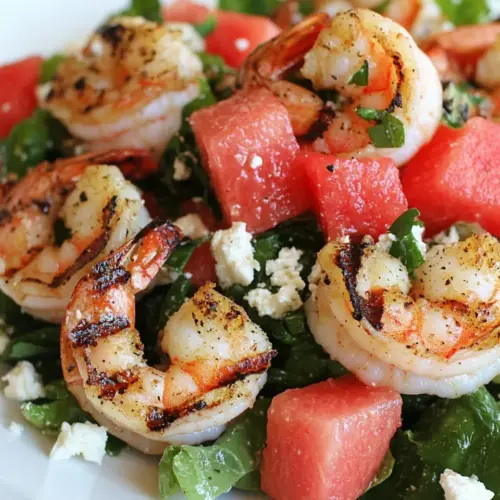
Grilled Shrimp and Watermelon Chopped Salad
Grilled Shrimp and Watermelon Chopped Salad sparkles with sweet, smoky, and tangy notes in a crisp, colorful bowl. Juicy watermelon, charred shrimp, creamy goat cheese, and a golden balsamic dressing make this an easy weeknight dinner or impressive summer salad. It is quick to assemble and perfect for warm weather entertaining, so give it a try for a bright, satisfying meal.
Equipment
- Grill or Grill Pan
- Skewers
- Mixing Bowl
- Whisk
Ingredients
- 2 1/2 tbsp DeLallo golden balsamic vinegar Adds a sweet-tart depth and acts as the acidic base for the dressing, balancing the richness of oil and cheese while enhancing the salad’s overall brightness with a mellow, honeyed balsamic character.
- 1 tsp water Thins the dressing to a lighter consistency and helps meld flavors together, preventing the vinaigrette from becoming too viscous while preserving brightness without diluting taste.
- 1 tbsp chopped shallots Provides a mild onion-like bite and aromatic complexity when finely chopped, contributing a subtle sharpness that lifts the dressing and complements the shrimp and greens.
- 1/8 tsp kosher salt Seasoningly enhances the dressing and salad components by bringing out natural flavors and providing a gentle mineral saline background without overwhelming subtle ingredients.
- pinch fresh black pepper Adds a hint of warm, pungent heat to the salad and dressing, creating subtle contrast that accentuates sweet watermelon and rich goat cheese without dominating the palate.
- 2 tbsp extra virgin olive oil Serves as the emulsifying fat in the dressing, contributing fruitiness and mouthfeel while carrying and distributing the balsamic vinegar and aromatics throughout the salad.
- 10 oz shelled and deveined, about 24 large shrimp Provides protein and a smoky-sweet seafood element when grilled, offering a firm, juicy texture that pairs well with crisp greens and sweet watermelon for a balanced entrée salad.
- 1 clove garlic crushed Imparts a sharp, garlicky pungency and savory depth when crushed, flavoring the shrimp and dressing with aromatic intensity that complements the salad’s other bright components.
- seasoned salt, to taste (I used Montreal Steak Grill Mates) Adds savory seasoning and a robust, smoky-herb flavor profile to the shrimp, allowing for personalized salting while introducing a grilled-steak–like character to the seafood.
- 8 cups chopped romaine Delivers a crisp, crunchy base and refreshing bitterness that holds up to dressing and warm shrimp, providing structure and a hearty leafy backdrop for the chopped salad.
- 4 cups diced watermelon Contributes juicy sweetness and refreshing contrast to savory elements, offering hydrating texture and a summery pop that harmonizes with tangy vinaigrette and creamy cheese.
- 4 ounces soft goat cheese Introduces a creamy, tangy richness and soft texture that contrasts with crisp greens and juicy watermelon, adding luxurious mouthfeel and a slightly tart flavor to each bite.
Instructions
- In a small bowl, combine vinegar, water, shallots, salt and pepper.: The moment you mix the vinegar with the minced shallots you will notice the aroma lift, a soft pungency that mellows as it sits. This pre-blending lets the shallot’s savory notes infuse the dressing, creating depth instead of sharp isolated bites. A common mistake is chopping the shallot too coarsely, which can leave you with uneven pockets of rawness, so take a moment to mince finely. If the mixture smells too acidic, a tiny extra pinch of salt will round it out.
- Gradually add olive oil, stirring until incorporated.: As you drizzle in the olive oil while whisking, the dressing will emulsify and gain a silky sheen, coating the back of a spoon. The visual cue you want is a glossy, slightly thickened liquid that clings rather than separates. If you pour the oil too quickly the dressing can break and become greasy, so patience matters here. If separation happens, whisk in a teaspoon of water to bring it back together.
- For the shrimp: If cooking outside on the grill, soak wooden skewers at least 30 minutes.: If cooking outside on the grill, soak wooden skewers at least 30 minutes : Soaking prevents wooden skewers from burning and ensures your shrimp cook uniformly without any charred splinters interfering with texture. You will smell a faint wood scent when you thread the shrimp , which is normal, and when placed on a hot grill the skewers should be secure without flaring. A common pitfall is forgetting to soak them, which can cause the skewers to smolder and impart an off flavor; if you are in a hurry, use metal skewers instead.
- Season shrimp with seasoned salt, then mix in crushed garlic.: Coating the shrimp with seasoned salt and rubbing in the crushed garlic releases savory oils and sets up a fragrant crust once grilled. You should be able to see a light sheen from the garlic and the seasoning should be evenly distributed; patchy coverage will give inconsistent flavor. Avoid over-salting, especially if your seasoned salt is robust, because the goat cheese and dressing will also contribute salt to the final dish.
- Thread the shrimp onto the skewers.: Threading ensures even exposure to heat, and it is satisfying to arrange the plump shrimp so they sit snug but not crowded. When they are properly arranged you will notice they line up in a neat row and will cook at the same rate. Crowding the skewers will trap steam and prevent the desirable char, so leave a little space between pieces.
- Light the grill or indoor grill pan on medium to medium-high flame, when hot spray the grates with oil and grill the shrimp about 1 to 2 minutes on each side. Set aside.: As the shrimp meet the hot grates you should hear an immediate sizzle and see the flesh go from translucent to opaque with attractive grill marks. That quick sear locks juices inside, giving the shrimp a firm but tender bite. Overcooking is the most common error here, producing rubbery texture, so watch closely; remove them as soon as they curl and take on firm whiteness with pink accents.
- In a large bowl toss the romaine with the dressing.: When you toss the romaine with the dressing you want to coat leaves lightly, not drown them, so toss gently until each piece has a sheen. You should hear the crispness of the leaves and see them glisten, which indicates they are dressed but still crunchy. A mistake is overdressing, which wilts the lettuce quickly, so add the dressing little by little and stop when the leaves look energized and glossy.
- Divide between four plates and top with watermelon, goat cheese and grilled shrimp.: Arrange the dressed romaine on plates, scatter the juicy watermelon for refreshing bursts, crumble the soft goat cheese for creamy tang, and finish with warm grilled shrimp on top. The visual contrast of green, pink, and white is part of the appeal, and the warm shrimp meeting cool fruit creates that signature temperature contrast. Avoid assembling too far in advance because the watermelon releases juices that can waterlog the greens; plate just before serving for best texture.
Notes
- Swap vinegars thoughtfully If you do not have DeLallo golden balsamic vinegar, choose a similarly sweet, mild balsamic rather than a very dark, aged style, to keep the dressing balanced with the watermelon.
- Use metal skewers if rushed Metal skewers eliminate soaking time and conduct heat to the center of the shrimp, helping them cook more evenly when you do not have time to soak wooden ones.
- Control dressing coverage Add the dressing in small increments while tossing the romaine, aiming for a light sheen rather than saturation to avoid wilting before service.
- Chill the watermelon Keep the diced fruit cold until assembly to ensure bright, crisp bites and minimize liquid released onto the greens.
- Season carefully Since the recipe includes seasoned salt and goat cheese, start with less seasoning on the shrimp and adjust after tasting to avoid oversalting.
- Serve immediately Combine and plate right before guests arrive to preserve the contrast of warm shrimp and cool watermelon, and to keep the romaine crisp.