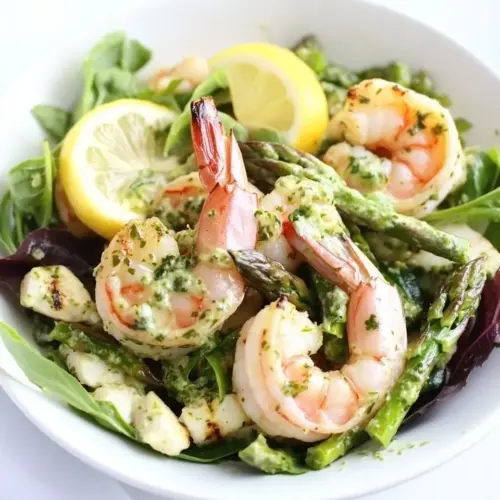
Grilled Shrimp and Asparagus Salad with Lemon Pesto Dressing
Grilled Shrimp and Asparagus Salad with Lemon Pesto Dressing is a bright, easy weeknight dinner featuring smoky grilled shrimp, tender asparagus, and a creamy herby pesto sauce brightened with lemon juice. Crisp spring green mix, buttery avocado, and toasted pine nuts add texture and richness, making it perfect for seasonal spring menus and quick entertaining. Make it for a fast, flavorful meal.
Equipment
- Grill
- Bowl
- Skillet
Ingredients
- 1/3 cup pesto sauce Adds a herbaceous, savory base and binds the lemon and oil into a cohesive dressing; choose a basil-based pesto for bright, aromatic flavor and a smooth texture that coats shrimp and asparagus. Enhances umami with Parmesan and olive oil, contributing richness to the salad without overpowering the fresh vegetables. Can be thinned slightly with reserved lemon juice or olive oil to achieve a pourable dressing consistency.
- 3 tablespoons fresh lemon juice Provides bright acidity and citrus lift that balances the richness of pesto and avocado; freshly squeezed lemon juice brightens flavors and helps prevent avocado browning. Also helps deglaze the grill pan or skillet slightly if used to finish cooked shrimp and asparagus, adding a clean, zesty finish to the dish.
- 1/2 pounds shrimp peeled and deveined Cooks quickly and brings tender, sweet seafood flavor; large or medium shrimp should be peeled and deveined for easy eating and even cooking. Marinate briefly with pesto and lemon to infuse flavor, then grill or sauté until just opaque to keep them juicy and tender. Offers a high-protein component that pairs well with the salad greens and avocado.
- 1/2 bunch asparagus trimmed Provides a crisp, slightly grassy vegetable element that grills quickly and offers a pleasant snap; trim woody ends before cooking. Grill or blanch briefly to retain bright green color and tender-crisp texture, then slice on a diagonal for attractive presentation. Complements the shrimp with mild bitterness and a vegetal contrast to creamy avocado.
- 5 ounces spring green mix Contributes a fresh, leafy base with mixed bitter and tender greens that anchor the salad and absorb the dressing; spring mix blends baby lettuces and microgreens for varied texture. Toss gently with dressing to prevent bruising and ensure each bite includes a balance of greens, shrimp, asparagus, and avocado. Serves as the salad framework that carries other flavors and components.
- 1 large avocado peeled and sliced Provides creamy, buttery texture and cooling richness that balances acidic lemon and herbaceous pesto; peel and slice just before serving to maintain color. Offers healthy fats that meld with the dressing to create a luxurious mouthfeel, while its mild flavor complements seafood and greens. Can be fan-sliced or cubed for attractive plating and easy distribution throughout the salad.
- 2 tablespoons pine nuts Adds a toasty, nutty crunch and subtle pine flavor when lightly toasted; scatter pine nuts over the finished salad for texture contrast. Can be warmed in a dry skillet for a few minutes until fragrant, taking care not to burn them, which intensifies their aroma and enhances the overall dish. Provides small bursts of richness that pair well with pesto and avocado.
Instructions
- Stir together the pesto sauce and lemon juice in a small bowl to make the dressing. Set aside until ready to use.: The aroma should be bright and herbal right away, with the lemon lifting the basil notes from the pesto sauce . Use a small whisk or fork and beat until the oils loosen and the mixture looks glossy, this tells you the dressing will coat leaves smoothly. You'll notice a fragrant, citrusy scent that indicates balance. If the dressing feels too thick, add a teaspoon of water at a time until it pours. Common mistakes include adding too much lemon up front which can overpower the pesto sauce , so taste as you go.
- Heat your grill to medium-high and spray with oil.: As the grill comes up to temperature you should hear a faint hum and smell a slight warm metal note; when a droplet of water dances and evaporates, it's ready. Oiling the grates prevents sticking and helps create those appealing char lines on both shrimp and asparagus . If you are using a stovetop grill pan, preheat it until it is hot enough that a small pinch of salt sizzles on contact. One pitfall is grilling at too low a temperature which leads to steaming rather than searing, producing pale and limp results.
- Lightly coat shrimp and asparagus with olive oil and sprinkle with salt and pepper.: You should feel the oil create a thin sheen when you toss the items, this encourages even browning and prevents sticking. The salt draws out flavor from the shrimp and enhances the vegetal sweetness of asparagus . I usually do this in a shallow bowl so everything gets an even coating. Avoid over-oiling which can cause flare ups and greasy texture.
- Place the shrimp and asparagus on the grill (you may need to do so in batches depending on the size of your grill). Grill, flipping once or twice until shrimp is cooked through and asparagus is bright green and soft, but still al dente.: You will hear light sizzling and smell a buttery, toasted aroma as the grill kisses the surfaces. Watch for the shrimp to turn opaque and curl into a neat C shape, and for the asparagus to take on flecks of char while remaining springy to the bite. This technique seals in juices for the shrimp and concentrates sweetness in the asparagus . Overcooking is the main error here; shrimp become rubbery and asparagus mushy if left too long.
- Transfer shrimp and asparagus to a plate and allow to cool slightly. Chop the asparagus into 2-inch pieces.: As they relax off the heat you'll notice a gentle steam and the aromas will mellow, which makes handling safer. Letting them rest a few minutes preserves juiciness in the shrimp , and chopping the asparagus into uniform 2 inch pieces ensures each forkful has a balanced texture. If you chop while piping hot you risk wilting the greens later. A common oversight is skipping the brief rest which can leave juices running into the salad and making it soggy.
- Add the spring greens to a large serving bowl. Add the lemon-pesto dressing, grilled shrimp, asparagus, avocado, pine nuts, and toss everything together.: When you pour the glossy dressing over the greens, you should see it lightly coat leaves rather than pool at the bottom; this is the correct ratio. Tucking in warm shrimp helps carry flavor into the leaves, and the creamy avocado will soften slightly, binding with the oil for a silky mouthfeel. Toss gently so the leaves retain their structure and the toasted pine nuts remain crunchy. Overmixing can bruise the greens and cause limpness, so fold carefully.
- Serve and enjoy!: The final plate should look vibrant, with glossy dressing, charred streaks on the asparagus , and a scatter of golden pine nuts . You will notice a range of temperatures and textures that make every bite satisfying. Serve immediately while the shrimp retains warmth; leftovers are still tasty but lose some of the immediate contrast between warm and cool components. A frequent mistake is letting the salad sit too long before eating, which dulls the flavors and softens the greens.
Notes
- Use room temperature ingredients: Letting the avocado and the cooked shrimp come to near room temperature before serving helps the dressing coat them more evenly and enhances flavor release.
- Alternative to grilling: If you do not have a grill, use a hot grill pan or stovetop skillet to achieve similar char and caramelization on the shrimp and asparagus.
- Adjust dressing thickness: If your pesto sauce is particularly thick, add a small splash of water or extra lemon juice to reach a pourable consistency that will coat the greens without clumping.
- Make ahead tips: Prepare the dressing up to 2 days ahead and store it chilled, but keep the spring green mix and avocado separate until assembly to avoid wilting and browning.
- Toast nuts for extra depth: Lightly toasting the pine nuts brings out their natural oils and adds a warm, nutty aroma that contrasts nicely with the herbal dressing.