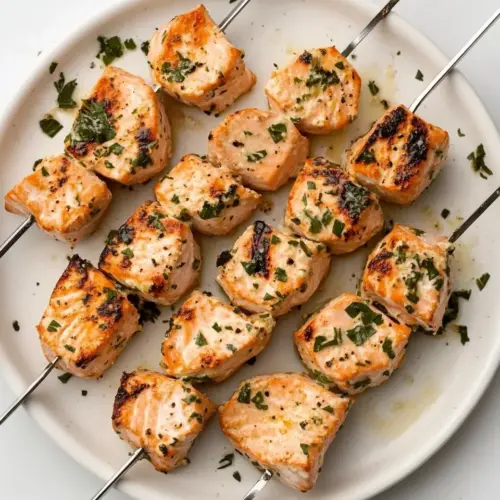
Grilled Salmon Kebabs
Grilled Salmon Kebabs are a bright, herb forward summer recipe featuring tender wild salmon marinated in lemon, rosemary, and dijon mustard. This easy weeknight dinner delivers crispy seared edges and flaky, juicy centers, perfect for small gatherings. Fast to prepare and full of fresh flavor, it is a reliable crowd pleaser you'll want to make again and again.
Equipment
- Grill or Grill Pan
- Mixing Bowl
- Skewers
- Whisk
Ingredients
- 1 pound wild salmon thick, without skin, cut into 12 cubes Provide tender, flaky texture and rich omega-3 fats; cut into 12 cubes for even grilling and quick, consistent cooking. Marinate well to absorb flavors and avoid overcooking by monitoring internal temperature closely.
- 2 tablespoons extra virgin olive oil Coat and help carry flavors while preventing sticking on the grill; adds a subtle fruity richness that complements the salmon. Use sparingly to balance moisture without making the kebabs greasy.
- 2 tablespoons lemon juice freshly squeezed Brighten and tenderize with acidity while enhancing seafood flavor; freshly squeezed lemon juice adds vibrant brightness that cuts through the fish’s richness. Squeeze just before marinating to preserve fresh citrus aroma.
- 3 tablespoons rosemary fresh, minced Infuse aromatic, piney notes and earthy depth; minced fresh rosemary distributes evenly across the cubes for consistent herb flavor. Use fresh and mince finely to avoid woody bites and release essential oils.
- 1 tablespoon dijon mustard Emulsify the marinade and add tangy, savory complexity; Dijon mustard helps bind oil and lemon for a cohesive coating. Use a small amount to amplify flavor without overpowering the salmon.
- 2 garlic cloves minced Provide pungent, savory depth and aromatic warmth; minced garlic penetrates the salmon and browns slightly on the grill for added complexity. Mince finely to release oils and avoid large, harsh pieces.
- 1/2 teaspoon kosher or sea salt Enhance overall flavor balance and help bring out natural fishiness while seasoning evenly; kosher or sea salt is preferred for consistent distribution. Measure carefully to avoid oversalting delicate seafood.
- 1/2 teaspoon black pepper Add sharp, warm bite and subtle heat to round out the marinade; freshly ground black pepper complements the salmon and other seasonings. Grind just before mixing to preserve volatile pepper aromas.
Instructions
- Whisk together all ingredients for marinade.: The bowl will smell bright and herbaceous as the lemon juice and minced garlic release their oils, while the extra virgin olive oil picks up the piney notes of the minced rosemary . Emulsifying the marinade creates a silky coating that clings to the salmon, ensuring even flavor distribution. If you skip thorough whisking you might end up with uneven seasoning, leaving some pieces underflavored. A common mistake is adding cold oil directly to citrus without whisking, which can cause separation; take a few extra seconds to blend until glossy.
- Add salmon and let marinate for about 20 minutes at room temperature.: As the salmon soaks, the marinade should scent the air with citrus and herbs. You will notice the flesh becoming slightly firmer where the marinade touches it, a sign that the acids are working. Marinating at room temperature speeds flavor penetration and helps the fish cook evenly, but avoid leaving it too long or the citrus can start to cook the surface. A frequent error is overmarinating, which can make the texture mealy, so stick close to the recommended time.
- Thread pieces of salmon on skewers.: When threading, each bite should have similar thickness so all pieces finish at the same time. You will feel the salmon give slightly as you slide it on the skewer, and the skewers will sit neatly for a balanced sear. Avoid crowding the skewers; packed pieces steam instead of char. An easy slip up is pushing pieces too tightly, which prevents airflow and even browning, so leave a little space between pieces.
- Coat grates of a grill or a grill pan or skillet with a light layer of cooking spray.: The heat will hiss as the spray hits the grates, and this thin film prevents sticking while promoting even contact for char marks. Coating properly helps produce welcome sizzle when the fish hits the surface. Make sure your spray is applied before the pan or grates are hot, otherwise it can create smoke. A typical mistake is not oiling enough, leading to ripped or torn fish when you try to flip.
- Set to high.: A hot surface gives immediate searing, creating a slight crust that contrasts with the tender interior. You should see the grates shimmer and feel strong radiant heat when you hover your hand a safe distance above. High heat shortens cook time and locks in juiciness, but be ready to move the skewers if flare ups start. The usual error here is using too low a heat, which yields dull color and a longer cook time that dries out the fish.
- Once hot, add skewers to grill or pan and cook for 3 minutes or so on each side for 6 to 8 minutes, until the fish is opaque and flakes easily with a fork, basting with any leftover marinade while cooking.: You will hear a steady sizzle and see the edges turn opaque first, then the center will follow. Flip carefully to preserve grill marks and baste lightly to boost sheen and flavor. The aroma will be a warm blend of citrus and herbs with roasted fish notes. Cook until the flesh flakes with gentle pressure, and avoid probing too often which lets juices escape. Overcooking is a common problem, so rely on visual cues and the flaky test instead of strict times alone.
- Enjoy!: The first bite should present a balance of char, tender flesh, and bright herb citrus. Serve right away while the aroma is still fresh and the texture is at its peak. If the fish sits too long it will cool and lose some of its appeal, so time serving to coincide with finishing the last skewer. A mistake people make is letting the kebabs rest too long on the grill, which can continue to cook them and dry them out, so plate promptly and enjoy.
Notes
- Citrus swap Try adding a bit of orange or lime juice in place of some of the lemon juice for a different brightness that pairs well with rosemary.
- Herb mix Substitute or add finely chopped parsley or dill to the minced rosemary for fresher, greener notes that complement the salmon.
- Mustard boost Increase the amount of dijon mustard slightly if you want a tangier, more pronounced savory backbone to the marinade.
- Garlic timing If you prefer a mellow garlic presence, add one clove at first and the other just before grilling to keep some brightness.
- Oil choice Swap to a neutral oil if you want an even lighter mouthfeel than the extra virgin olive oil offers while still protecting the fish during grilling.
- Skewer style Use metal skewers if you often make kebabs, they are reusable and transfer heat to the center of the fish for slightly faster cooking.