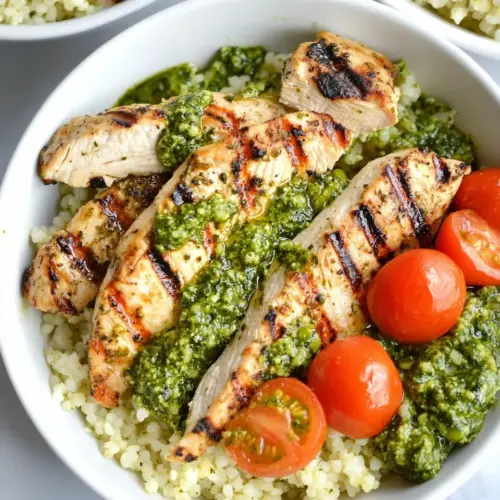
Grilled Pesto Chicken Couscous Bowls
Grilled Pesto Chicken Couscous Bowls combine fluffy couscous, charred zucchini and tomatoes, and sliced grilled chicken with a bright basil and spinach pesto. This easy weeknight dinner is creamy, herbaceous, and full of summer brightness, perfect for quick entertaining or a wholesome family meal. Make it for a colorful, satisfying plate that comes together in under an hour.
Equipment
- Grill pan
- Food Processor
- Medium heat proof bowl
- Baking Sheet
- Fork
Ingredients
- 1 cup couscous Provide a light, fluffy base to absorb flavors and pair with vegetables and chicken; couscous cooks quickly and offers a neutral grain texture that complements the bowl.
- 1 1/3 cups boiling water Bring moisture and heat to hydrate the couscous; boiling water softens the grains so they become tender and ready to fluff before serving.
- Kosher salt and Black Pepper Season simply to enhance overall flavor balance; kosher salt and black pepper elevate the couscous, vegetables, and chicken when used judiciously.
- 2 medium zucchini, diagonally sliced 1/4 inch thick Offer a mild, slightly sweet squash texture when grilled; diagonally sliced zucchini provides tender, charred bites that add bulk and freshness to the bowl.
- 6 medium Campari tomatoes, halved Contribute juicy, tangy sweetness when charred or roasted; halved Campari tomatoes add acidity and bright color that brighten the dish.
- Olive Oil Cooking Spray Allow grilling or pan-searing without added oil pooling; olive oil cooking spray helps produce even browning on zucchini and chicken with minimal added fat.
- 4 Organic Chicken Breasts, 6 ounces each Supply protein and hearty substance for the bowls; skinless chicken breasts grill quickly and provide lean, satisfying portions for each serving.
- 1/2 cup fresh packed basil leaves Deliver aromatic, herbaceous brightness for the pesto; fresh packed basil leaves create the distinctive green, savory herb base for flavoring.
- 1/2 cup fresh packed SimplyNature Organic Baby Spinach & Arugula Mix Introduce peppery, leafy depth to the pesto and salad components; the baby spinach and arugula mix adds nutrients and a subtle bitter note.
- 1 clove garlic Impart pungent, savory depth to the pesto; a clove of garlic gives aromatic heat and complexity when crushed or blended.
- 1/4 cup grated Parmesan Add umami and salty richness to the pesto and finished bowls; grated Parmesan provides nutty depth and helps bind the sauce.
- salt Enhance seasoning control at the table and during cooking; added salt refines flavors in the couscous, vegetables, and chicken.
- Black Pepper, to taste Adjust final taste with a sharp, warming kick; black pepper allows tailoring of heat to personal preference throughout the dish.
- 3 tablespoons Extra Virgin Olive Oil Bind ingredients and carry fat-soluble flavors in the pesto and for finishing; extra virgin olive oil provides fruity richness and silky mouthfeel.
Instructions
- To make the pesto: In a food processor, pulse basil, spinach and arugula mix, garlic, parmesan cheese, salt and pepper until smooth. Slowly add the olive oil while pulsing.: The aroma of crushed basil and garlic fills the kitchen immediately, a bright green whirl of leaves and Parmesan that smells herbaceous and slightly nutty. Use short pulses to combine the basil , spinach and arugula mix, garlic , Parmesan , salt and pepper until you see a coarse purée, then slowly drizzle in the Extra Virgin Olive Oil while pulsing to emulsify into a glossy sauce. This method preserves texture so the pesto keeps a fresh color and avoids overheating the herbs. A common mistake is overprocessing which can make the pesto muddy and bitter, so stop when you still see flecks of leaf and the oil is just incorporated.
- Place couscous in a medium, heat-proof bowl. Add boiling water and 1/4 teaspoon salt. Cover.: As the steam rises, the grain soaks up hot liquid and puffs into light, separate pieces, providing a tender, cushiony base. Pour the boiling water and add 1/4 teaspoon of salt, then cover immediately to trap steam and ensure even hydration. Let it rest undisturbed so the heat can gently finish the cooking rather than stirring it while hot, which can make it gluey. If you disturb it too soon you may end up with clumpy couscous , so let the bowl sit for the full rest time.
- Let stand for 5 minutes or until liquid has been absorbed. Fluff couscous with a fork to separate grains.: During this quiet period the grains swell and tenderize, releasing a faint wheaty aroma. After the rest, fluff with a fork to separate the grains and restore lightness, watching for a uniform texture. Fluffing also aerates the couscous , preventing dense pockets that can form when packed tightly. A frequent error is using a spoon that compacts the grains, so always use a fork for a lighter result.
- Add 2 tablespoons of the pesto. Toss to combine and set aside.: The warm couscous gently releases the pesto's aromas, and the heat helps the herbs bloom, coating each grain with olive oil sheen. Toss to combine until the color is streaked through but not oversaturated, so you still taste basil distinct from the grain. This layering step marries flavor but avoids drowning the texture in sauce. Avoid adding too much pesto at once, which can make the couscous feel heavy rather than bright.
- Pound the thicker end of the chicken to make both sides leveled out so they cook evenly.: When you press down to even the thickness, the chicken achieves a uniform cook and prevents thin edges from drying out while the thick center comes up to temperature. Use a meat mallet or a rolling pin and work gently until the breast is consistent in thickness. Uneven breasts are a common source of overcooked edges and undercooked centers, so take this step seriously for a tender result.
- Spritz with oil and season with 1/2 teaspoon salt and black pepper.: The light coating of oil helps the seasoning stick and encourages a golden sear, while the salt and pepper build a simple savory crust. Apply seasoning evenly so each breast gets balanced flavor. Over seasoning can mask the pesto's nuance, so measure carefully and adjust at plating if needed.
- Heat a grill or grill pan on medium-high heat.: You want the surface hot enough to produce immediate contact sear and caramelization without burning. A hot pan creates audible sizzle on contact and develops a flavorful crust on the meat and vegetables. If the pan is not hot enough, food will steam and fail to brown properly, so wait until you see a faint smoke and feel the heat before adding items.
- Spritz the zucchini and tomato all over with olive oil, season with salt and pepper.: Each piece should glisten slightly, which helps the vegetables brown and prevents sticking. The oil also amplifies flavor and encourages blistering of skins for tomatoes and cross hatch marks on the zucchini. Too little oil can cause sticking and uneven charring, so ensure a light, even coating.
- Cook zucchini, in batches, for 2 to 3 minutes each side or until tender. Transfer to a baking sheet. Cover to keep warm.: Listen for a steady sizzling sound and watch for golden brown char lines around the edges, the visual cue the sugars are caramelizing. Working in batches ensures each piece gets direct contact with the hot surface so you get even browning rather than steaming. A common pitfall is overcrowding the pan which lowers the temperature and yields limp rather than crisp edged slices.
- Add tomato to the grill. Cook, turning, for 1 to 2 minutes or until softened.: Placing the grilled zucchini on a baking sheet and covering to keep warm preserves heat without continuing to cook them aggressively, holding the texture until assembly. This rest prevents overcooking and allows moisture to redistribute gently. Avoid stacking pieces tightly which can trap steam and make them soggy.
- Cook the chicken 3 to 4 minutes each side or until browned and cooked through. Slice.: When the tomatoes hit the hot surface you want to hear a soft sizzle and see the skins slightly blister, giving a sweet, roasted flavor while maintaining a pop of juicy interior. Turn them once so they soften uniformly without collapsing. Cook briefly because over grilling will leave you with a runny, shapeless ingredient rather than pleasant tender bursts.
- Divide couscous between 4 plates, 3/4 cup each.: The chicken should sizzle with a steady sound and develop a deep golden crust, signaling Maillard reaction and added flavor. When done, allow a short rest so juices redistribute, then slice against the grain for tender pieces. Rushing this step often yields dry breast meat, so check internal doneness carefully rather than relying only on timing.
- Top with vegetables and chicken. Drizzle with remaining pesto. Serve.: Spoon the warm, pesto coated couscous into even portions so every bowl begins with a consistent base, offering balanced ratios of grain to toppings. The visual of a neat bed of grain makes assembly easier and helps distribute flavors uniformly. Overpacking bowls can lead to spillage and imbalance, so keep the portions tidy.
- Top with vegetables and chicken: The contrast of colorful grilled zucchini and charred tomatoes over the warm couscous creates an appealing plate, and sliced chicken laid on top invites the fork to combine textures. Drizzle with remaining pesto for a final glossy finish and an herbaceous lift. A misstep here is adding too much dressing at once, which can make the bowl overly oily, so start light and add more if desired.
- Drizzle with remaining pesto: A finishing spoonful of sauce brightens the whole bowl and ties every element together, leaving a fragrant sheen on the chicken and vegetables. The aroma should be fresh and garlicky, complementing the charred notes. Resist over drizzling to keep the balance between grain and sauce right. Serve immediately to enjoy the contrasting temperatures and textures.
Notes
- Make extra pesto: Double the pesto quantity and store in a jar with a thin film of olive oil on top, it keeps well in the fridge and brightens leftovers.
- Even cooking tip: Pound the thicker parts of the chicken to a uniform thickness so every breast finishes at the same time without drying out.
- Vegetable finish: If your grill pan is small, finish grilled zucchini and tomatoes in a hot oven for a minute to intensify caramelization without crowding the pan.
- Adjust pesto texture: For a chunkier sauce, pulse fewer times; for a silkier sauce, increase oil slowly until you reach a glossy emulsion.
- Serving suggestion: Serve the bowls slightly warm rather than piping hot so the pesto and couscous flavors meld beautifully without clashing temperatures.