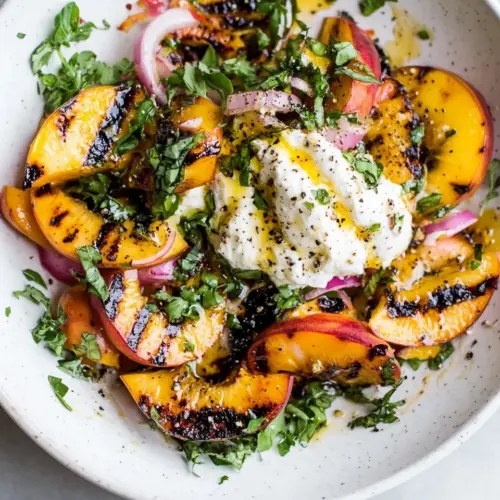
Grilled Peach Burrata Salad
Grilled Peach Burrata Salad blends juicy grilled peaches with creamy burrata, crunchy homemade garlic butter croutons, and bright mint for an easy weeknight dinner or showstopping summer appetizer. The smoky char on the fruit and silky cheese create a creamy sweet contrast that feels elegant yet effortless, making it a must make this season.
Equipment
- Cutting Board
- 8 Inch Chef Knife
- Extra Virgin Olive Oil
Ingredients
- 4 peaches, quartered Quartered and lightly charred to intensify natural sweetness and add smoky depth; provides juicy contrast to creamy cheese and adds a summery, vibrant element to the salad. Allow to caramelize briefly on a hot grill to develop complex flavors and maintain firm texture for serving.
- 1 pound burrata cheese Soft and creamy center that brings rich, milky creaminess and a silky mouthfeel; serves as the salad's decadent focal point, balancing bright fruit and crisp greens. Tear or slice gently so the creamy interior can mingle with dressings and juices.
- Homemade garlic butter croutons Crisped until golden to contribute crunchy texture and to absorb garlic-infused butter flavors; creates savory, toasty bites that counterbalance soft cheese and juicy peaches. Prepare just before serving to keep croutons crisp and flavorful throughout the meal.
- 1/4 cup finely minced mint Finely minced to add fresh, cool herbaceous brightness and a pop of green color; complements the sweetness of the peaches and the richness of the burrata with a light, aromatic lift. Scatter evenly over the salad to distribute its refreshing flavor in every bite.
- 1/4 cup olive oil Used as a smooth, fruity base for dressing or to finish the salad with a silky coating; helps marry flavors and provides healthy fats that enhance mouthfeel. Drizzle evenly and toss gently so it clings to greens, peaches, and cheese.
- Fresh cracked black pepper, to taste Freshly cracked to introduce sharp, pungent heat and aromatic spice that elevates overall flavor; allows diners to adjust seasoning intensity and adds an earthy balance to sweet and creamy components. Grind over just before serving to preserve bright pepper oils.
- Kosher salt, to taste Added to taste to enhance and balance flavors with saline lift; draws out sweetness from the peaches and heightens the savory notes of the croutons and burrata. Sprinkle sparingly and taste as you go to avoid overpowering delicate ingredients.
- Crushed red pepper, to taste Pinched in small amounts to bring an optional fiery kick and subtle complexity; provides contrast against sweet fruit and creamy cheese when a touch of heat is desired. Use cautiously so it enhances rather than overwhelms the salad's delicate balance.
Instructions
- Preheat your grill to medium-high heat.: You will notice the metal warming and the grill grates beginning to radiate heat, which is essential for creating quick, even char on the peaches . A properly preheated grill prevents sticking and speeds caramelization. If the grill is too cool, the fruit will warm through without developing those smoky browned edges, so avoid that common mistake.
- Cut your peaches in half, remove the pit, and cut each half in half.: As you slice the peaches , their sweet fragrance will become more pronounced and juices may bead at the cut surface, signaling ripeness. This cutting method creates sturdy quarters that hold together on the grill while maximizing surface area for charring. Take care not to press down too firmly, which can bruise the flesh and release excess juice.
- Lightly brush your peaches with olive oil, place on the grill, and grill until lightly charred on all sides – about 5 minutes.: When the peaches hit the hot grate you should hear a soft hiss and see sugars begin to caramelize, forming amber blisters and char marks that smell sweet and toasty. Turn carefully so each side gets color, and aim for that golden edge without turning the fruit into mush. A common error is overcooking, which makes the peaches collapse instead of holding their shape.
- Remove from the grill and set on a medium-sized serving platter.: The sound will die down as the fruit rests, and steam will rise slightly, carrying the grilled aroma. Letting the peaches rest on the platter for a moment keeps their juices contained, which helps when you assemble the salad. Avoid piling them while very hot, which can make the burrata break down prematurely when you add it.
- Take your ball of burrata out of its container and cut/break it into small chunks. The inside will be a bit runny but I just spread it around so that each serving gets a good amount of cheese.: The creamy interior spills out with a soft, velvety texture and a gentle milky scent that contrasts the caramelized peaches . Tearing rather than slicing encourages the stracciatella to mingle across the platter, creating pockets of cream. Be careful not to overhandle the burrata , since too much pressure will make it lose its luscious structure.
- Scatter around the desired amount of croutons onto the platter.: The crunch of the croutons should be audible as you add them, and their toasty, garlicky fragrance will punctuate the sweetness and cream. Distribute them evenly so each serving gets texture contrast. A frequent oversight is adding soggy croutons, so use well toasted, cooled pieces for the best bite.
- In a small bowl mix together mint and olive oil. Drizzle the mixture over the platter.: As you whisk the mint into the olive oil , the oil will take on a fresh, herbaceous scent that helps the mint adhere to the other elements. Drizzle this mixture so it lightly coats the peaches and burrata , providing a fragrant sheen. If you think the oil is overpowering, start with less and add more sparingly to avoid masking the fruit.
- Season the salad with the desired amount of fresh cracked black pepper, kosher salt, crushed red pepper, and freshly minced mint.: The oil will gleam on the fruit and cheese, catching the light and bringing the components together visually and taste wise. You will see the mint flecks rest on the surface and hear the soft sound of oil settling, which is oddly satisfying. Avoid dousing the platter, which can make the croutons soggy and dilute the contrast of textures.
- Season the salad with the desired amount of fresh cracked black pepper kosher salt crushed red pepper and freshly minced mint.: The aroma of freshly cracked black pepper will heighten sweetness, while the kosher salt amplifies all flavors. A light dusting of crushed red pepper adds warm heat that plays against the creamy burrata . Taste as you go, because it is easy to oversalt or overspice; small adjustments are what create balance.
Notes
- Swap crouton seasoning Use garlic butter croutons as written or try herb seasoned croutons for a fresher note, making sure they remain crisp to keep texture contrast with the burrata.
- Adjust the heat Increase crushed red pepper slightly if you like a lingering warmth, but add in small increments so it complements rather than overwhelms the sweetness of the peaches.
- Mint intensity If you want a brighter herbal profile, double the finely minced mint and mix half into the oil and half as a final sprinkle for layered aroma.
- Olive oil finish Use a high quality olive oil for the finishing drizzle as it shapes the mouthfeel and carries aromatics, the difference is noticeable in aroma and silkiness.
- Serving scale To make a larger platter for a crowd, multiply the ingredients proportionally and assemble on multiple platters to avoid crowding and preserve the charred texture of the peaches.